Supplement Label Design for the EU: What Must Be on the Label Before You Design It
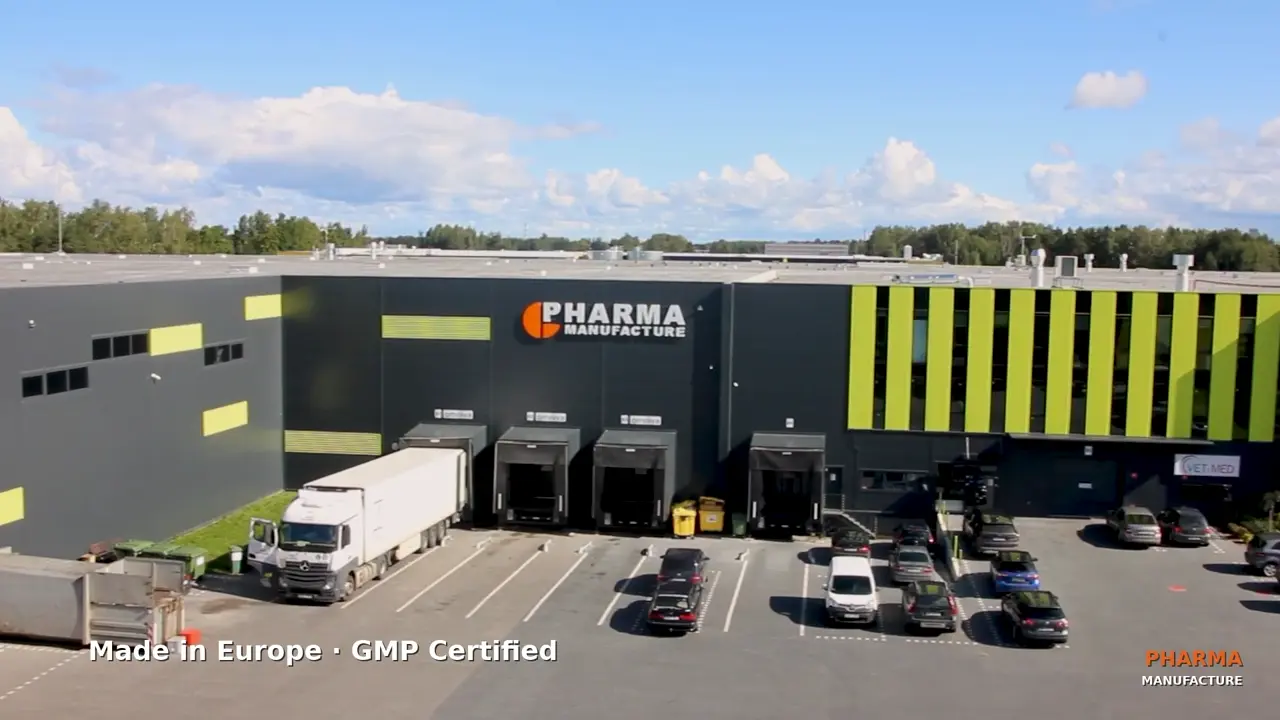
Supplement label design for the EU starts from text the law fixes before any layout. Regulation (EU) No 1169/2011 sets the mandatory particulars on pre-packed food, among them the ingredient list, allergens, net quantity, the durability date and the name and address of the business responsible for the product in the EU, and Directive 2002/46/EC adds the items specific to food supplements. That business is the brand on the label. Pharma Manufacture, which makes private label supplements at its factory in Mārupe, Latvia, supplies what the text is built from: the full formula with quantities per portion, and a Certificate of Analysis for every batch that carries the batch number printed on your label. The pack then sets the label size. Bottles run from 40 to 200 mm tall and 20 to 110 mm in diameter on the counting line; powder sachets are 50, 55 or 60 mm wide and 60 to 110 mm tall, printed on the laminate itself, and start from 80,000 sachets, the print run of one laminate roll. Production takes from four weeks for a ready tablet or capsule formula, and about eight weeks for a typical run, counted from a confirmed order and brief.
| Label item | Who decides it | What Pharma Manufacture supplies | Rule |
|---|---|---|---|
| The name “food supplement” and the categories of nutrients or substances | The brand | The formula, which names every active | Directive 2002/46/EC, Article 6(1) (the name) and Article 6(3)(a) (the categories), as adopted |
| Ingredient list | The brand approves the wording | Full formula with quantities per portion | Regulation (EU) No 1169/2011, Article 9(1)(b) |
| Allergens | The brand, from the formula | Full formula | Regulation (EU) No 1169/2011, Article 21 and Annex II |
| Amount of each nutrient per daily portion; vitamins and minerals as a percentage of the reference intakes | The brand states it | Quantities per portion from the formula | Directive 2002/46/EC, Article 8(1) to (3), as adopted; reference intakes in Annex XIII, Part A of Regulation (EU) No 1169/2011 |
| Recommended daily portion and the warning statements | The brand | Doses checked against the rules of the country of sale | Directive 2002/46/EC, Article 6(3)(b) to (e), as adopted |
| Net quantity | The brand, from the pack count | Bottles counted unit by unit on a Cremer CF 1220 counter | Regulation (EU) No 1169/2011, Article 9(1)(e) |
| Durability date and storage conditions | The brand | The formula and the pack drawing | Regulation (EU) No 1169/2011, Article 9(1)(f) and (g) and Article 25 |
| Lot (batch) number | Set per batch | Certificate of Analysis with the same batch number | Directive 2011/91/EU, Articles 2(1), 3 and 4, as adopted |
| Name and address of the business responsible in the EU | The brand: its own name | Client brands kept confidential | Regulation (EU) No 1169/2011, Article 9(1)(h) and Article 8(1) |
| Nutrition and health claims | The brand, which answers for them | Formula composition | Regulation (EC) No 1924/2006; EU list of authorised claims in Regulation (EU) No 432/2012 |
| Sweetener and polyol statements | The brand | Formula shows sweeteners and polyols | Regulation (EU) No 1169/2011, Annex III, points 2.1 and 2.4 |
| Language of the label | The brand | The formula the translation is made from | Regulation (EU) No 1169/2011, Article 15 |
| Minimum text size | The designer | Pack drawing and sizes | Regulation (EU) No 1169/2011, Article 13(2) and (3), and Annex IV |
Key Takeaways
- The label text is fixed before the design: Regulation (EU) No 1169/2011 sets the particulars every pre-packed food carries, and Directive 2002/46/EC adds those specific to food supplements.
- The brand on the label answers for the text and for every claim on it. Pharma Manufacture supplies the formula with quantities per portion and a Certificate of Analysis for each batch.
- The EU has set no single maximum dose for vitamins and minerals in supplements, so the daily portion on the label is checked against the rules of the country of sale.
- The pack sets the label size: a powder sachet is printed on its own laminate at 50 to 60 mm wide, and a bottle label follows a bottle of 40 to 200 mm in height.
- “Sugar-free” on a pack means no more than 0.5 g of sugars per 100 g or 100 ml, and a product with sweeteners carries the statement “with sweetener(s)”.
What must be on a food supplement label in the EU?
A food supplement sold pre-packed in the EU carries two layers of mandatory text: the particulars Regulation (EU) No 1169/2011 requires on all pre-packed food, and the items Directive 2002/46/EC adds for supplements. Design can start once both layers are written, because together they take up most of the space on a small pack.
The general layer is the one every food shares: the ingredient list, allergens, net quantity, the durability date and the name and address of the business responsible for the product in the EU, which are points (b), (c), (e), (f) and (h) of Article 9(1) of Regulation (EU) No 1169/2011. Allergens follow Article 21 and Annex II of the same regulation. Storage conditions are a mandatory particular too, in point (g) of Article 9(1): where a food needs special storage conditions or conditions of use, Article 25(1) says they shall be indicated, and Article 25(2) adds that the storage conditions or the time limit for consumption after opening are indicated where appropriate. The lot indication comes from a separate act, Directive 2011/91/EU (in force; text as adopted): under Article 2(1) a foodstuff may not be marketed without it, under Article 3 the lot is determined by the producer, manufacturer or packager, or by the first seller established in the Union, and under Article 4 it appears on the prepackaging or on a label attached to it. Anything the brand adds on top, from “vegan” to a flavour description, is voluntary information, and under Article 7 of the same regulation it must not mislead.
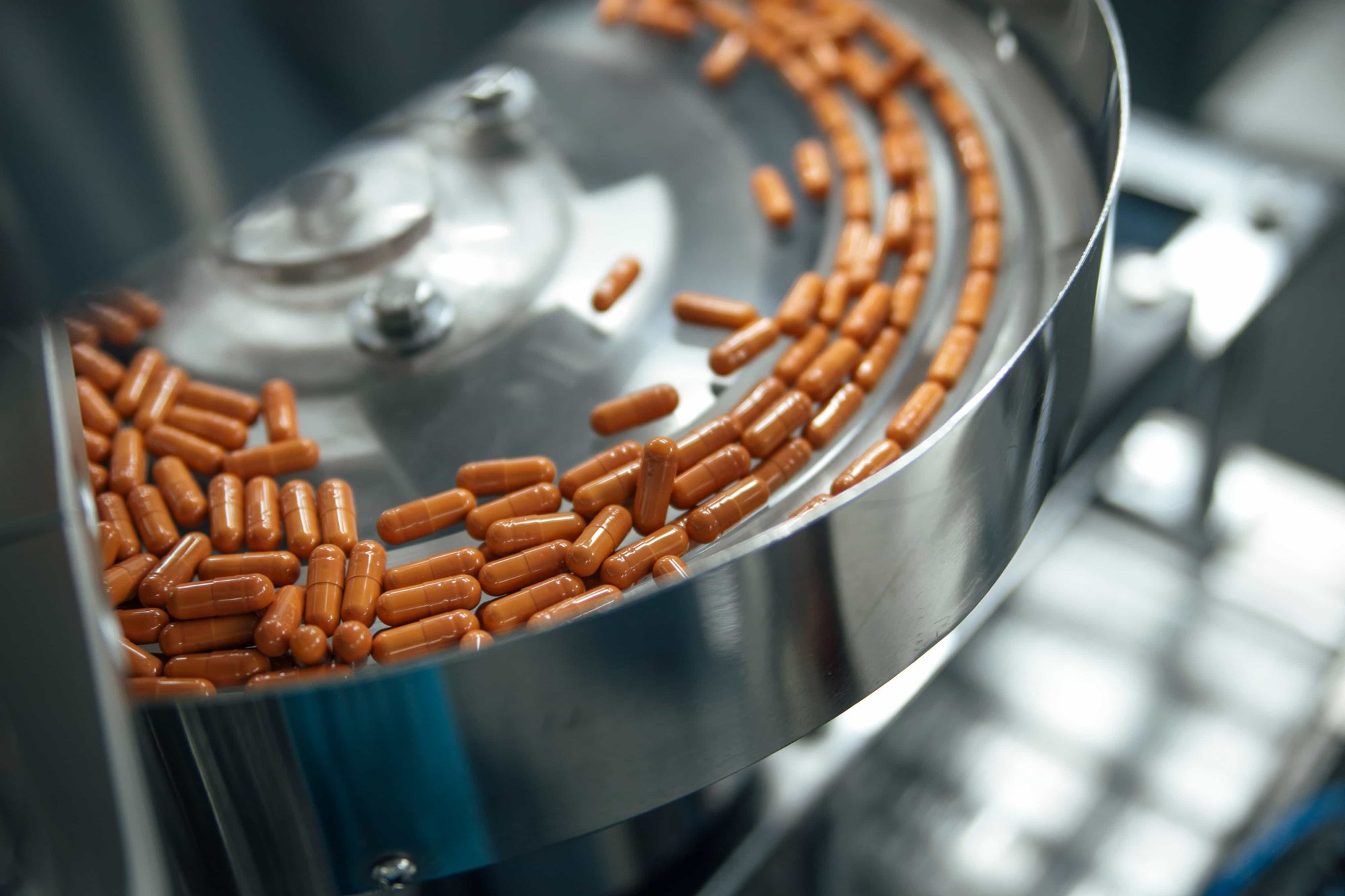
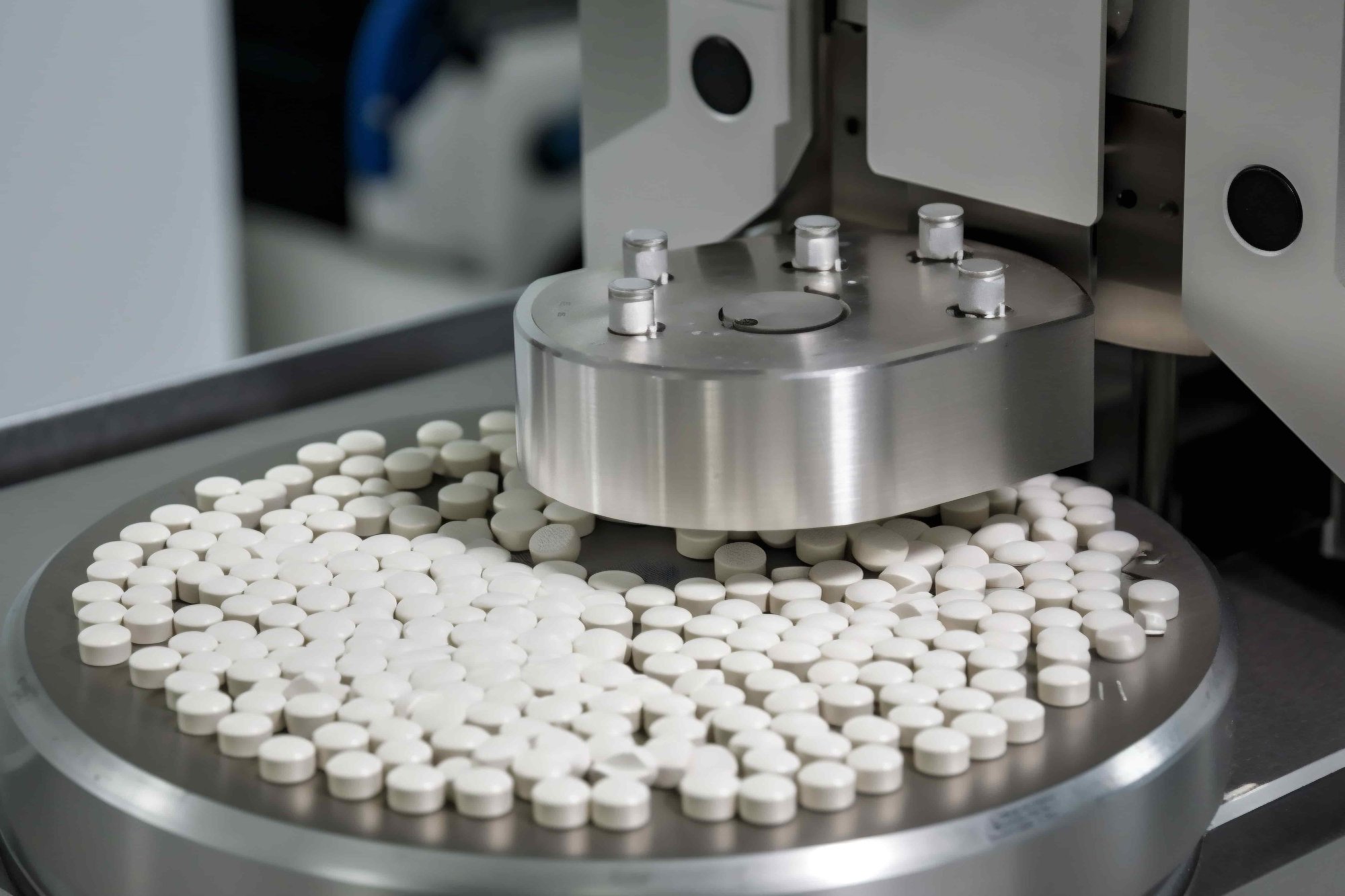
Net quantity is where a label and the production line meet. For a product sold by count, the number on the front is the declaration: ninety capsules means ninety capsules. Pharma Manufacture counts bottles on a Cremer CF 1220, a 12-channel linear counter with infrared detection, and the cost of a counting error explains why that matters for the figure you print.
What does Directive 2002/46/EC add to a supplement label?
Directive 2002/46/EC turns a food label into a supplement label: it adds the category name and the dose information a consumer reads before swallowing anything. Article numbers in this section follow the Directive as adopted in 2002. The items to plan space for:
- the name “food supplement” (Article 6(1));
- the names of the categories of nutrients or substances that characterise the product, or an indication of the nature of those nutrients or substances (Article 6(3)(a));
- the portion of the product recommended for daily consumption (Article 6(3)(b));
- a warning not to exceed that recommended daily dose (Article 6(3)(c));
- a statement that food supplements should not be used as a substitute for a varied diet (Article 6(3)(d));
- a statement that the products should be stored out of the reach of young children (Article 6(3)(e));
- the amount of each nutrient or substance with a nutritional or physiological effect, declared in numerical form and per portion recommended for daily consumption, with the units for vitamins and minerals set in Annex I of the Directive (Article 8(1) and (2));
- for vitamins and minerals, the amount also as a percentage of the reference values (Article 8(3)).
The reference values in Article 8(3) are those of Directive 90/496/EEC, which Regulation (EU) No 1169/2011 repealed; under Article 53(2) of that regulation references to the repealed acts are construed as references to it, and the nutrient reference values for adults are in its Annex XIII, Part A. The nutrition declaration of Articles 30 to 35 of Regulation (EU) No 1169/2011 does not apply to foods within the scope of Directive 2002/46/EC (Article 29(1)(a)), so for a supplement the amounts follow Article 8 of the Directive.
The dose itself is a separate question from the label text. Directive 2002/46/EC, Article 5, provides for maximum amounts of vitamins and minerals, but the EU has set no single maximum, so the limits differ by country and are checked for the country of sale. The vitamin and mineral forms a supplement may use are listed in Annex II of the same directive. Pharma Manufacture’s R&D checks the doses against the rules of the country of sale. A daily portion that fits one country can need adjusting for another, which is cheaper to learn before artwork goes to print than after.
Who decides the label text: the brand or the manufacturer?
The brand decides the text and answers for it. Under Article 8 of Regulation (EU) No 1169/2011, the business responsible for food information is the one under whose name the food is marketed or the importer into the Union market if that business is not established in the Union, and every nutrition or health claim on the pack falls under Regulation (EC) No 1924/2006, which the brand answers for as well. Choosing a ready formula from the catalogue of 350 does not move that responsibility to the factory.
In practice the work splits like this. The brand chooses the product name, the claims, the languages, the design and the market. Pharma Manufacture supplies the facts the text is built from: the full formula with quantities per portion, the dose check for the country of sale, the pack sizes the line can run, and the Certificate of Analysis for each batch.
Supplement label size: how the pack decides it
There is no single supplement label size: the label is as large as the pack you choose allows, and each format carries the brand in its own way. That is why the pack is chosen first and the artwork second.
| Pack | Where the text goes | Size you design for | What it means for the design |
|---|---|---|---|
| Bottle, PET or glass | A label on the bottle | Bottles 40–200 mm tall and 20–110 mm in diameter on the counting line | The label follows the bottle chosen; a very tall bottle or a wide squat jar can fall outside the line |
| Blister in a carton | Printed carton | The cartoner’s format range, confirmed on the carton drawing | The text is printed on the carton itself, so the carton drawing comes before the artwork |
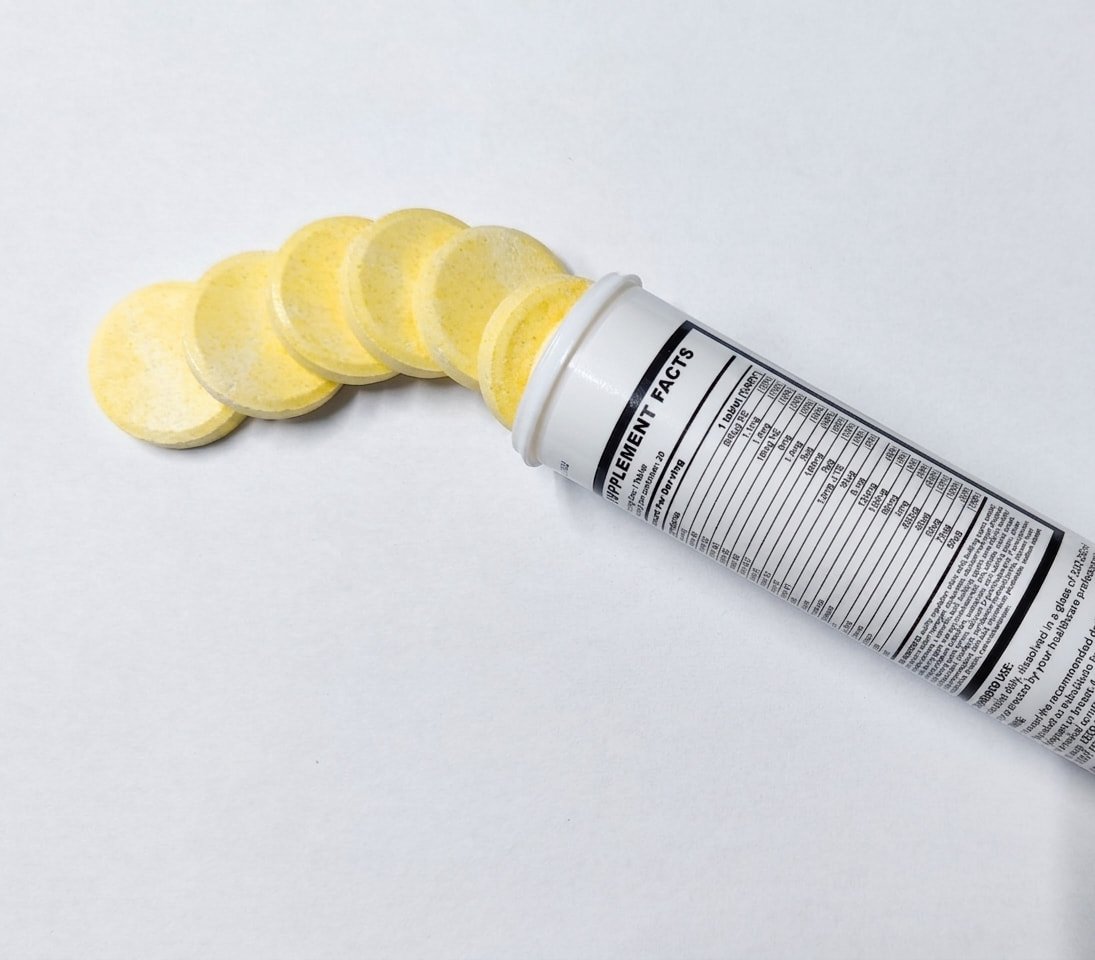
| Effervescent tube | IML film bonded into the tube as it forms, or offset print or a label on a formed tube | Tube size and closure chosen first | IML ties the film quantity to the tube-forming run |
| Powder sachet | Printed on the paper layer of the three-layer laminate, no separate label | 50, 55 or 60 mm wide, 60–110 mm tall, 4–12 g of powder | One face of the smallest sachet is 30 cm², so the mandatory text is planned before anything decorative |
| Jar or doypack | A label | Jar or doypack format chosen first | A design change means a new label, not a new pack |
The sachet is the tightest case. A 50 × 60 mm face gives 30 cm² for the name, the warnings, the daily portion and the brand, and the small-pack rule on text size depends on the pack’s largest surface. Under Article 13(2) of Regulation (EU) No 1169/2011 the mandatory particulars are printed in characters whose x-height, as defined in Annex IV, is at least 1.2 mm, and Article 13(3) lowers that to 0.9 mm for packaging whose largest surface is under 80 cm². The sachet faces above are 30 to 66 cm², under the 80 cm² threshold of Article 13(3), so the 0.9 mm figure applies if the face is treated as the largest surface; the designer confirms it for the pack. The carton holding the sachets is built around the product. For carton dimensions and the full format list, see whether to use your own artwork or a designer and the packing solutions page.
Is there a supplement label template or mockup to start from?
The template is the drawing of the pack you have chosen: a carton drawing for a blister, a sample or drawing of the bottle, the sachet width and height. A mockup built on a generic bottle before the pack is fixed usually has to be redone once the format is confirmed.
Ask for the format ranges in writing before your designer starts. A carton drawing that falls outside the cartoner’s range is an expensive thing to discover after artwork goes to print, and a label sized for a bottle outside the counting line’s range is a reprint.
Which words on a supplement label need extra care?
The product name, the front-of-pack words and the free-from statements are regulated as closely as the back panel. Four rules come up on almost every supplement label:
- The name can be a claim. Under Article 1(3) of Regulation (EC) No 1924/2006, a trade mark, brand name or fancy name that could be read as a nutrition or health claim may be used only if a claim that complies with the regulation stands next to it. General references to wellbeing are allowed only alongside a specific authorised health claim (Article 10(3)), and claims about the rate or amount of weight loss are prohibited (Article 12(b)).
- “Sugar-free” has a number. It means no more than 0.5 g of sugars per 100 g or 100 ml (Regulation (EC) No 1924/2006, Annex). “With no added sugars” means no added mono- or disaccharides or other food used for sweetness; where sugars occur naturally, the label adds “CONTAINS NATURALLY OCCURRING SUGARS”.
- Sweeteners bring their own statements. A product with sweeteners carries “with sweetener(s)”, and one with more than 10 % added polyols carries “excessive consumption may produce laxative effects” (Regulation (EU) No 1169/2011, Annex III, points 2.1 and 2.4). This matters for effervescent tablets, chewables and syrups.
- Health claims come from the EU list. Authorised health claims are listed in Regulation (EU) No 432/2012, and the brand checks its wording against that list before the artwork is final.
“Vegan” and “lactose-free” are properties of a specific formula, confirmed on request. “Gluten-free” means no more than 20 mg/kg of gluten in the food as sold (Regulation (EU) No 828/2014) and is agreed per formula. A vegan HPMC capsule shell is the first question, not the only one: every ingredient, excipient and coating is checked as well.
When does the label artwork have to be final?
As early as the pack allows, because artwork approval and raw materials are the two things that move a production date most often. Pharma Manufacture counts its lead time, from four weeks for a ready tablet or capsule formula and about eight for a typical run, from a confirmed order and brief.
The deadline is hardest on printed packs. A sachet’s laminate is printed as a run and ordered together with the powder batch, so changing the artwork after that run is not a label swap. On an effervescent tube with IML, the printed film is bonded into the tube as it forms. On a bottle, a jar or a doypack, a correction means a new label.
Supplement label design checklist for the EU
Work through it in this order; each step fixes something the next one depends on.
- Choose the pack. Bottle, blister and carton, tube, sachet, jar or doypack. Get the format range or drawing in writing.
- Fix the formula and the daily portion. Take the full formula with quantities per portion from the manufacturer.
- Name the countries of sale. The dose check and the label language both depend on them.
- Write the mandatory text from Regulation (EU) No 1169/2011 and Directive 2002/46/EC: name, categories, ingredients, allergens, daily portion, warnings, amounts per portion with percentages of reference intakes, net quantity, durability date, storage, the business name and address.
- Check every claim against Regulation (EC) No 1924/2006 and the list in Regulation (EU) No 432/2012, including the product name.
- Check free-from and sweetener wording: “sugar-free” at 0.5 g per 100 g or 100 ml, “with sweetener(s)”, the polyol statement above 10 %.
- Measure the text size on the real pack, not on the mockup.
- Leave a field for the batch number and durability date, which change every batch.
- Approve the artwork before the print run that the pack depends on: the laminate for sachets, the film for IML tubes.
- Keep the approved text with the formula so the next batch and the next market start from the same file.
Supplement label design: frequently asked questions
Who is responsible for the text on a private label supplement label?
The brand whose name is on the pack. Article 8 of Regulation (EU) No 1169/2011 makes the business the food is marketed under responsible for its food information, or the importer into the Union market if that business is not established in the Union, and the brand answers for every claim under Regulation (EC) No 1924/2006. Pharma Manufacture supplies the formula with quantities per portion and a Certificate of Analysis for each batch.
Does the manufacturer’s name have to appear on the label?
The label carries the name and address of the business responsible for the product in the EU, which is the brand. Pharma Manufacture keeps client brands confidential, so a product made in Mārupe goes to market under the brand’s own name and address.
Does Pharma Manufacture design or print the label?
Pharma Manufacture can work from finished artwork you already have, provided it is built for the pack it will run on; the options are set out in whether to use your own artwork or a designer.
What size should a supplement label be?
The size of the pack you choose. At Pharma Manufacture, bottles run from 40 to 200 mm tall and 20 to 110 mm in diameter, and sachets are 50, 55 or 60 mm wide and 60 to 110 mm tall with the brand printed on the laminate. Choose the pack first, then size the artwork to its drawing.
Where do the % NRV figures on a supplement label come from?
From two sources: the quantities per portion in the formula, which Pharma Manufacture supplies, and the reference intakes for vitamins and minerals in Annex XIII of Regulation (EU) No 1169/2011. The percentage is the amount per daily portion divided by the reference intake for that nutrient.
Can one label be used in several EU countries?
Only if the text is in a language each country accepts. Under Article 15 of Regulation (EU) No 1169/2011 the mandatory food information appears in a language easily understood by the consumers of the Member States where the food is marketed, a Member State may stipulate within its own territory one or more of the official languages of the Union, and the particulars may also be given in several languages. The daily portion also has to fit each country’s limits. The EU has set no single maximum dose, so Pharma Manufacture’s R&D checks the doses against the rules of each country of sale.
Can a supplement label say “sugar-free”?
Only if the product has no more than 0.5 g of sugars per 100 g or 100 ml, the condition in the annex to Regulation (EC) No 1924/2006. A product sweetened instead also carries “with sweetener(s)”. Pharma Manufacture confirms per formula whether the finished product meets the condition.
Can the brand name suggest what the supplement does?
Only with a compliant claim next to it. Under Article 1(3) of Regulation (EC) No 1924/2006, a brand or fancy name that could be read as a nutrition or health claim needs a claim that complies with the regulation beside it. Pharma Manufacture’s formula names are working titles; the name on your pack is chosen by your brand.
Can I put “vegan” on a supplement label?
Yes, when the specific formula meets it, and Pharma Manufacture confirms that per formula on request. The vegan HPMC capsule shell is one component; every ingredient, excipient and coating is checked too. Voluntary information on a label must not mislead, under Article 7 of Regulation (EU) No 1169/2011.
What does the batch number on the label link to?
To that batch’s Certificate of Analysis. Pharma Manufacture tests every batch in its own laboratory and releases it with a Certificate of Analysis carrying the batch number printed on your label, the tests run, the limit for each and the result. A sample of each batch is kept for at least three years.
Can I change the label artwork after the first batch?
Yes, and the cost depends on the pack. On a bottle, jar or doypack it means a new label. On a Pharma Manufacture sachet the brand is printed on the laminate, which is ordered as a run with the powder batch, so new artwork means a new laminate run from 80,000 sachets.
Send Pharma Manufacture the pack and the country of sale
More than 50 people work at the Pharma Manufacture factory at “Kargo k-1”, Mārupe, Latvia, which holds certificates GMP-FS-01, HACCP-01 and ISO 22000:2018 MSC-22-1384.
Send the pack you have in mind, the formula or catalogue product, and the countries you will sell in to sales@pharmamanufacture.eu or through the contact form. The reply comes within 24 hours with the price and the minimum order for that exact product, and the formula with quantities per portion follows for the label text. If you are still choosing a format, the sachet, doypack or jar comparison shows how each one carries the brand.
Sources
Pharma Manufacture, equipment — Cremer CF 1220 counter, bottle format 40–200 mm by 20–110 mm, lead time from 4 weeks, about 8 for a typical run: https://pharmamanufacture.eu/equipment/ (reviewed 2026-10-30)
Pharma Manufacture, powder sachets — 4–12 g, 50/55/60 mm wide, 60–110 mm tall, three-layer laminate printed on the paper layer, minimum of 80,000 sachets: https://pharmamanufacture.eu/private-label-sachets-manufacturer-europe/ (reviewed 2026-10-30)
Pharma Manufacture, effervescent tablets — IML and offset branding of tubes: https://pharmamanufacture.eu/private-label-effervescent-tablets-manufacturer-europe/ (reviewed 2026-09-04)
Pharma Manufacture, packing solutions — packaging formats: https://pharmamanufacture.eu/food-supplement-packing-solutions/ (reviewed 2026-10-30)
Pharma Manufacture, certificates — certificate numbers, Certificate of Analysis per batch: https://pharmamanufacture.eu/certificates/ (reviewed 2026-10-30)
Pharma Manufacture, contacts — address, sales@pharmamanufacture.eu and quote request: https://pharmamanufacture.eu/contacts-2/ (reviewed 2026-10-30)
Regulation (EU) No 1169/2011 on the provision of food information to consumers, in force, checked 30 October 2026: https://eur-lex.europa.eu/legal-content/EN/TXT/?uri=CELEX:32011R1169
Regulation (EU) No 1169/2011, Annex III, points 2.1 and 2.4 (sweeteners, polyols), text reviewed 2026-10-30: https://www.legislation.gov.uk/eur/2011/1169/annex/III
Regulation (EU) No 1169/2011, Articles 8, 9(1), 13(2) and (3), 15, 25, 29(1)(a), 53(2), Annexes IV and XIII, text as adopted (Official Journal L 304, 22.11.2011), read 2026-11-01; later amendments exist and were not read, so this is not the current consolidated text: https://www.legislation.gov.uk/eur/2011/1169/contents/adopted
Directive 2002/46/EC, Articles 6(1), 6(3), 8(1) to (3), text as adopted (Official Journal L 183, 12.7.2002), read 2026-11-01; later amendments exist and were not read, so this is not the current consolidated text: https://www.legislation.gov.uk/eudr/2002/46/contents/adopted
Directive 2011/91/EU on indications or marks identifying the lot to which a foodstuff belongs, Articles 1(2), 2(1), 3 and 4, text as adopted (Official Journal L 334, 16.12.2011), read 2026-11-01; its in-force status was not checked: https://www.legislation.gov.uk/eudr/2011/91/contents/adopted
Directive 2002/46/EC on food supplements, in force, checked 30 October 2026: https://eur-lex.europa.eu/legal-content/EN/TXT/?uri=CELEX:32002L0046
Commission Regulation (EU) No 828/2014 on the information to consumers on the absence or reduced presence of gluten in food (no more than 20 mg/kg for “gluten-free”), in force (EU Publications Office, checked 2026-11-01): https://eur-lex.europa.eu/legal-content/EN/TXT/?uri=CELEX:32014R0828
Regulation (EC) No 1924/2006 on nutrition and health claims made on foods, in force, checked 30 October 2026: https://eur-lex.europa.eu/legal-content/EN/TXT/?uri=CELEX:32006R1924
Regulation (EC) No 1924/2006, Article 1(3) and Annex (conditions for “sugars-free” and “with no added sugars”), text reviewed 2026-10-30: https://www.legislation.gov.uk/eur/2006/1924/article/1 and https://www.legislation.gov.uk/eur/2006/1924/annexes
Regulation (EU) No 432/2012 establishing a list of permitted health claims, in force, checked 30 October 2026: https://eur-lex.europa.eu/legal-content/EN/TXT/?uri=CELEX:32012R0432