What Does One Extra Tablet in the Bottle Actually Cost?
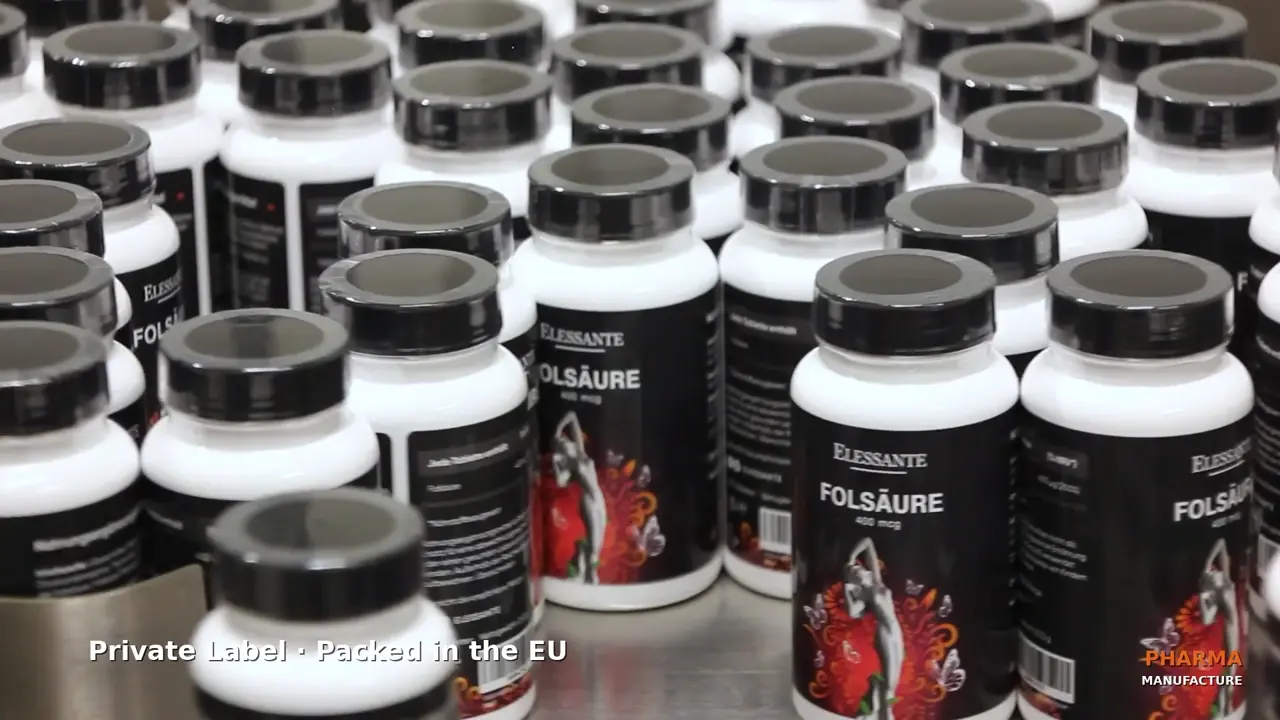
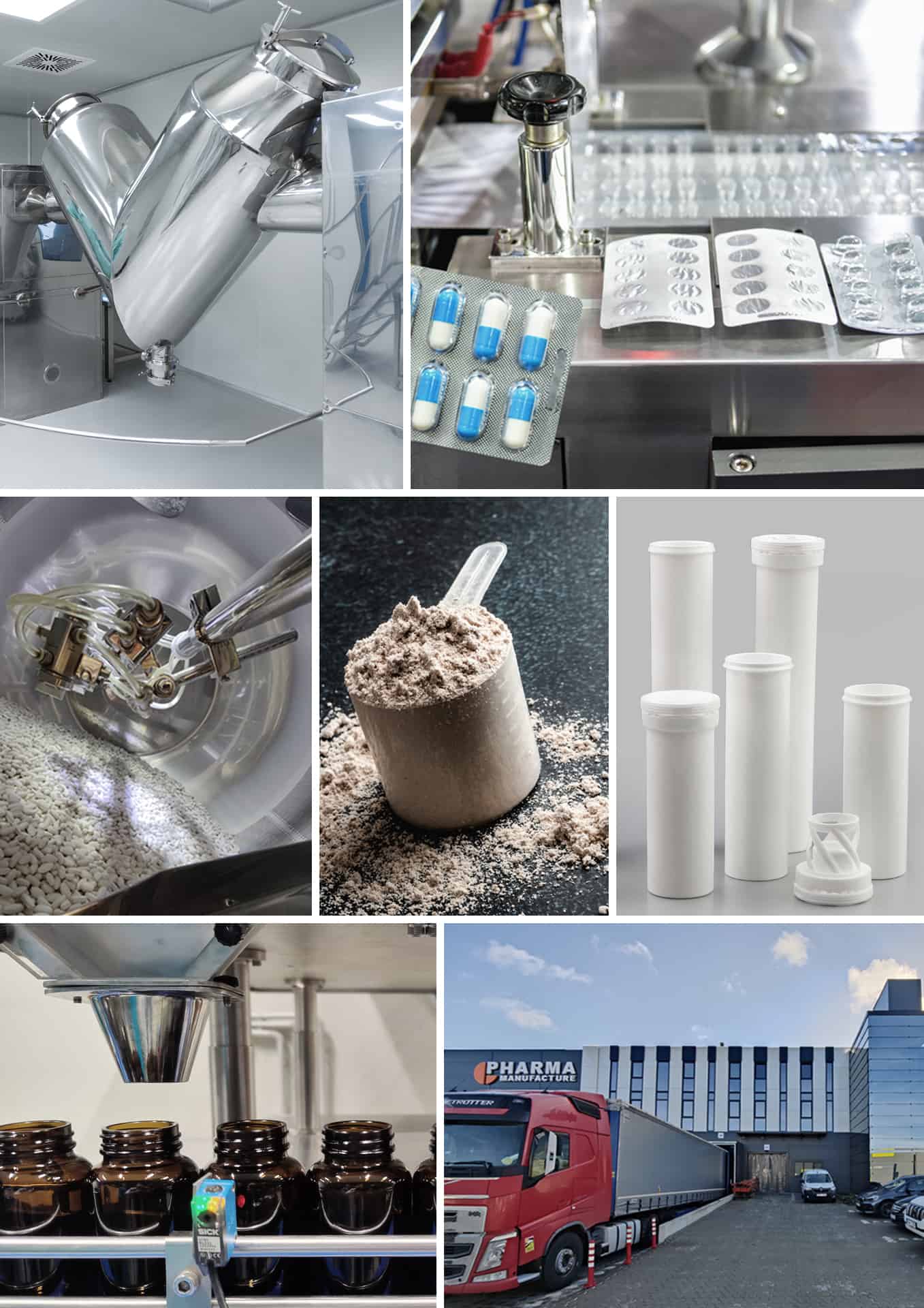
Pharma Manufacture is a contract food supplement manufacturer in Mārupe, Latvia, in the European Union. Tablets and capsules bottled on our line are counted on a Cremer CF 1220 rather than dosed by weight, and the bottle and jar formats we pack into are listed on the packing solutions page. Counting accuracy is not a minor spec on that machine — it is the difference between a bottle that matches its label and one that doesn’t. Here is what that one figure is actually worth.
Counting is the quietest place a supplement brand loses money. Put two tablets too many in a 90-count bottle and you’ve given away 2.2% of every unit you make. Put two too few and the label on the bottle no longer tells the truth, which is a different and more expensive kind of problem.
Neither failure announces itself. Nobody opens a bottle and counts. The overfill shows up months later as a margin that never matched the spreadsheet, and the underfill shows up as a complaint, a review, or a regulator’s letter. Both trace back to one machine you probably never asked about.
Key Takeaways
- Overfilling a 90-count bottle by two tablets gives away 2.2% of every unit produced.
- Net quantity is a mandatory particular on pre-packaged food labels under Regulation (EU) No 1169/2011, so underfilling is a labelling problem, not just a service failure.
- Ask a manufacturer what counts your bottles and what it does with broken tablets.
- Modern counters detect each unit optically and reject damaged product instead of bottling it.
Why does a counting error cost more than it looks?
Because it repeats on every single unit. A two-tablet overfill on a 90-count bottle is 2.2% of the contents, and that percentage doesn’t get better at volume, and the loss just gets bigger in absolute terms. On a 10,000-bottle run you’ve quietly produced and given away the equivalent of roughly 220 bottles’ worth of product.
Now run the arithmetic the other way. Underfilling by two means the number printed on your label is wrong on every unit in the batch. There’s no version of that which stays a small problem.
The uncomfortable part is that both errors come from the same place: a counting method that isn’t accurate enough, running unattended, thousands of times an hour.
What does the law actually require on the label?
Net quantity is not optional. Article 9 of Regulation (EU) No 1169/2011 lists the mandatory particulars that must appear on pre-packaged food, and net quantity is one of them, alongside the ingredient list, allergens, durability date and the name and address of the business responsible for the product in the EU.
For a supplement sold by count, that declaration is the number on the front of your bottle. Ninety capsules means ninety capsules. The same regulation requires that food information isn’t misleading, so a bottle that consistently contains fewer units than it claims is a compliance issue with your name on it, not your manufacturer’s.
That’s worth sitting with for a second. Your contract manufacturer runs the machine, but the business whose name appears on the label is the one placing the food on the market. The obligation follows the brand.
How is a supplement bottle actually counted?
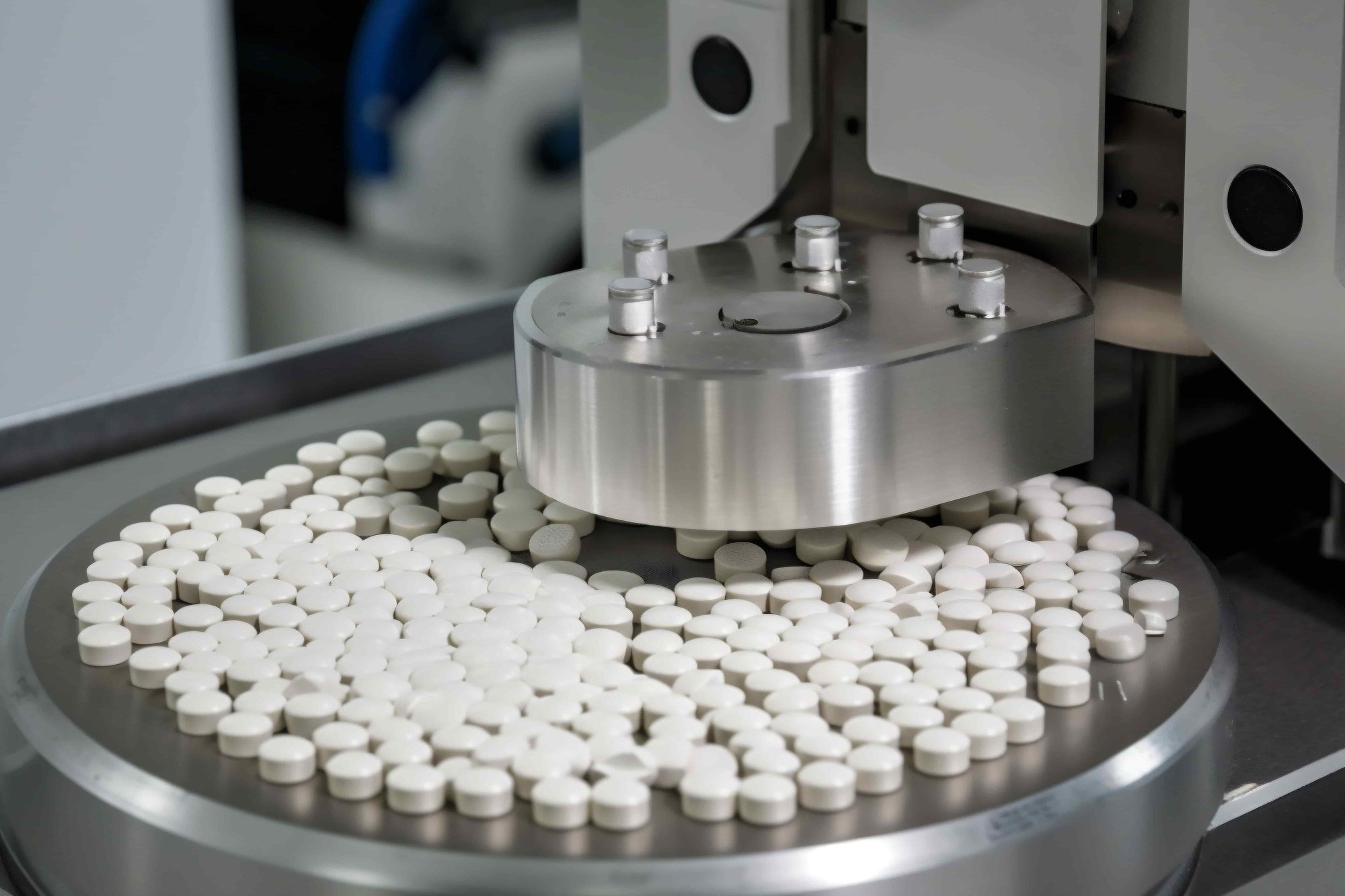
Not by weight, in the good version. Weight-based filling works fine for powder, but for tablets and capsules it’s an approximation: it assumes every unit weighs the same, and it can’t tell a whole tablet from a broken one.
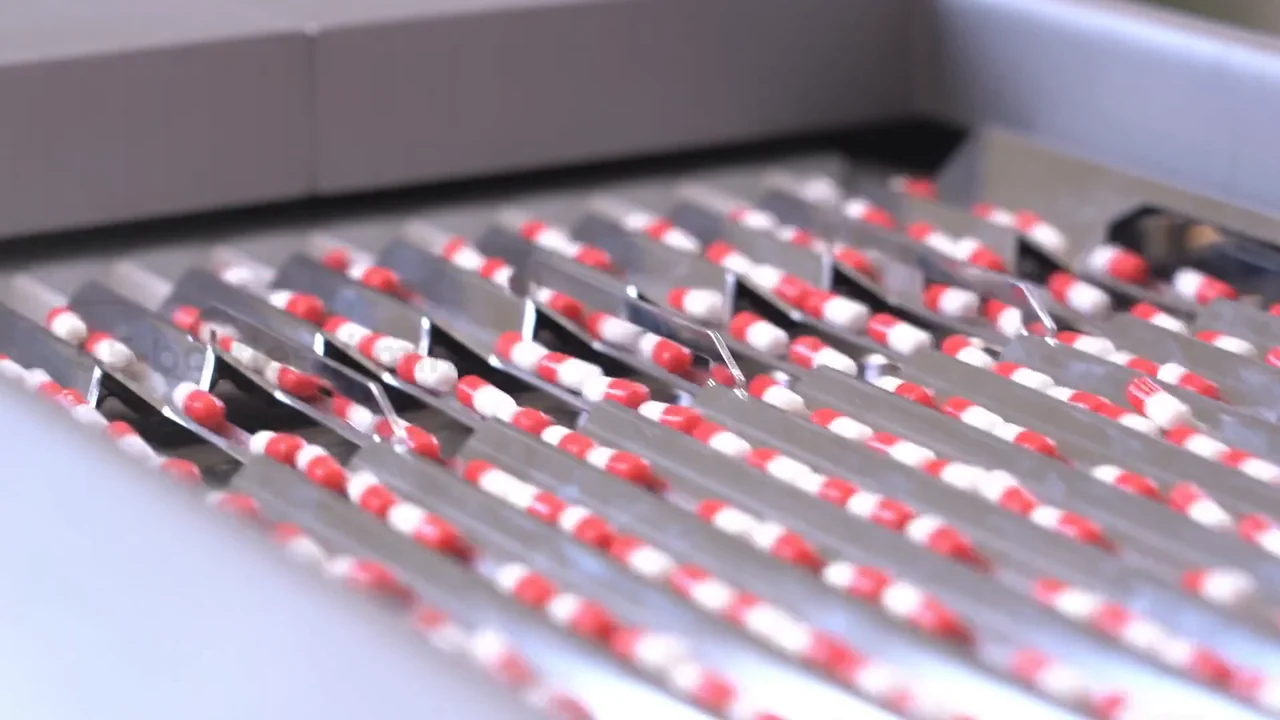
The alternative is optical counting. On a linear counter, product is spread into separate channels, passes a detection unit that registers each unit individually, and drops into the bottle underneath. Our own line uses a Cremer CF 1220, a 12-channel linear counter with infrared detection and three vibratory plates that spread the product evenly before it’s counted. Cremer states 100% counting accuracy for the system.
Speed matters here too, but less than people expect. The CF 1220 runs at 55 bottles per minute and counts up to 5,500 products per minute. What matters more is that the stated accuracy applies at that speed, because an inaccurate machine simply makes the same error faster.
What happens to a broken tablet?
This is the question that separates a good counter from an ordinary one. Tablets chip. Capsules occasionally deform. If the system only counts objects, a half tablet counts as one, and your customer opens a bottle with 88 whole tablets and two halves.
A counting system with shape detection identifies broken tablets and unusual shapes and rejects them rather than bottling them. That’s a small feature with a large effect on what the customer actually receives, and it’s worth asking about specifically. “Do you have a counter” and “does your counter reject broken product” are different questions with different answers.
If you’d like the full picture of what happens before that point, the equipment page lists every machine your product passes through, with the manufacturers’ published data.
Which bottle can you actually use?
Bottle choice is constrained by the machine, and it’s cheaper to learn that before you order 20,000 of them. A counter with an indexing conveyor has a format window: ours handles glass or plastic bottles from 40 to 200 mm in height and 20 to 110 mm in diameter.
Most standard supplement bottles sit comfortably inside that range, which is exactly why the exceptions hurt. An unusually tall bottle, or a very wide squat jar, is the kind of thing a designer picks for shelf presence and a production manager discovers is unrunnable. Send the drawing early. The packing solutions page covers the sizes we stock in millilitres, which is usually how brand owners think about it.
What should you ask your manufacturer?
Four questions, and none of them take long to answer if the machine is in the building.
What counts the bottles, and is it optical or weight-based? What’s the stated counting accuracy, and who states it? Does the system reject broken tablets, or does it bottle them? And which bottle dimensions can the line actually handle?
A manufacturer who answers all four in one reply is telling you they know their own line. Vague answers here are worth taking seriously, because unlike most production questions, this one costs you money on every unit whether or not anyone notices. Our full checklist of questions covers the nine worth asking before you commit.
Frequently asked questions
Is weight-based filling ever acceptable for tablets?
For powders it’s the norm. For tablets and capsules it’s an approximation that assumes uniform unit weight and can’t distinguish a broken tablet from a whole one. Optical counting removes both assumptions, which is why counting machines exist as a separate category.
How accurate can tablet counting realistically be?
Manufacturers of dedicated counting machines state very high accuracy for their systems; Cremer states 100% counting accuracy for the CF 1220. What matters when you’re comparing suppliers is whether they can name the machine and quote its stated accuracy, or whether the answer is just “it’s accurate”.
Does overfilling ever make commercial sense?
Deliberately, no. Some brands overfill slightly out of caution because they don’t trust their count, which is an expensive way to buy peace of mind. Accurate counting removes the reason for the padding, and the saving lands on every unit.
What if my bottle doesn’t fit the machine?
Then either it gets hand-filled, which changes your cost and your lead time, or you change the bottle. Both are much easier decisions before the packaging order goes in. Ask for the format range at the quote stage.
Who is responsible if the count is wrong?
The manufacturer runs the machine, but the business named on the label is the one placing the food on the market under Regulation (EU) No 1169/2011. That’s why it’s worth checking how your product is counted before the first batch, not after the first complaint.
Ask us what counts your bottles
Pharma Manufacture is a contract food supplement manufacturer in Mārupe, Latvia, in the European Union. We publish the numbers rather than describe them in adjectives. The counter, its stated accuracy, its reject function and the exact bottle sizes it takes are all on the equipment page, along with the other four machines your product would pass through.
If you’re planning a bottled product, tell us the count per bottle, the dose form and the bottle you have in mind, and we’ll confirm whether it runs on our line before you commit to packaging. Get in touch and we’ll usually reply within 24 hours.
Sources
Regulation (EU) No 1169/2011 on the provision of food information to consumers, Article 9 (mandatory particulars), retrieved 2026-07-21: https://eur-lex.europa.eu/legal-content/EN/TXT/?uri=CELEX:32011R1169
Cremer Speciaalmachines B.V., CF series product page (counting accuracy, channel count, output, bottle dimensions), retrieved 2026-07-21: https://www.cremer.com/p/cf-series/