South America · Food supplements from the EU · Mārupe, Latvia
Food supplements for South America: registration country by country
Brazil, Argentina, Chile, Colombia, Peru, Ecuador, Uruguay, Paraguay and Bolivia each have their own regulator and procedure; where a review time is published it runs from 15 to 60 working days, with fees such as USD 904.34 in Ecuador and S/ 2,756.70 in Peru. In every country a local company files; we manufacture in Latvia from 150 units and supply the documents.
Short answer
Is there one supplement registration for South America?
No. Each of the nine countries has its own regulator and procedure, from a notification in Brazil to a permit for every import consignment in Chile, five-year registrations in Uruguay and Bolivia and a five-year notification in Ecuador. In every country the applicant is a local company. Pharma Manufacture manufactures in Latvia from 150 units and supplies the documents that applicant files.
Brazil, Argentina, Chile, Uruguay and Paraguay regulate a supplement as a food. Peru and Bolivia handle it through their medicines authorities, DIGEMID and AGEMED, as a dietary product. The paperwork, the label wording and the permitted ingredients differ by country, so one EU product usually becomes several national versions of the same formula.
Nine countries
Supplement registration in nine countries: regulator and procedure
| Country | Regulator and procedure | Who files | Trade agreement with the EU |
|---|---|---|---|
| Brazil | Anvisa: notificação before sale, no registration (RDC 843/2024) | Manufacturer’s head office, representative or importer in Brazil | EU-Mercosur interim agreement; provisional application from 1 May 2026 announced by the Commission on 23 March 2026 |
| Argentina | SENASA (since Decree 697/2026; formerly ANMAT / INAL). RNPA registration per product, each lot with an import notice. ANMAT’s FAQ also describes, for products covered by the Código Alimentario from the EU and other Annex III countries, a sworn declaration under Decree 35/2025 with a certificate of free sale no older than one year, RNPA optional; whether it covers a supplement, the importer confirms with SENASA or its customs broker; details on the Argentina page | Importer; RNE number on the registration route | EU-Mercosur interim agreement; provisional application from 1 May 2026 announced by the Commission on 23 March 2026 |
| Chile | SEREMI de Salud: authorisation for each import consignment (partida de importación), no product registration | Chilean importer or customs agent | EU-Chile Interim Trade Agreement |
| Colombia | INVIMA: registro sanitario (Decreto 3249/2006) | Importer, with the written authorisation of the holder (titular) | EU-Colombia, Peru and Ecuador agreement, since 1 August 2013 |
| Peru | DIGEMID: registro sanitario as a producto dietético, procedure N° 104 of the 2026 TUPA | Peruvian laboratorio or droguería with a director técnico | EU-Colombia, Peru and Ecuador agreement, since 1 March 2013 |
| Ecuador | ARCSA: notificación sanitaria, 5 years, USD 904.34 for a foreign product (ARCSA page of 1 January 2026) | Person or company with an Ecuadorian RUC | Same agreement, since 1 January 2017 |
| Uruguay | MSP: registration, 5 years, 20 UR | Manufacturer or importer with an MSP habilitación | EU-Mercosur interim agreement; provisional application from 1 May 2026 announced by the Commission on 23 March 2026 |
| Paraguay | DINAVISA: sanitary registration for 5 years (Resolución 234/2024), each batch through customs | Paraguayan company, normally the importer, with an opening authorisation | EU-Mercosur ratified; start date not yet confirmed by the Commission |
| Bolivia | AGEMED: registro sanitario as a suplemento dietético, 5 years (AGEMED manual of 2021) | Bolivian importer or laboratory with a Regente Farmacéutico | None found; not a party to the EU-Colombia, Peru and Ecuador agreement |
Colombia has applied the EU agreement with Colombia, Peru and Ecuador since 1 August 2013; its supplement procedure is described on the Colombia page.
Duty preferences under these agreements depend on the tariff code of each product. No official rate for supplements was found for any of the nine countries, so the importer checks the code in the European Commission’s Access2Markets tool before the landed price is set.
Time and fees
Review time and regulator’s fee by country
| Country | Review time | Regulator’s fee | Valid for |
|---|---|---|---|
| Brazil | No prior review: the notification is automatic, and the product may be sold once the protocol is issued | TFVS, set by company size; amount not found | Until the first confirmation window, 1 October to 31 December 2029 |
| Argentina | Registration route: RNE 30 and RNPA 30 working days in SENASA’s tariff table; the Decree 35/2025 declaration route, which per ANMAT needs no RNPA, is to be confirmed for supplements | RNE ARS 424,950; RNPA ARS 303,450 per product | Not stated in the tariff table |
| Chile | Not stated on ChileAtiende | From $40,400 to $164,700 depending on the kilograms imported (pesos, by context) | One consignment |
| Colombia | 15 working days (art. 12, Decreto 3249/2006) | INVIMA tariff; 2026 amount not retrieved | 10 years in the original decree text |
| Peru | 30 working days; no answer counts as a refusal | S/ 2,756.70 | 5 years |
| Ecuador | Not published by ARCSA; 15 working days to answer observations | USD 904.34 | 5 years |
| Uruguay | Not stated on the MSP page | 20 UR | 5 years |
| Paraguay | 15 working days for vitamins and minerals only, otherwise 60 | 50 jornales for an imported product, paid before filing (Resolución 234, art. 41) | 5 years |
| Bolivia | 30 working days | Set by RM 0265/2018; no amounts in the AGEMED manual | 5 years |
A published review time is the regulator’s own term, not a guarantee, and the clock usually stops while the regulator waits for documents. All terms and fees were checked on 30 October 2026 against the sources listed below.
Steps
Steps to your first shipment, country by country
- Choose the local applicant: an importer, laboratory or droguería registered with the national authority (local company; before anything is filed).
- Choose a ready-made formula or send your own; Pharma Manufacture returns formula options, a price and the factory documents on that country’s list (you and Pharma Manufacture; first reply within 24 hours).
- Where the file needs a certificate of free sale, in Uruguay, Ecuador, Paraguay, Peru and Bolivia, and in Chile on request, start it early: it is issued in Latvia and then apostilled (issued in Latvia).
- The applicant files and pays the regulator (local company; terms and fees in the table above).
- Pharma Manufacture makes the batch alongside the file (from 4 weeks, about 8 weeks for a typical run); in Bolivia two batches come first, because AGEMED asks for the results of two.
- Each shipment clears with the batch documents; in Chile every consignment needs its own SEREMI authorisation (importer and broker).
What you pay. The regulator’s fee and the import duty are paid in the country of sale by the local company; the table above gives every fee the regulators publish. In Latvia a certificate of free sale costs EUR 50 + VAT or EUR 100 + VAT at LTRK and an apostille EUR 30 at a sworn notary. The Pharma Manufacture quote covers the product under your brand, made to the agreed formula and volume; help with the label artwork is part of the service, and every batch leaves with a Certificate of Analysis. Prices are sent on request.
Terminology
Dietario, dietético or alimenticio: the legal name by country
Each country uses its own term on the label and in the file, so the national word is taken from the table below rather than carried over from a neighbouring market.
| Country | Legal term | Rule or regulator |
|---|---|---|
| Brazil | suplemento alimentar | RDC 243/2018, Anvisa |
| Argentina, Uruguay, Paraguay | suplemento dietario | CAA art. 1381; MSP; DINAVISA |
| Colombia | suplemento dietario | Decreto 3249/2006, INVIMA |
| Peru | producto dietético | DIGEMID, TUPA 2026, procedure N° 104 |
| Ecuador | suplemento alimenticio | ARCSA |
| Bolivia | suplemento dietético | AGEMED |
From the factory
Registration requirements: the documents from the factory
The lists differ by country, but the same papers come back again and again:
- Certificate of free sale from the country of origin, apostilled or consularised: required in Uruguay, Ecuador, Paraguay and Bolivia, in Peru as a Certificado de Libre Comercialización, and Chile’s SEREMI may request one. Colombia asks for a certificate from the health authority of the exporting country.
- GMP certificate: Peru asks for the manufacturer’s BPM certificate or its equivalent; Bolivia also accepts a quality management system certificate, without apostille.
- Certificate of Analysis: Paraguay requires it for every batch at import; Bolivia wants results for two batches of a new product.
- Formula with quantities for the file in Uruguay, Paraguay, Peru and Bolivia.
- Shelf life evidence: stability data in Brazil; a stability study or the manufacturer’s shelf-life justification in Peru; Bolivia accepts 24 months on the manufacturer’s declaration.
- Label project built to the national rules: in Spanish for Peru, Ecuador and Bolivia, where the official documents say so.
Pharma Manufacture releases every batch with a Certificate of Analysis and holds GMP-FS-01, HACCP-01 and ISO 22000:2018 MSC-22-1384, scope tablets, capsules and powders. Whether a regulator accepts GMP-FS-01 as its BPM equivalent is that regulator’s decision, made in the applicant’s file.
Latvia has been a party to the Hague Apostille Convention since 30 January 1996, and all nine countries are parties too, so a Latvian public document can be apostilled for any of them. Which certificate a regulator accepts is that regulator’s decision.
In Latvia, certificates of free sale are issued to exporters by the Latvian Chamber of Commerce and Industry (LTRK), in Latvian and English, on a written application; LTRK lists the fee as EUR 50 + VAT for members and EUR 100 + VAT for non-members. An apostille on a Latvian public document is issued by any sworn notary for EUR 30, or EUR 50 within two hours, and only as an e-apostille.
Shipping
How to import food supplements into South America
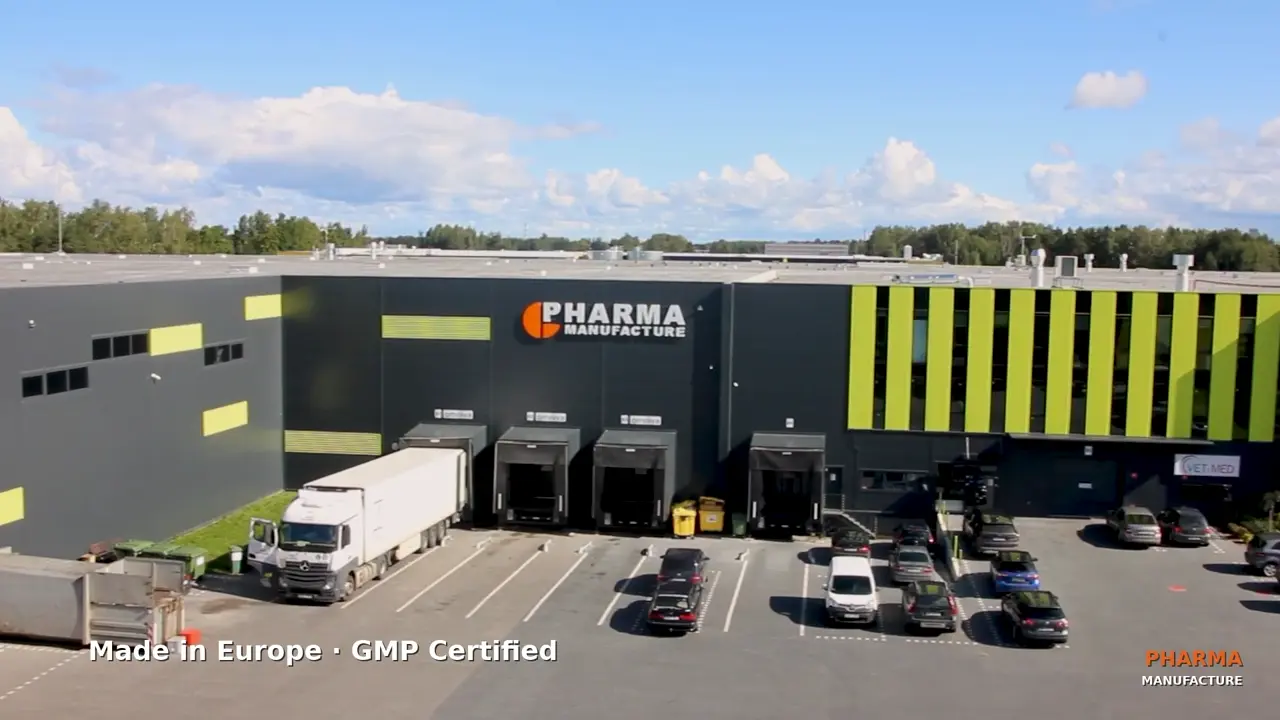
The factory in Mārupe is 2 minutes from Riga Airport and close to the Free Port of Riga, so both air and sea freight start next to the plant; the buyer’s forwarder chooses the mode and the port of arrival. Paraguay and Bolivia have no coast, so sea cargo continues overland from a port in a neighbouring country. In all nine countries the local importer or registration holder clears the goods, which is why FCA (handover to the buyer’s forwarder in Latvia) or DAP (delivery to the agreed place, duties on the buyer) fit, and delivered duty paid terms leave the import step with the wrong party.
Production runs from 4 weeks, about 8 weeks for a typical run from confirmed order and specification to despatch.
Frequently asked questions
Common questions about supplements for South America
Is one registration valid across South America?
No. Each country has its own regulator, from Anvisa in Brazil to AGEMED in Bolivia, and a product approved in one is not approved in the next. Even within Mercosur, the Argentine exemption for products from member states does not cover a product made in the EU.
How do you register a food supplement in South America?
Country by country, always through a local company that files the dossier with its national regulator, from Anvisa in Brazil to AGEMED in Bolivia, using the factory documents Pharma Manufacture supplies. Brazil and Ecuador use a notification, Chile an authorisation for each import consignment and the other countries a product registration.
Who files a supplement registration in South America?
A local company in every country: an importer, a laboratory, a droguería or another holder registered with the national authority. That company holds the registration or notification; Pharma Manufacture, the manufacturer in Latvia, supplies it with the factory documents for the file.
Where in South America is no product registration needed?
In Chile, Brazil and Ecuador, with conditions. Chile’s SEREMI de Salud authorises each import consignment for the importer’s warehouse instead of registering the product. Brazil and Ecuador use a notification instead: automatic in Brazil, filed with Anvisa before sale, and reviewed by ARCSA in Ecuador, with up to two corrections allowed.
Which documents does Pharma Manufacture supply for South America?
A Certificate of Analysis for every batch, the formula with quantities, copies of the GMP-FS-01, HACCP-01 and ISO 22000 certificates, and help with the label artwork as part of the service. A sample of each batch is kept for at least three years.
What are the requirements to import food supplements?
Three requirements repeat in every country: a local importer who handles the product with its health authority, the product registered, notified or authorised in that country, and the factory documents. Pharma Manufacture supplies a Certificate of Analysis per batch, the formula with quantities and copies of GMP-FS-01, HACCP-01 and ISO 22000; Uruguay, Ecuador, Paraguay, Peru and Bolivia also ask for an apostilled or legalised certificate of free sale, which in Latvia LTRK issues.
What is maquila in the supplement trade?
Maquila is contract manufacturing of a supplement under the client’s brand. Pharma Manufacture manufactures in Latvia under your brand, from one of its 350 ready formulas or from your own formula. In Ecuador the word appears in the ARCSA file; in Peru the DIGEMID form speaks of fabricación por encargo.
What is the difference between private label and white label?
With white label, the buyer picks a ready formula from the manufacturer and sells it under its own brand; with private label, the product carries the buyer’s brand and can also start from a formula developed for that buyer. Pharma Manufacture works both ways: 350 ready formulas in the catalogue or a custom formula, with a higher minimum order.
Which South American countries have a trade agreement with the EU?
All except Bolivia, for which none was found. Peru and Colombia have applied the EU agreement since 2013 and Ecuador since 2017. Chile has an interim trade agreement with the EU. For Argentina, Brazil and Uruguay the Commission announced on 23 March 2026 that the EU-Mercosur interim agreement would apply provisionally from 1 May 2026; Paraguay’s start date is unconfirmed.
Can an EU label be used unchanged in South America?
No. Brazil requires “SUPLEMENTO ALIMENTAR” in bold capitals and accepts claims only from its own list, so a claim authorised in the EU under Regulation (EU) No 432/2012 is rewritten from the Brazilian list. Argentina prescribes mandatory warnings, and Bolivia accepts a multilingual label only if Spanish is one of the languages.
What is the minimum order for a South American launch?
Pharma Manufacture starts at 150 units for a ready-made formula in tablets or capsules, with 350 ready-made formulas in the catalogue. Powder sachets start at 80,000, set by the laminate print run, and a formula developed from scratch has a higher minimum. Registration is per product, so fewer SKUs means fewer files.
One formula, the documents for each country
Tell us which countries you plan to enter, the product and the form. We reply with formula options, a price for your volume and the documents we supply for each national file.
Contact Pharma Manufacture about supplements for South America.
REPLY WITHIN 24H · CONTACT US NOW: