What to Prepare Before You Request a Private Label Price List
Pharma Manufacture is a contract manufacturer of food supplements in Mārupe, Latvia, in the European Union. The fastest way to a first private-label product isn’t a custom formulation built from a blank page — it’s picking a starting point from our ready-made formula catalogue and asking for a price list against it. A price list here means something specific: a number against a formula and a form that already exist and are already in production, not a fully scoped quote for a product nobody has made yet. Send the right five details up front — form, formula or category, packaging, label status and a rough quantity — and what comes back is useful on day one, instead of a first draft that gets revised twice.
Key Takeaways
- A price list is priced against something that already exists in our catalogue — a stock formula in a form we already run. A custom product that doesn’t exist yet gets a different, longer conversation instead.
- Naming the formula or category and the form (tablet, capsule, softgel, effervescent tablet or powder) is what turns a general request into a priceable one.
- Packaging preference and label status change what we can quote, so send them with the product, not in a follow-up message.
- A quantity range and your target market round out the picture — the range keeps the number honest, the market affects labelling and registration support.
- Send those five things and you’ll get a price list and the exact MOQ for your project back, usually within 24 hours.
What does “price list” actually mean at Pharma Manufacture?
A price list, in the sense this guide uses it, is an answer against something concrete: a formula from our catalogue, in a form we already tool up for — tablets, capsules or softgels, effervescent tablets, or sports-nutrition powders — priced with your packaging and a first-order range attached. It is not the same thing as a project quote for a formula that doesn’t exist yet. Developing and validating a new recipe is a longer, separate conversation with our in-house R&D team of pharmacists, biochemists and nutritionists, with its own brief and its own timeline — worth having when you need it, but a different request from the one this guide is about.
If what you actually want is to understand how per-unit cost is built up rather than get a number for one specific order, our guide to private label costs in the EU is the better starting point.
Our own process makes the distinction visible. Request a price list, choose your packing, sign off the label, and the order moves to manufacturing and packing before it ships to your warehouse. Every step after the first one depends on what you told us in it, which is exactly why the price-list request is worth getting right the first time, rather than sending a name and a country and waiting to see what comes back.
Which formula or form should you name?
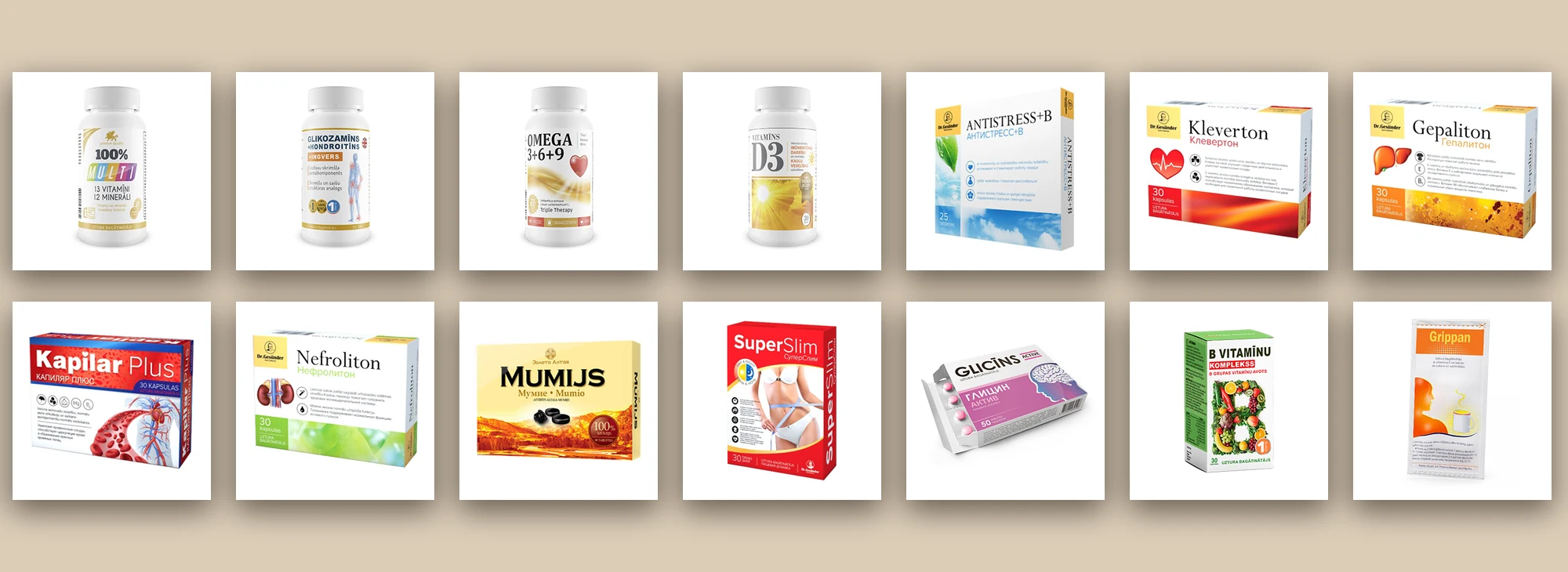
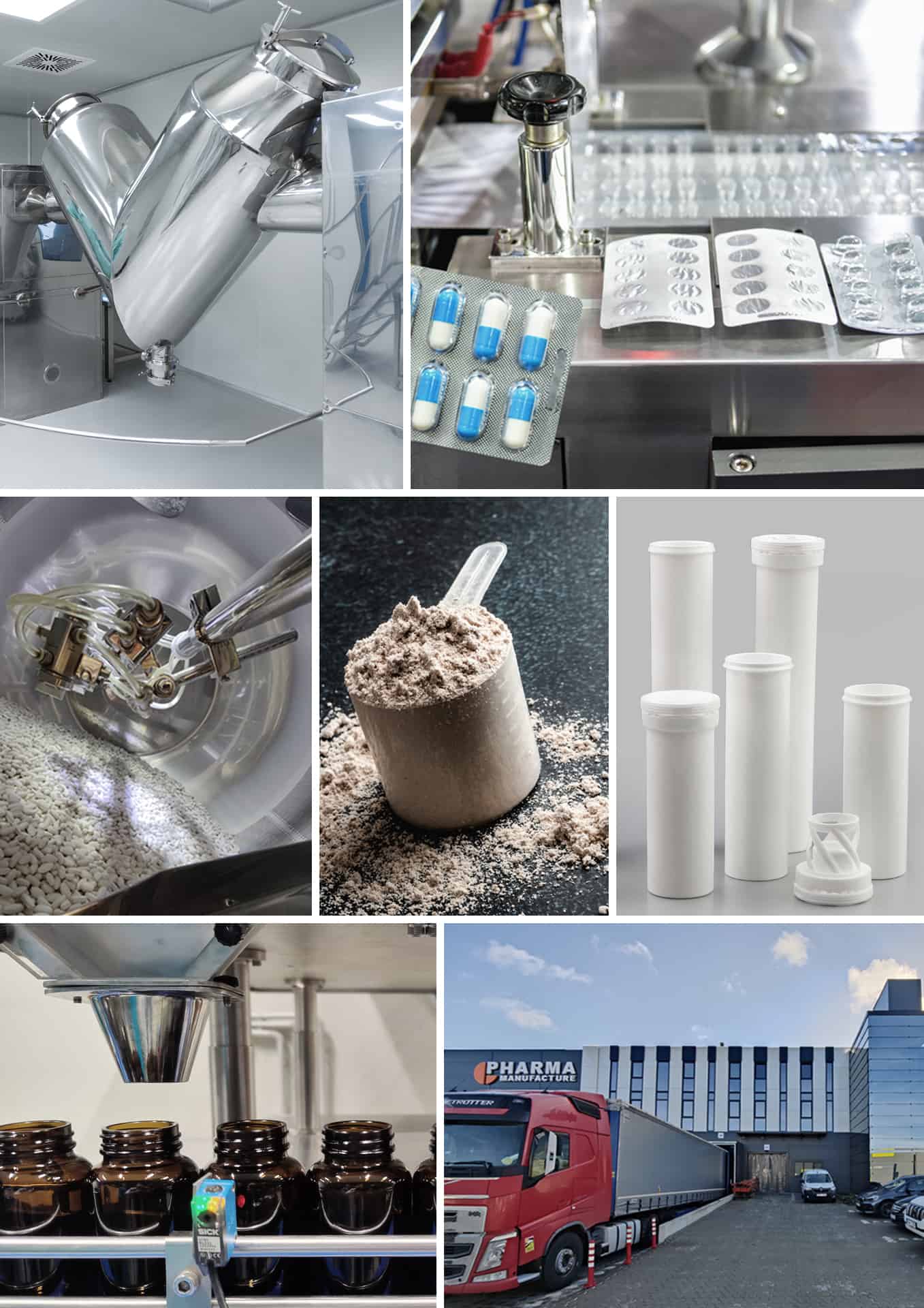
Pharma Manufacture’s ready-made range runs to more than 140 formulas already in production — tablets, capsules and softgels such as multi vitamin and mineral tablets, vitamin C tablets, magnesium and B6 tablets, calcium and D3 tablets, omega-3 fish oil softgel capsules, probiotic softgel capsules, creatine monohydrate tablets, glucosamine and chondroitin tablets, coenzyme Q10 capsules and collagen capsules, alongside effervescent tablets packed in tubes and sports-nutrition powders — the same three categories listed on the home page and grouped on our products page. Naming the actual formula, or at least the category it falls in, does two things at once: it tells us which of the three catalogue sections to price from, and it tells us which form — tablet, hard capsule, softgel, effervescent tablet or powder — the rest of your request has to match.
If you haven’t settled on a formula yet, that’s a different, earlier step. Our guide to choosing a supplement form and formula walks through how dose, chemistry and audience narrow the field before you ever request a price list. This guide assumes you’re close enough to name a category; the catalogue is there to browse beforehand, not to guess at from the outside.
What packaging preference should you send with it?
Packaging isn’t an afterthought to the formula — it’s priced as its own component, with its own range of formats. PET bottles come in seven sizes from 100 to 500 ml and seven colours; amber glass bottles run 60 to 500 ml for oils and liquids; blisters are supplied with a printed carton; effervescent tablets are packed in tubes with a moisture-absorbing cap; powders go into round or cylinder jars, with an optional dosing scoop, or into doypacks in white, silver, transparent or eco finishes. Every material carries an EU Certificate of Conformity, regardless of which one you pick.
Name the format even if you’re flexible on the details. A bottle, a tube and a doypack run on different packing lines and take differently shaped labels, so “whatever’s standard” is a harder brief to price than a named format.
Is your label ready, or do you need help with it?
Tell us where your label stands, because the two paths genuinely diverge. If you already have artwork, it needs to be sized to the packaging format you’ve chosen — a bottle label, a tube wrap and a jar label are different shapes and different print methods, so artwork built for one doesn’t drop onto another. If you don’t have a label yet, say so; label design help is part of the service, not a separate add-on you have to request by name, and the team can also help with the registration steps a new product needs in your market.
Either way, this is a one-line answer in your first message — “label ready” or “need design help” — and it saves a round trip later.
What quantity range and target market should you mention?
You don’t need a final order quantity to request a price list — a range is enough to check against the production and packaging minimums for your form. What matters is giving a range at all: a request with no quantity attached can’t be priced past “it depends,” because the minimum itself is set per form and per packaging component, not as one company-wide figure.
Your target market matters for a different reason. Registration support is part of the service when a new market requires it, and delivery runs EU-wide as standard, but labelling and registration requirements aren’t identical from one country to the next. Naming the market lets us flag what your label will need before it’s finalised, not after.
The five things, side by side
| Have ready | What to send | Why it matters |
|---|---|---|
| Formula or category | A named formula from the catalogue, or at least tablet / capsule / softgel / effervescent tablet / powder | Tells us which catalogue section and which production line to price from |
| Packaging preference | Bottle, blister, tube, jar or doypack | Packaging is priced separately from the formula and sets the label shape |
| Label status | “Ready” or “need design help” | Artwork has to match the packaging format — naming this first avoids redoing it |
| Quantity range | A rough range, not a final number | Lets us check it against the minimum for your specific form and packaging |
| Target market | Country or region, even approximate | Registration and labelling requirements differ across the markets we deliver to |
Send those five and the reply comes back within 24 hours: a price list against the formula and form you named, priced with your packaging, and the exact minimum order quantity for that specific combination — not a general figure pulled from a brochure.
What mistakes delay a price list?
None of the following are unusual, and none of them are really mistakes so much as a request that arrives a step earlier than it needs to.
Asking without a form in mind. The catalogue is organised by form for a reason — tablets, capsules and softgels sit in one pricing structure, effervescent tablets and powders in others. A request for “a supplement” rather than “a tablet” or “a softgel” has to go back and ask which section to price from before anything else can happen.
Asking for one minimum across the whole catalogue. The minimum is set per form and per packaging component, not once for the whole product range, so a question like “what’s your MOQ” with no product attached can only be answered in general terms. Naming the form first gets a real number instead of a range.
Sending a label before packaging is chosen. Artwork is built to fit a shape — a bottle, a tube, a jar — and that shape is decided before the label design step, not after. Finished artwork sent ahead of a packaging decision usually needs revisiting once the format is confirmed, which is the one part of this that’s genuinely easier to do in order.
Frequently asked questions
Do I need a finished formula picked out before I request a price list?
No — a category is enough to start. If you know you want a tablet, a softgel or a powder but haven’t picked the exact formula, browsing the catalogue or working through how to choose a form and formula first will get you to a specific enough answer faster than guessing inside the request itself.
What’s the difference between a price list and a full project quote?
A price list is priced against a formula and a form that already exist in production, which is why it’s fast — nothing has to be developed. A custom formula that doesn’t exist yet needs a project quote instead, and that starts with a brief for our R&D team rather than a catalogue pick. That’s a separate conversation from the one this guide covers.
Can I request one price list for more than one product?
Yes, but each form is priced separately, even inside the same message. A tablet and a powder run on different lines with different packaging, so naming both is fine — expect two line items back, not one blended number.
Do I need my label finished before I ask for a price list?
No. Tell us whether you have artwork ready or need design help, and either answer moves the request forward. What actually slows things down is artwork built before the packaging format is confirmed, not the absence of artwork.
How long until I hear back?
Within 24 hours, with a price list and the exact minimum order quantity for what you described.
What if I haven’t decided on a target market yet?
Give your best current guess. It’s enough to flag whether registration support is likely to matter, and you can narrow it down before the label is finalised — it doesn’t have to be locked in at the price-list stage.
Ready to send us your five details?
Pharma Manufacture is a contract food supplement manufacturer in Mārupe, Latvia, in the European Union, certified to GMP, ISO 22000 and HACCP and working from a catalogue of more than 140 ready-made formulas as well as custom development. Name your form or formula, your packaging preference, where your label stands, a rough quantity and your target market, and Request price list — we reply within 24 hours with a price list and the exact MOQ for your project.
Sources
Pharma Manufacture, our products — ready-made and custom formula catalogue by category: https://pharmamanufacture.eu/our-products/ (reviewed 2026-09-04)
Pharma Manufacture, tablets, capsules and softgels — more than 140 ready-made formulas and category names: https://pharmamanufacture.eu/food-supplement-tablets-and-capsules/ (reviewed 2026-09-04)
Pharma Manufacture, packing solutions — bottle, jar, tube and doypack formats: https://pharmamanufacture.eu/food-supplement-packing-solutions/ (reviewed 2026-09-04)
Pharma Manufacture, home page — product forms and private-labeling service scope: https://pharmamanufacture.eu/ (reviewed 2026-09-04)
Pharma Manufacture, contacts — what to send when requesting a quote, reply within 24 hours: https://pharmamanufacture.eu/contacts-2/ (reviewed 2026-09-04)