
Stock Formula or Custom? How to Choose Your Supplement Form and Formula
Pharma Manufacture is a contract food supplement manufacturer in Mārupe, Latvia, in the European Union. We produce tablets, capsules, softgels, effervescent tablets and sports-nutrition powders as both ready-made and custom formulas, which is the exact choice this guide walks through. Our tablets, capsules and softgels page shows what a stock formula in each form looks like, and our product range covers all three forms side by side.
Pick the form your active ingredient and dose actually allow, then start with a stock formula unless you have a real reason not to. Custom gives you control; stock gets you to market faster and cheaper. Most first products should be simpler than the founder wants them to be.
That last point is the one I repeat most often. People arrive with a spreadsheet of fourteen ingredients and leave with a clean formula of five. Let’s walk through how those decisions get made from a formulator’s chair, so you can make yours before you ever send an inquiry.
Start with the form, not the ingredients
The form isn’t a branding choice. It’s a constraint. Your active ingredient, its dose, how it tastes, and how stable it is will rule some forms in and others out before you get to pick the one you like.
A simple example. If your dose is 2 grams of a powder, you are not fitting that into one capsule. A standard hard capsule holds a few hundred milligrams of most powders. You’d need five or six capsules per serving, which nobody wants to swallow. That ingredient wants to be a powder or an effervescent tablet. The dose decided the form, not you.
So before anything else, get three numbers and one fact straight: the active, the daily dose, how it tastes, and whether it’s sensitive to moisture or oxygen. Those four things eliminate most of your options for you. What’s left is where you actually have a choice.
The five forms, and what each is genuinely good for
We make five forms, and each one earns its place for different reasons. Below is the honest version of what each suits, including the parts that don’t make it into glossy brochures.
Tablets
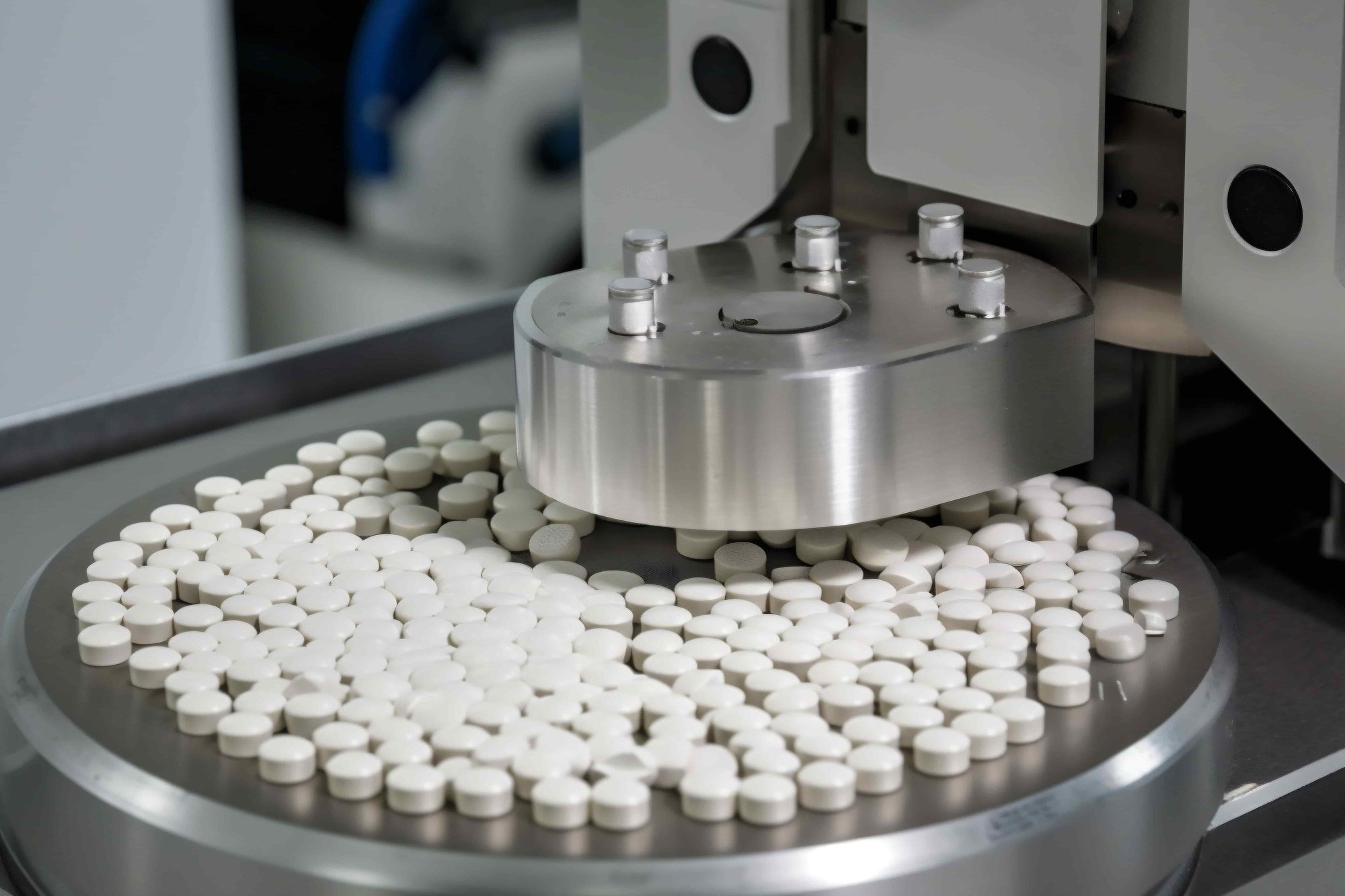
Tablets are the workhorse. They’re dense, cheap per unit at volume, stable, and they let you pack a fairly high dose into a small footprint. If you’re cost-sensitive and your ingredient compresses well, tablets are usually the rational answer.
The tradeoffs are real, though. A big tablet is harder to swallow, and some people just don’t like the feel of them. You can coat a tablet to make it slip down more easily and to mask taste, but coating adds a step and a little cost. Tablets also aren’t ideal for oils or anything that won’t compress into a stable solid.
Hard capsules
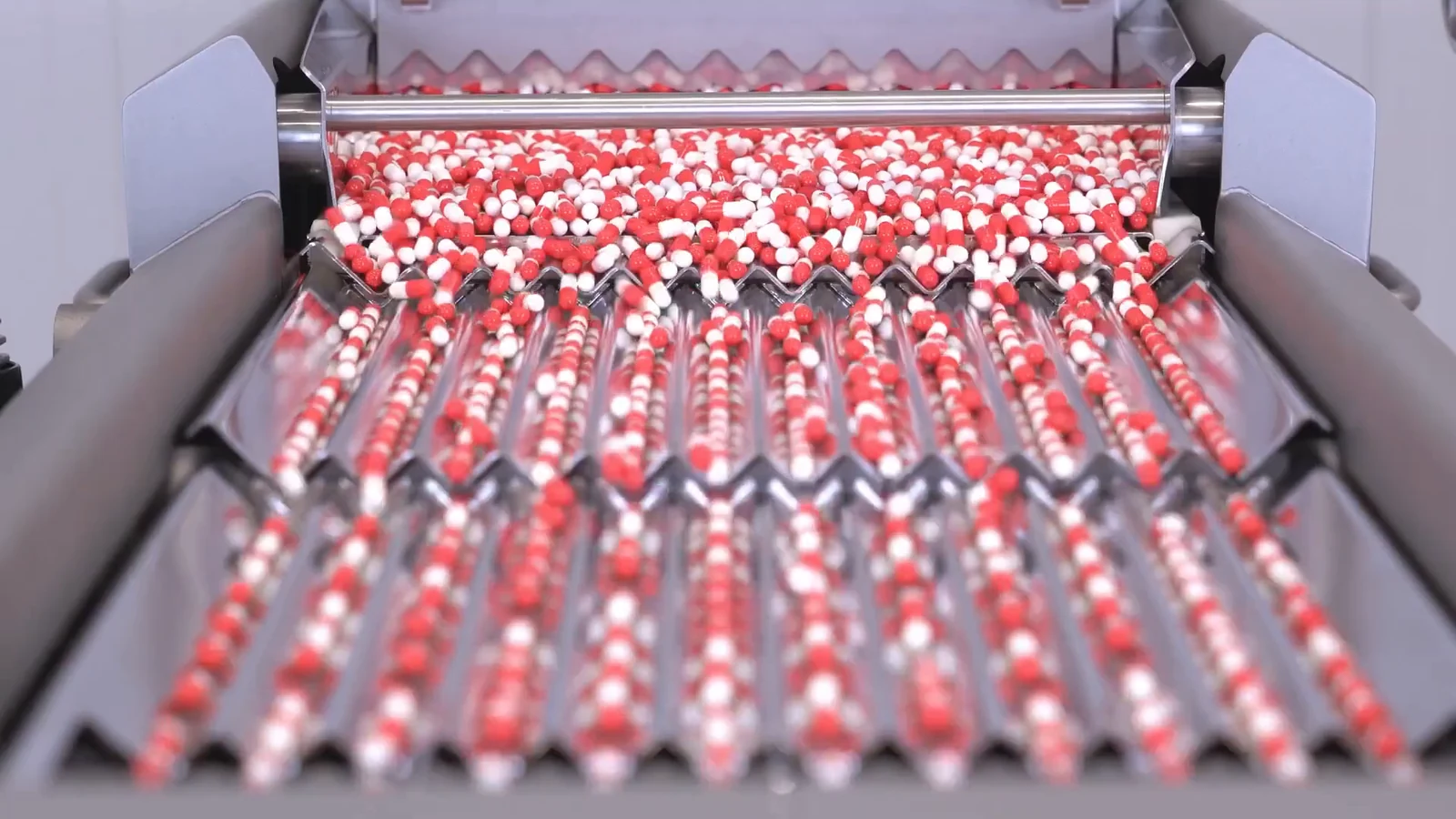
Hard capsules are the flexible, fast option. They suit powders, granules, and ingredient blends that you’d rather not compress. They’re easy to swallow at small sizes, they look clean, and they’re forgiving when you’re still tweaking a blend, because you’re filling a shell rather than engineering a compression.
We offer both gelatin and vegan HPMC shells. That single choice matters more than founders expect. If your audience is plant-based or you’re selling into markets where vegan positioning carries weight, HPMC keeps you honest on the label. Gelatin is the traditional, lower-cost option. Same capsule, different shell, real difference to your buyer.
Softgels
Softgels are built for oils and fat-soluble ingredients. If your active is an oil, or it dissolves in oil rather than water, a softgel holds it neatly, seals out air, and goes down smoothly. They look premium, and they handle ingredients that would be miserable as a dry powder.
The catch is that softgels are a more specialised process, so they’re generally a more considered choice than a basic capsule. They’re the right call when the ingredient demands it, less so when you’re chasing the cheapest possible unit. Match the form to the chemistry and a softgel is often the only sensible home for an oil.
Effervescent tablets
Effervescent tablets are the form people enjoy taking. They drop into water, fizz, and turn a supplement into a drink. That makes them a strong fit for higher doses that would be unpleasant to swallow dry, and for actives that taste better diluted and flavoured.
They’re moisture-sensitive by nature, which is why they ship in tubes with a desiccant cap rather than loose in a bottle. That packaging isn’t optional, it’s part of the format. Effervescents feel modern and they’re a genuine point of difference on a shelf, but they ask more of your formulation and your packing than a plain tablet does.
Sports-nutrition powders
Powders win when the dose is large. Protein, creatine at higher servings, amino blends, pre-workout style products, none of those fit into a pill in any realistic count. A scoop in a shaker is the only practical delivery for grams-per-serving doses.
Powders also give you the most room to play with flavour and texture, which is half the product in sports nutrition. The flip side is that taste and mixability become make-or-break, and packaging shifts to jars or doypacks. If you’re building in this category, our sports-nutrition private-label range is worth a look for how the format and packing fit together.
Matching the active to the format
Once you know your active and dose, the form often picks itself, and fighting that is how products go wrong. The rule of thumb I use: dose size sets the form, ingredient chemistry confirms it, and audience preference breaks any remaining tie.
Dose first. Milligrams fit a capsule or a tablet. Grams want a powder or an effervescent. There’s no negotiating with volume; the ingredient takes up the space it takes up.
Chemistry second. Oils go in softgels. Moisture-sensitive actives need protective packing whatever the form. Bad-tasting actives either hide inside a coated tablet or a capsule, or get flavoured into a powder or effervescent where the taste is part of the experience.
Audience third. Plant-based buyers push you toward HPMC capsules or tablets. People who hate swallowing pills lean toward effervescents and powders. A premium positioning might justify a softgel’s look and feel. None of these override the first two rules, but they’re how you choose between options that are all technically fine.
Stock formula or custom: the honest tradeoff
A stock (ready-made) formula is one that already exists, tested and production-ready, that you put your label on. A custom formula is one our R&D team develops to your spec. The decision usually comes down to four things: cost, speed, minimum order, and control.
Stock wins on cost, speed, and minimum order quantity. The recipe is proven, the work is done, and you skip development time entirely. You’re closer to a launch, with less money tied up before you’ve sold a single unit. For a first product, that’s often exactly what you want, and we cover the money side in detail in our guide to private-label supplement costs.
Custom wins on control and differentiation. You choose every ingredient, every dose, the exact form. If your whole pitch is a formula nobody else has, stock can’t deliver that. The trade is time, development cost, and a higher minimum order, because a bespoke recipe isn’t worth setting up for a tiny run.
My genuinely unglamorous advice: most founders launching their first line should start with a well-chosen stock formula, or a stock base with light tweaks, and save full custom for product two once they have sales data and a clearer read on what their audience actually buys. Custom is the right answer far less often than people assume at the start. The exception is when your differentiation is the formula, in which case custom isn’t a luxury, it’s the point.
What an in-house R&D team actually does for you
Beyond mixing ingredients, an R&D team keeps your product launchable. Ours brings together pharmacists, biochemists, dieticians, and nutritionists, and most of their value shows up in the unglamorous parts: stability, dosing, sourcing, and whether your idea survives contact with EU rules.
In practice, they tell you when your dose won’t fit the form you wanted, swap an ingredient that won’t stay stable on a shelf, and flag a claim you legally can’t make before it reaches a label. They also handle the parts founders underestimate: label design help, EU registration support, and getting the formula production-ready rather than just theoretically nice.
That last piece is where good R&D quietly earns its keep. A formula that works in a beaker but separates in a bottle, or that’s beautiful but unsellable because of how it’s labelled, isn’t a finished product. The team’s job is to catch that before it costs you a production run. You can see the forms and packaging this applies to across our product range.
The compliance part you can’t skip
Before you write a word of marketing, understand this: in the EU you can describe what a supplement is and how it’s taken, but you cannot claim it treats, cures, or prevents anything. Disease claims on a food supplement aren’t allowed, full stop. The science of your product and the language on your label are two separate problems.
Two regulations set the boundaries you’ll live inside. Regulation (EU) No 1169/2011 governs food information and labelling, the mandatory details that have to appear and how. Regulation (EC) No 1924/2006 covers nutrition and health claims, and the key rule is simple to state: only authorised claims are permitted. If a specific health claim hasn’t been approved for your ingredient, you can’t put it on the pack, however true you believe it to be.
This catches a lot of first-time founders, because the claims they most want to make are exactly the ones they can’t. The practical move is to plan your messaging around what’s permitted from the start, ideally with R&D input, rather than designing a label you’ll have to tear up. Compliant copy is less dramatic, but it’s the copy you’re allowed to sell.
Bringing it together
The order of operations is what saves you. Lock the active and dose, let those pick the form, decide stock versus custom honestly, and keep your first product simpler than instinct tells you to. A clean five-ingredient formula in the right form, packed and labelled compliantly, beats an over-engineered fourteen-ingredient one that’s late, expensive, and hard to sell. If you’re still mapping out the launch itself, our playbook for launching a supplement brand with an audience covers the steps around the product decision.
Frequently asked questions
How do I choose the right supplement form?
Start with your dose. Milligram doses fit tablets or capsules; gram doses need powders or effervescent tablets. Then check chemistry, oils go in softgels, moisture-sensitive actives need protective packing, and let audience preference (vegan, pill-averse) break any remaining tie. The form is a constraint set by your ingredient, not a free branding choice.
Is a stock formula or a custom formula better for a first product?
For most first products, a stock formula is the smarter start. It’s cheaper, faster to launch, and carries a lower minimum order, because the recipe is already proven. Custom makes sense when your differentiation is the formula. Otherwise, launch on stock, gather real sales data, and consider custom for your second product.
What’s the minimum order quantity?
It’s low, but there’s no single public number, because the real minimum depends on the form and the packaging you choose. A simple bottled tablet and a custom softgel in a printed carton sit at different points. The honest answer is to tell us your product and packing, and we’ll give you the figure for that specific combination.
Are gelatin and vegan capsules really different?
Yes, in the way that matters to your buyer. Gelatin shells are the traditional, lower-cost option. Vegan HPMC shells let you sell honestly to plant-based customers and in markets where that positioning carries weight. The capsule does the same job either way; the shell choice is about your audience and your label, not performance.
What health claims can I put on a supplement label?
Only authorised ones. Under Regulation (EC) No 1924/2006, a nutrition or health claim has to be approved before you can use it, and disease claims (treats, cures, prevents) aren’t permitted on supplements at all. You can describe what the product is and how it’s taken. Plan your messaging around permitted claims early, ideally with R&D input.
Still choosing?
Pharma Manufacture is a contract food supplement manufacturer in Mārupe, Latvia, in the European Union. Still weighing up your form, or stuck between a stock base and a custom build? Send us the active, the dose, and the audience you’re selling to, and we’ll tell you what’s realistic, including the minimum order for that exact spec. We’re a GMP, HACCP, and ISO 22000 manufacturer in Mārupe, Latvia, with in-house R&D and EU-wide delivery, and we reply within 24 hours. Start a conversation here.
Sources
Regulation (EU) No 1169/2011 on the provision of food information to consumers, retrieved 2026-09-04: https://eur-lex.europa.eu/legal-content/EN/TXT/?uri=CELEX:32011R1169
Regulation (EC) No 1924/2006 on nutrition and health claims made on foods, retrieved 2026-09-04: https://eur-lex.europa.eu/legal-content/EN/TXT/?uri=CELEX:02006R1924-20121129
Directive 2002/46/EC on the approximation of the laws of the Member States relating to food supplements, Article 7 (labelling, presentation and advertising), retrieved 2026-09-04: https://eur-lex.europa.eu/legal-content/EN/ALL/?uri=celex:32002L0046