How to Get an NPN in Canada for a Private Label Supplement, and How to Look One Up
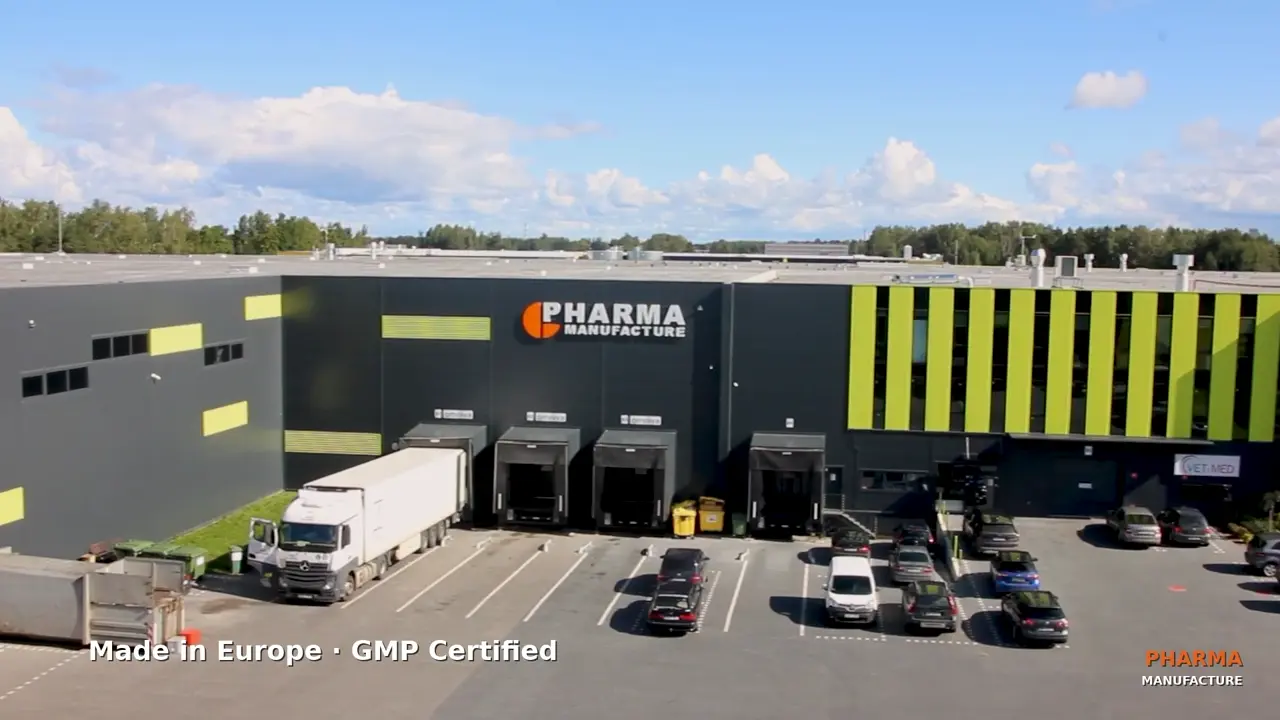
To get an NPN in Canada, the applicant, usually the brand, files a product licence application with Health Canada, and an applicant based outside Canada names a representative in Canada (Natural Health Products Regulations, SOR/2003-196, section 5). Health Canada’s target is 60 calendar days for a Class I application, 90 for Class II, and 30 days of screening plus 180 days of assessment for Class III. To look up an NPN, search by the number or the product name in Health Canada’s Licensed Natural Health Products Database (LNHPD). Pharma Manufacture makes the product at its GMP, ISO 22000 and HACCP certified private label factory in Mārupe, Latvia, in the EU, and supplies the manufacturer’s documents; the NPN is filed and held in the brand’s name.
| Question | Answer |
|---|---|
| What the NPN is | The product number on the label of a licensed natural health product; no natural health product is sold in Canada without a product licence (SOR/2003-196, section 4) |
| Who applies and holds it | The applicant, usually the brand or its Canadian company |
| Applicant based outside Canada | Names a representative in Canada to whom notices may be sent (section 5) |
| Class I review target | 60 calendar days, compendial applications included |
| Class II review target | 90 calendar days |
| Class III review target | 30 days of screening plus 180 days of assessment |
| Applications that met the target in 2020–21 | Class I 70.5 %, Class II 50 %, Class III 31.5 %; Health Canada aims for 90 % |
| Application fee | Health Canada said on 24 November 2025 that the fees would not start on 1 December 2025 |
| Where to look up an NPN | LNHPD, by NPN or product name |
| Importer’s site licence | 35, 65 or 95 working days, depending on the GMP evidence and the number of sites |
| Label | NPN on the front panel; text in English and French (section 87); the new labelling requirements apply to every natural health product by 22 June 2028 |
| What Pharma Manufacture supplies | Copies of GMP-FS-01, HACCP-01 and ISO 22000:2018 MSC-22-1384, and the site name and address |
This guide covers the product licence itself. Ordering from an EU factory, duty under CETA, the origin declaration and shipping times are covered in the Canada market guide.
Key Takeaways
- The NPN belongs to the applicant, usually the brand; an applicant based outside Canada names a representative in Canada under section 5 of SOR/2003-196.
- Class I, which includes compendial applications, has a 60-day review target; Class III has 30 days of screening plus 180 days of assessment.
- Review times are targets: in 2020–21, the only year Health Canada publishes on that page, 70.5 % of Class I applications and 31.5 % of Class III applications met them.
- Health Canada said on 24 November 2025 that NHP fees would not start on 1 December 2025; final fees will be published in the Canada Gazette, Part II, before they apply.
- The NPN covers the product; the Canadian importer separately holds a site licence, and since the FSRN process ended on 16 February 2026 the GMP evidence for a foreign manufacturing site goes through the site licensing pathway.
What is an NPN, and which supplements need one?
An NPN is the number Health Canada’s product licence gives a natural health product (NHP), Canada’s regulatory category for supplements, and it is printed on the front panel of the label. Under section 4 of the Natural Health Products Regulations, SOR/2003-196, no NHP may be sold in Canada without a product licence.
Health Canada separates NHPs from foods by format and use. In its guidance on the Supplemented Foods Regulations, food is eaten ad libitum, while an NHP comes in a measured dose in formats that are not typical of food: capsules, tablets, powders and tinctures. For the formats Pharma Manufacture makes, that puts tablets, hard capsules and softgels on the NHP side, and the same guidance names a protein powder sold as a workout supplement with directions as an NHP.
A caffeinated energy drink, or a dry drink mix with more than 150 ppm caffeine, is a supplemented food under the food rules and carries a Supplemented Food Facts table, not an NPN. Some products carry a DIN-HM on the front panel instead of an NPN. The full format-by-format table is in the Canada market guide.
Who can apply for an NPN? Can a foreign company hold one?
Any applicant can apply for a product licence, including a company based outside Canada, which must name in the application a representative in Canada to whom notices may be sent (SOR/2003-196, section 5(b)). The applicant holds the licence and the NPN. In practice that is the brand, either directly or through its Canadian company.
Three parties are involved, and each has a different job. The brand, as applicant, files for and holds the NPN. The Canadian importer holds the site licence, which Health Canada requires of every site in Canada that manufactures, packages, labels or imports NHPs for sale. The manufacturer, for a product made in Mārupe, is Pharma Manufacture, and it supplies the documents both licences rely on.
A brand that has no Canadian entity yet has two decisions before the first application: who acts as its representative in Canada, and which Canadian company imports. Both roles sit in Canada; the factory in Latvia supplies the documents to both.
NPN classes I, II and III: review times and what they mean in practice
Health Canada’s service standard for a product licence is 60 calendar days for Class I, 90 calendar days for Class II, and 30 days of screening followed by 180 days of assessment for Class III. Class I includes compendial applications, which follow a Health Canada monograph.
Health Canada sorts applications into the three classes by how its monographs are used. A Class I application must match one monograph exactly, with no modification. A Class II application is supported entirely by two or more monographs with no deviations (in set cases), or by a monograph or an acceptable combination with minor deviations that keep the monograph’s intent. A Class III application falls outside Class I and II and needs a full assessment of safety, efficacy or quality. That covers a product with an ingredient, claim or condition of use that no monograph supports, a modified formulation such as a liposomal one, a dosage form or route outside the monograph, and some combinations of monographs that carry extra risk.
| Class | Review target | Applications that met the target, 2020–21 |
|---|---|---|
| Class I, including compendial | 60 calendar days | 70.5 % |
| Class II | 90 calendar days | 50 % |
| Class III | 30 days of screening plus 180 days of assessment | 31.5 % |
These figures are targets, not guarantees. Health Canada aims to complete 90 % of applications within the standard and publishes how many actually did (2020–21 is the only year it publishes on that page, and it notes that COVID-19 prioritisation affected non-COVID applications). The last row is the one that changes a launch plan: in 2020–21 fewer than a third of Class III applications were decided on target, so allow for a longer wait.
The cost of the compendial route is flexibility: the formula and the claims stay inside an existing monograph. A formula that departs from a monograph is classed by Health Canada’s definitions: a minor deviation that keeps the monograph’s intent can stay in Class II, while an ingredient, claim or condition of use that no monograph supports goes to Class III.
How to get an NPN: the application process step by step
The NPN application process runs in seven steps, five of them on the applicant’s side, one at Health Canada and one at the manufacturer.
| Step | Who | What happens |
|---|---|---|
| 1. Classify the product | Brand | Confirm it is an NHP rather than a supplemented food; for a borderline format, ask Health Canada at smiu-ugdi@hc-sc.gc.ca |
| 2. Fix the applicant | Brand | The brand or its Canadian company; a representative in Canada if the applicant is based abroad |
| 3. Choose the route | Brand | A monograph-based (compendial) formula goes as Class I; any other formula is classed by Health Canada’s definitions |
| 4. Collect the manufacturer’s data | Pharma Manufacture | Certificates, site name and address |
| 5. File the product licence application | Applicant | Fill in Health Canada’s web-based Natural Health Product Licence Application (PLA) form and submit it electronically through Health Canada’s designated channel (Canada Post Connect, formerly ePost Connect, per Health Canada’s page), as an enrolled Trading Partner; paper, e-mail and CD or DVD submissions are not processed. Finished product specifications go in with Class II and III applications |
| 6. Review | Health Canada | 60, 90, or 30 plus 180 days, depending on the class |
| 7. Licence issued | Applicant | The NPN goes on the front panel, and the licence can be checked in the LNHPD |
The applicant chooses the claims and confirms that every ingredient is admissible; the manufacturer’s data supports that choice.
What does the manufacturer supply for an NPN application?
For a product made in Mārupe, Pharma Manufacture supplies copies of its GMP-FS-01, HACCP-01 and ISO 22000:2018 MSC-22-1384 certificates and the site name and address as printed on the certificates: “Kargo k-1”, Mārupe, LV-2167, Latvia.
The application itself asks the applicant for product data: the formula with the forms of the raw materials, the dose per unit, allergens, shelf life and storage conditions, and, for Class II and Class III applications, a finished product specification (Class I applicants keep the specification and provide it on request). Which of these documents the factory provides is agreed with it before the application is filed.
The same site documents serve the importer’s site licence. Health Canada’s Site Licensing Guidance Document (version 3.0, 2015) lists the evidence it takes for a foreign site: a GMP certificate from the regulator of an MRA country or a PIC/S member (3 years), an NSF/ANSI 173 section 8 certificate with finished product testing and stability data (3 years), or a Quality Assurance Report (1 year). The importer chooses the evidence route for the Mārupe site with Health Canada.
What does your product decide before you apply?
Four facts about the product settle most of the NPN path before anyone fills in a form. The dosage form comes first: Pharma Manufacture makes tablets, capsules and softgels, effervescent tablets in tubes and liquid forms, and each form brings its own specification for the file.
The format decides the regime. Tablets, capsules and softgels are NHPs; a caffeinated drink is a supplemented food. Pharma Manufacture also makes effervescent tablets, drink cubes and shots: effervescent tablets are not named in Health Canada’s guidance, and drink cubes and shots depend on dose and presentation, so for those the brand confirms the category with Health Canada before choosing a route.
Where the applicant is based decides the representative. A brand registered outside Canada adds a representative in Canada to the application under section 5.
The formula decides the class, and the class decides the calendar. A formula that follows a monograph goes in as a compendial Class I application with a 60-day target; for any other formula, Health Canada’s class definitions decide between the 90-day and the 30-plus-180-day standard.
The pack decides part of the label. Packs with an available surface area of 90 cm² or less, products for one day of use or less, and packs of three doses or fewer can be exempt from the Product Facts table (section 93.5). The NPN still goes on the front panel.
Is there an NPN application fee?
Health Canada said on 24 November 2025 that the fees for natural health products would not start on 1 December 2025. It will revisit the cost recovery proposal once the program adjustments are made, and the final fees will be published in the Canada Gazette, Part II, before they apply.
Fees were proposed, not set. Health Canada published proposed fees on 12 May 2023 and revisions to the proposal on 27 March 2024. Its cost recovery page, opened on 1 November 2026, lists no final fees. A brand budgeting a launch today plans the NPN around the review time and checks that page and the Canada Gazette, Part II, before the application is filed.
How to do an NPN lookup in the LNHPD
To look up an NPN, open Health Canada’s Licensed Natural Health Products Database at health-products.canada.ca/lnhpd-bdpsnh and search by the NPN or by the product name.
The search also takes the brand name, the licence holder, an ingredient, the dosage form or the recommended use. An entry shows the Natural Product Number (NPN), the market status and the licence status (active, discontinued, stop sale, cancelled or suspended), the brand name, the licence holder, the dosage form, the recommended route of administration, the recommended dose, the recommended use or purpose and the risk information. It also lists the medicinal ingredients, with quantity, extract and potency, the non-medicinal ingredients, the date of licensing and the revised date of the licence.
A lookup answers two practical questions. A retailer or importer checks that the number on the label belongs to the product in hand. A brand checks its own licence after step 7, before the label artwork goes to print. For a product made by Pharma Manufacture, the NPN belongs to your brand as the product licence holder.
After the NPN: site licence, label and first shipment
An NPN lets the product be sold; the importer’s site licence lets it be imported. Health Canada’s target for a site licence is 35, 65 or 95 working days, depending on the GMP evidence and the number of sites, and 15 working days for a notification.
Health Canada Bulletin No. 10 ended the Foreign Site Reference Number (FSRN) on 16 February 2026. Foreign sites must now submit the same GMP evidence through the site licensing pathway; for a Pharma Manufacture product, the Canadian importer lists the Mārupe site in its site licence application and files that evidence. Health Canada’s Bulletin 11 moved site licence applications from ePost Connect to LiquidFiles on 30 March 2026. Guides that still tell you to get an FSRN for the factory are out of date on this point.
Set label information has to appear in English and French (section 87). The front panel carries the brand name, the NPN, the dosage form and the net quantity (section 93). The new labelling requirements, such as the Product Facts table, came into force on 21 June 2025, and every natural health product has to meet them by 22 June 2028; a Ministerial Order gives products licensed from 21 June 2025 the same deadline. For licences issued before 21 June 2025, a change to risk information can go through a simplified 60-day notification between 21 June 2025 and 21 August 2028.
Production at Pharma Manufacture takes from 4 weeks, about 8 weeks for a typical run from confirmed order and brief to despatch. The product licence, the site licence and transit come on top of that. Shipping, duty and the CETA origin declaration are in the Canada market guide; what a factory needs to quote a first order is in this checklist.
Why order an NPN product from Pharma Manufacture?
For a Canadian brand that wants to buy European rather than American, Pharma Manufacture is a factory in Mārupe, Latvia, EU, that has been making supplements for 25 years. It holds GMP, HACCP and ISO 22000:2018 certificates and is registered with the US FDA, and it supplies the manufacturer’s side of the file: a Certificate of Analysis for each batch, copies of the certificates and the site name and address for your importer’s site licence. You can start from 350 ready-made formulas or have one developed, from 150 units of a ready-made tablet or capsule formula, with production from 4 weeks. The ordering route, duty and shipping are in how a Canadian brand orders from a European factory.
Frequently asked questions
Can a company outside Canada hold an NPN?
Yes. A company based outside Canada can apply for and hold a product licence if it names a representative in Canada to whom notices may be sent, as section 5 of the Natural Health Products Regulations requires. For a supplement made by Pharma Manufacture in Latvia, the brand holds the NPN and Pharma Manufacture supplies the manufacturer’s documents.
Does Pharma Manufacture get the NPN for my brand?
The NPN is filed and held by the applicant, which is your brand or its Canadian company, with a representative in Canada if the brand is based abroad. Pharma Manufacture manufactures the product in Mārupe, Latvia, and supplies copies of GMP-FS-01, HACCP-01 and ISO 22000:2018 MSC-22-1384 and the site name and address for the file.
How long does it take to get an NPN?
Health Canada’s service standard is 60 calendar days for a Class I application, 90 for Class II, and 30 days of screening plus 180 days of assessment for Class III. These are targets: in 2020–21, the only year Health Canada publishes on that page, 70.5 % of Class I, 50 % of Class II and 31.5 % of Class III applications met them. Pharma Manufacture production, from 4 weeks, comes on top.
Is there an NPN application fee?
Health Canada said on 24 November 2025 that the fees for natural health products would not start on 1 December 2025, and final fees will be published in the Canada Gazette, Part II, before they apply. Fees were proposed in 2023 and revised in 2024; the official page, which lists no final fees, is Health Canada’s cost recovery page.
How do I check whether a supplement has an NPN?
Search Health Canada’s Licensed Natural Health Products Database (LNHPD) at health-products.canada.ca/lnhpd-bdpsnh by the NPN or the product name. The NPN also appears on the front panel of the label. For a product made by Pharma Manufacture, the NPN belongs to the brand as the product licence holder.
Does an energy drink or a drink mix need an NPN?
A caffeinated energy drink, or a dry drink mix with more than 150 ppm caffeine, is a supplemented food in Canada and follows the food rules, with the Supplemented Food Facts label required since 1 January 2026. For borderline formats Pharma Manufacture makes, such as drink cubes and shots, the brand asks Health Canada at smiu-ugdi@hc-sc.gc.ca.
Is an NPN enough to import my supplement into Canada?
The NPN covers the product; importing for sale also needs a site licence, held by the Canadian importer. Health Canada’s target for a site licence is 35, 65 or 95 working days, depending on the GMP evidence and the number of sites. For a product from Pharma Manufacture, the importer lists the Mārupe site in its site licence application and files the GMP evidence for it.
Does Health Canada accept Pharma Manufacture’s GMP certificates?
Health Canada names the GMP evidence it takes for a foreign site: a GMP certificate from an MRA-country or PIC/S regulator, an NSF/ANSI 173 section 8 certificate, or a Quality Assurance Report. Pharma Manufacture holds GMP-FS-01, HACCP-01 and ISO 22000:2018 MSC-22-1384, and the importer chooses the evidence route for the Mārupe site with Health Canada.
Does my importer still need a Foreign Site Reference Number for the factory?
The FSRN process ended on 16 February 2026 under Health Canada Bulletin No. 10: no new FSRNs are issued and an FSRN no longer counts as GMP evidence. For a Pharma Manufacture product, the Canadian importer files the GMP evidence for the Mārupe site through the site licensing pathway.
What must the label show next to the NPN?
The front panel carries the brand name, the NPN, the dosage form and the net quantity, and set label information appears in English and French. The outer label carries the Product Facts / Info-produit table unless an exemption applies. Every natural health product has to meet the new labelling requirements by 22 June 2028.
Planning an NPN for a product made in the EU?
Tell Pharma Manufacture the product, the form, whether the formula follows a monograph, and who your applicant and Canadian importer are. Ask for a price for the run and for the list of manufacturer’s documents Pharma Manufacture can supply for the NPN file and the importer’s site licence. Still choosing the form? Start from the active ingredient and the dose, and if you are comparing factories, these nine questions help. Request a price list.
Sources
Natural Health Products Regulations, SOR/2003-196, sections 1, 4, 5, 87, 93, 93.1 and 93.5 — product licence requirement, representative in Canada, label content: https://laws-lois.justice.gc.ca/eng/regulations/sor-2003-196/page-1.html (reviewed 2026-10-30)
Health Canada, Service standards for natural health product application reviews — Class I, II and III targets, share of applications on target, 90 % goal: https://www.canada.ca/en/health-canada/corporate/about-health-canada/legislation-guidelines/acts-regulations/service-standards-high-volume-regulatory-authorizations/service-standards-natural-health-product-application-reviews-under-natural-health-product-regulations.html (reviewed 2026-10-30)
Health Canada, Service standards for site licence applications — site licence review streams: https://www.canada.ca/en/health-canada/corporate/about-health-canada/legislation-guidelines/acts-regulations/service-standards-high-volume-regulatory-authorizations/service-standards-site-licence-application-under-natural-health-product-regulations.html (reviewed 2026-10-30)
Health Canada, Site licensing bulletin of 15 October 2025 — 35, 65 and 95 working days, notifications 15 working days: https://www.canada.ca/en/health-canada/services/drugs-health-products/natural-non-prescription/applications-submissions/site-licensing/bulletin/october-15-2025.html (reviewed 2026-10-30)
Health Canada, Bulletin No. 10, 16 February 2026 — end of the Foreign Site Reference Number process: https://www.canada.ca/en/health-canada/services/drugs-health-products/natural-non-prescription/applications-submissions/site-licensing/bulletin/ending-foreign-site-reference-number-process-foreign-warehouses.html (reviewed 2026-10-30)
Health Canada, Site licensing bulletins (Bulletin 11 — site licence applications move from ePost Connect to LiquidFiles on 30 March 2026): https://www.canada.ca/en/health-canada/services/drugs-health-products/natural-non-prescription/applications-submissions/site-licensing/bulletin.html (reviewed 2026-10-30)
Health Canada, Site licensing — who needs a site licence: https://www.canada.ca/en/health-canada/services/drugs-health-products/natural-non-prescription/applications-submissions/site-licensing.html (reviewed 2026-11-01)
Health Canada, Site Licensing Guidance Document, version 3.0 (2015) — GMP evidence for foreign sites and validity periods: https://www.canada.ca/en/health-canada/services/drugs-health-products/natural-non-prescription/legislation-guidelines/guidance-documents/site-licensing-guidance-document.html (reviewed 2026-10-30)
Health Canada, Guidance document: Labelling of natural health products — bilingual labels, Product Facts table, 21 June 2025 and 22 June 2028 dates, 60-day notification: https://www.canada.ca/en/health-canada/services/drugs-health-products/natural-non-prescription/legislation-guidelines/guidance-documents/labelling.html (reviewed 2026-10-30)
Health Canada, Cost recovery for natural health products (page of 24 November 2025) — proposal history, no final fees: https://www.canada.ca/en/health-canada/services/drugs-health-products/natural-non-prescription/regulation/cost-recovery.html (reviewed 2026-10-30 and 2026-11-01)
Health Canada, Revisions to the proposed fees (27 March 2024, not in force) — cost recovery will not begin on 1 December 2025: https://www.canada.ca/en/health-canada/services/drugs-health-products/natural-non-prescription/regulation/cost-recovery/revisions-proposed-fees.html (reviewed 2026-10-30 and 2026-11-01)
Health Canada, Natural Health Products Management of Applications Policy (issued 15 December 2025) — application classes I, II and III, finished product specifications, web-based PLA form, electronic submission through Connect: https://www.canada.ca/en/health-canada/services/drugs-health-products/natural-health-products/legislation-guidelines/guidance-documents/management-product-licence-applications-attestations.html and PDF https://www.canada.ca/content/dam/hc-sc/documents/services/drugs-health-products/natural-health-products/legislation-guidelines/guidance-documents/management-product-licence-applications-attestations/management-product-licence-applications-attestations.pdf (reviewed 2026-11-01)
Health Canada, Electronically contacting the Natural and Non-prescription Health Products Directorate: Submitting electronic applications — Connect, Trading Partner enrolment: https://www.canada.ca/en/health-canada/services/drugs-health-products/natural-non-prescription/legislation-guidelines/guidance-documents/electronically-contacting-natural-health-products-directorate/submitting-applications.html (reviewed 2026-11-01)
Health Canada, Supplemented Foods Regulations guidance — NHP and food boundary, Tables 1 and 2, classification requests: https://www.canada.ca/en/health-canada/services/food-nutrition/legislation-guidelines/guidance-documents/supplemented-foods-regulations.html (reviewed 2026-10-30)
Health Canada, Licensed Natural Health Products Database (LNHPD) — NPN lookup, search fields and a sample product record (fields of an entry): https://health-products.canada.ca/lnhpd-bdpsnh/?lang=eng (reviewed 2026-11-01); sample record https://health-products.canada.ca/lnhpd-bdpsnh/info?licence=80057714 (reviewed 2026-11-01)
Pharma Manufacture, Canada market guide — ordering from the EU, duty, origin declaration, shipping: https://pharmamanufacture.eu/markets/canada/