Tablets, Capsules or Powders: Which Supplement Form Starts With the Smallest Order?
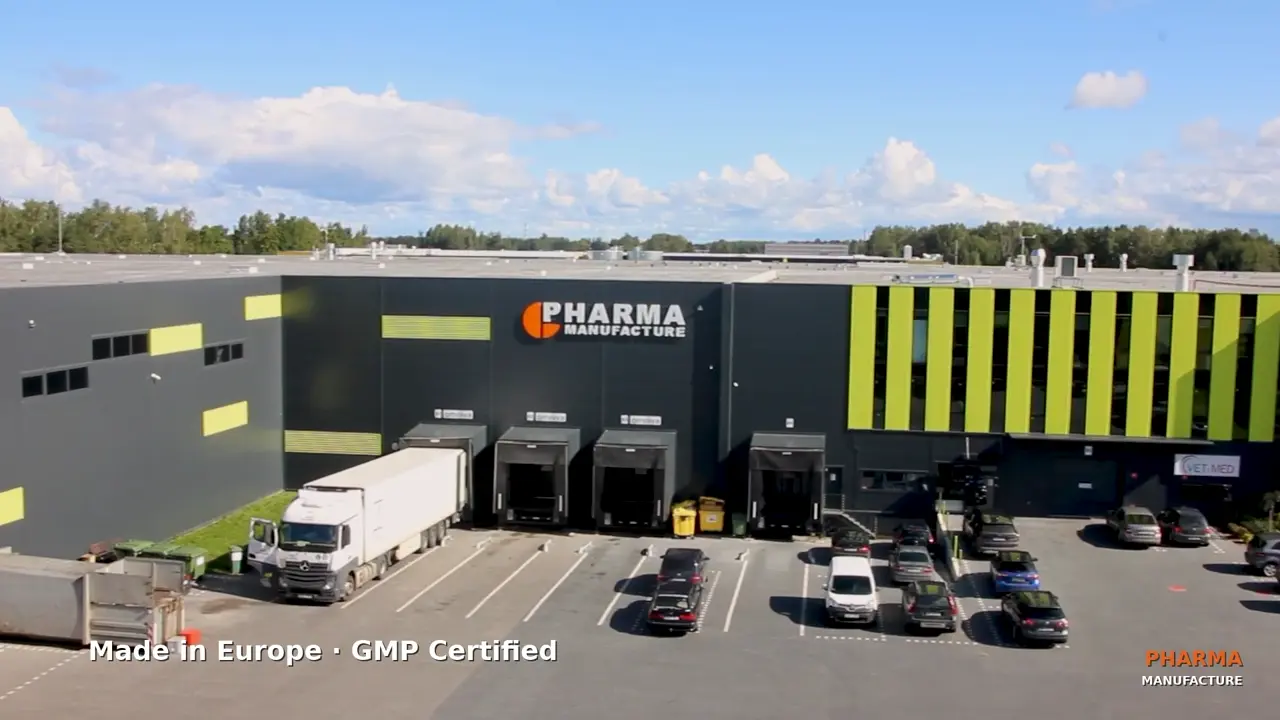
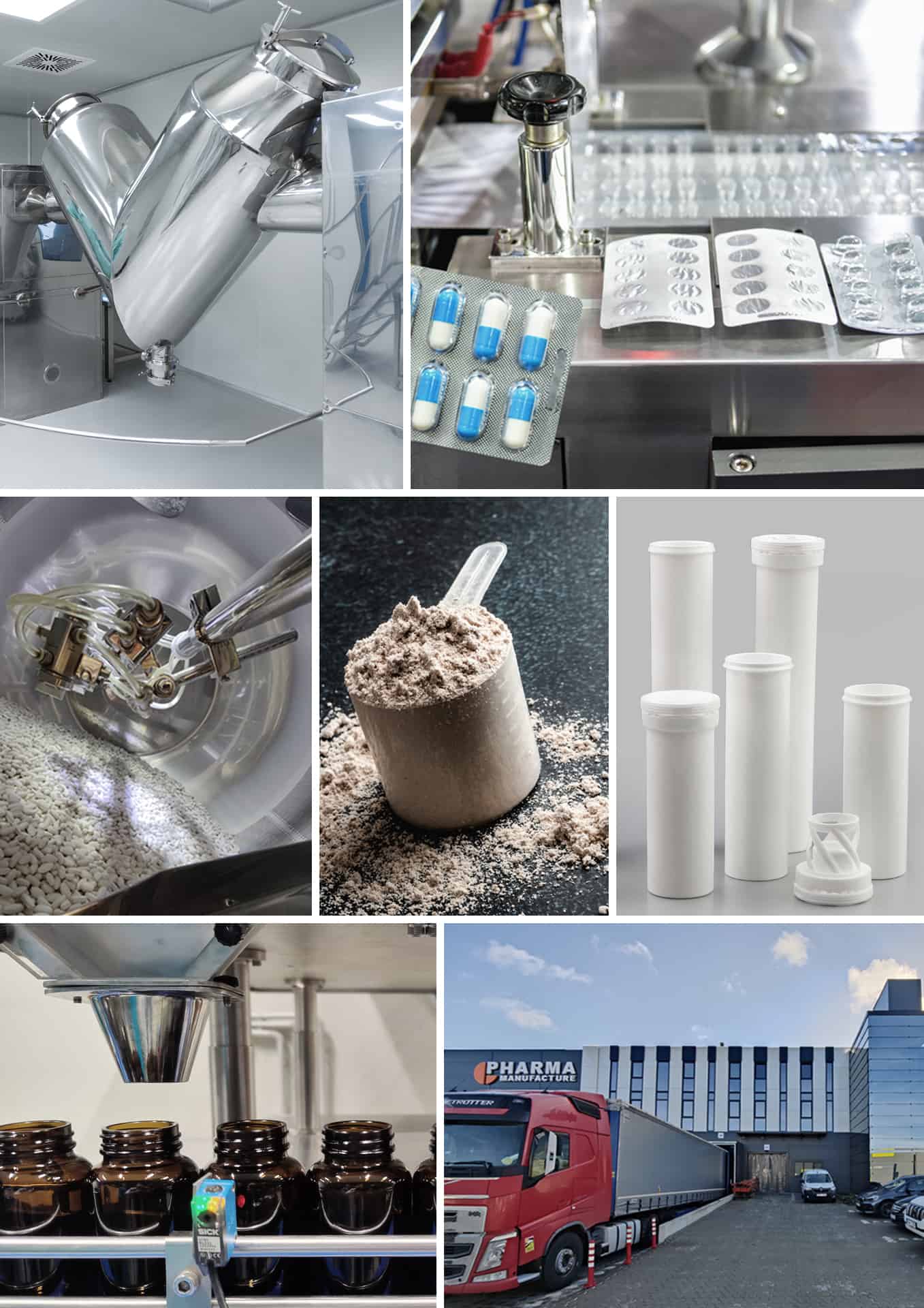
Pharma Manufacture is a contract manufacturer of food supplements in Mārupe, Latvia, in the European Union, producing tablets, hard capsules and softgels, effervescent tablets in tubes and sports-nutrition powders for private label brands. If “which form has the lowest MOQ” means “which form lets me start smallest,” the honest answer is still it depends on the product — but what it depends on is concrete. Below is what keeps a first run small for each form we produce, what pushes it up, and the trade-offs first-time brands tend to discover only after picking a form for the wrong reason.
Key Takeaways
- No form is “the smallest” by default — an existing size, a stock formula and standard packaging shrink any first run; a custom version of any of those three grows it.
- Tablets and hard capsules share packaging, but each needs its own tooling — an existing size and shell or shape keeps that part small.
- Softgels start as a bigger commitment almost by default: die-forming and the tumbling-and-drying step apply to every batch regardless of size.
- Effervescent tablets keep their tube and moisture-absorbing cap even at the smallest order — that packaging isn’t optional.
- Sports-nutrition powders are decided twice: by the mixing batch, then by the jar, doypack or scoop chosen on top of it.
What actually makes any form’s first order small?
Whatever form you’re comparing, the same three levers move the floor up or down.
An existing size or shape is the biggest one. Tooling — press punches for a tablet, dosing discs for a capsule, an encapsulation die for a softgel — is cut for specific dimensions. Fit an existing size and the equipment is already set up; ask for one nobody has run before, and someone must source new tooling and run a validation batch first. That validation step, not the product, usually makes a custom size bigger.
A ready-made formula is the second lever. A stock formula skips development and validation, leaving only tooling, packaging and batch testing to size. A custom formula adds development on top — a separate cost from the form itself.
A standard packaging format is the third. Bottles, blisters, tubes, jars, doypacks and zip-lock bags are separate components with their own run sizes. A custom print run or a non-standard jar colour adds a component-level minimum unrelated to the product inside it. None of this is unique to one form — which lever matters most is what differs.
Tablets and hard capsules: what keeps the order small, and what changes it?
Tablets and hard capsules share packaging — bottle, blister or zip-lock — but they’re pressed and filled on different tooling, so each has its own version of “small.”
For a tablet, press tooling is cut to specific round and oval sizes. A dose that compresses into an already-tooled size starts on equipment that’s ready; one that isn’t tooled yet needs new punches and a validation run, regardless of batch size. Tablets also receive a pharmaceutical-grade coating after pressing — a fixed step a small order can’t skip.
For a hard capsule, the size does two jobs: it holds your dose, and it decides whether the filler is already set up for you. A dose that fits an existing size, gelatin or vegan HPMC, uses filling equipment that’s already configured; a dose too large or small for the tooled sizes needs new dosing setup, sometimes a different shell order. The dose you’ve fixed quietly decides how small the capsule order can start.
The shell material alone doesn’t move the order size — gelatin and vegan HPMC in the same size use the same filling setup. What moves it is a size neither shell currently runs in.
Softgels: why an oil-based active starts as a bigger commitment
If your active ingredient is an oil — a fish oil, a botanical oil, anything that won’t compress into a solid — a softgel usually isn’t a preference, it’s the only realistic container. That matters early: a softgel’s process has no tablet-style “small order” shortcut.
Shell and fill are blended as two separate mixtures, then formed together in an encapsulation die cut for one shape — we currently run four oval sizes, #3, #8, #10 and #20. Every batch afterward, regardless of size, goes through the same sequence: tumbling to remove excess surface moisture, then 12 hours drying in a wind-tunnel room, before polishing. None of those steps shrink for a smaller batch.
That’s the difference from tablets and capsules: an existing size removes their tooling question, leaving a simple batch-and-pack minimum. With a softgel, the die-and-drying process is present either way, so the honest comparison isn’t “softgel versus tablet, which is smaller” but “does your active ingredient give you a choice at all.” For an oil-based formula, usually not.
Effervescent tablets in tubes: what a small order still has to include
Effervescent tablets are moisture-sensitive by nature — the same chemistry that makes them fizz and dissolve — and the format’s packaging exists to manage that, at any order size. Ours are packed in plastic tubes with moisture-absorbing caps, and that isn’t optional for a smaller minimum — loose effervescent tablets in an ordinary bottle don’t keep well.
Inside that constraint, the same two levers apply. The tube and closure are separate components — we offer closures including A, DOG, DOSG, DAS, FOG, DA, DAG, DASG, G and FlipTop — and an existing tube size and closure keeps that part at its floor. Branding changes the print run rather than the tablet batch: in-mould labelling (IML) bonds a pre-printed film into the tube as it forms, tying film quantity to the tube-forming run, while offset printing or a label goes onto an already-formed tube, decoupling the two. Which of the two suits a small first run depends on the tube and the run — ask us for your case.
A ready-made effervescent formula removes the formulation question the same way it does for tablets and capsules — but the tube and its moisture-absorbing cap stay fixed regardless.
Sports-nutrition powders: why the mixing batch isn’t the whole story
Powders are mixed before they’re anything else. Sieving and mixing happens in a dedicated workshop as a single batch, which sets the production floor — there’s no “existing tablet size” to fall back on, because the mix itself is the product.
First-time buyers often assume the mixing batch is the only decision. It isn’t. Packaging is a second, independent decision — round or cylinder jars, a doypack, or a zip-lock bag — and how many finished units one batch becomes depends on the format chosen. A dosing scoop, where wanted, is a third component; ours range from 5 ml to 250 ml, natural or blue. None of the three is optional — a jar or doypack is how the product sells, a scoop is how consumers use it — so a small order still accounts for all three.
A ready-made powder formula removes the development step, same as the other forms — but not the packaging decision, worth settling early since buyers tend to leave it for last.
The pattern holds across all five forms:
| Form | Keeps a first run small | Pushes it up | Trade-off beyond order size |
|---|---|---|---|
| Tablets | An existing round or oval size, already tooled | A new diameter or shape — new punches and a validation run | Coating is a fixed step on every batch |
| Hard capsules | A dose that fits an existing size (#00, #0 or #1) in either shell | A dose that needs a size not currently tooled | Gelatin and vegan HPMC are different shells, not different order sizes |
| Softgels | A ready-made oval size and a stock formula | A shape not currently tooled, or a custom formula | Tumbling and a 12-hour wind-tunnel drying step apply to every batch regardless of size |
| Effervescent tablets | An existing tube size and closure | A new tube size or a custom print run | The moisture-absorbing tube cap is fixed, not optional, at any order size |
| Sports-nutrition powders | A standard jar, doypack or zip-lock already in use | A non-standard jar colour or a custom doypack print | Packaging and scoop are decisions separate from the mixing batch |
So which form actually gives you the smallest order?
No form is simply “the smallest” — each has its own floor, set by tooling for tablets and capsules, a fixed process for softgels, unsimplifiable packaging for effervescent tablets, and a second and third decision for powders.
If you haven’t settled on a form, start from your active ingredient and dose, not order size — an oil-based active rules out everything but a softgel before minimum order even enters the conversation. Still comparing manufacturers rather than forms? The same logic sits behind the nine questions worth asking before you commit — minimum order by form is one of them.
Once the form is fixed, tell us the form, stock or custom, and your packaging preference, and we’ll size it against the minimums that apply.
Frequently asked questions
Can I use a tablet or capsule size you don’t tool for, or switch capsule shells, and still keep the order small?
Only the shell choice is free. Gelatin and vegan HPMC are different shells, but the same capsule size uses the same filling setup either way, so switching shells doesn’t move it. A size that isn’t tooled yet does — it needs new punches or dosing discs and a validation run. An existing round or oval tablet size, or an existing capsule size, is the fastest route to the smallest tooling-related minimum.
Can effervescent tablets be packed in something other than a tube to avoid the tube minimum?
No — the tube and its moisture-absorbing cap are the standard format, not an option on top. Ours are packed in plastic tubes for exactly that reason: the tablets are moisture-sensitive, and the cap keeps them stable. An existing tube size and closure keeps the order at its floor.
Can sports-nutrition powder go in a bottle instead of a jar or doypack for a smaller order?
We pack powders in jars, doypacks or zip-lock bags — not bottles, a tablet and capsule format. A standard jar or doypack size and colour keeps that part small; the mixing batch is a separate question from the packaging format.
If my active ingredient is an oil, is there a smaller-order alternative to a softgel?
Generally not, if it must stay a single swallowed dose. Oils don’t compress into a tablet or fill cleanly into a capsule shell, so oil-based formulas go into softgels almost by default. The process — die-forming, tumbling, wind-tunnel drying — applies to every batch, so keeping it small means a ready-made formula in an already-tooled size, not a different form.
Tell us the form, get the real number
Pharma Manufacture is a contract food supplement manufacturer in Mārupe, Latvia, in the European Union, certified to GMP, ISO 22000 and HACCP. No form is inherently “the smallest” — an existing size, a stock formula and standard packaging keep an order small; a custom version of any of the three grows it.
Tell us which form you’re considering — tablets, capsules and softgels, effervescent tablets or sports-nutrition powders — with your packaging preference, and we’ll tell you what sets your smallest order. Request a price list and start with the product you have in mind.
Sources
Pharma Manufacture, tablets, capsules and softgels — tablet sizes, capsule sizes, softgel sizes, coating and drying process: https://pharmamanufacture.eu/food-supplement-tablets-and-capsules/ (reviewed 2026-09-04)
Pharma Manufacture, effervescent tablets — tube closures and IML/offset branding: https://pharmamanufacture.eu/private-label-effervescent-tablets-manufacturer-europe/ (reviewed 2026-09-04)
Pharma Manufacture, sports nutrition — mixing workshop, ready-made formulas and dosing scoops: https://pharmamanufacture.eu/sports-nutrition-private-label-manufacturer-europe/ (reviewed 2026-09-04)
Pharma Manufacture, packing solutions — jar, doypack, tube and moisture-absorbing cap formats: https://pharmamanufacture.eu/food-supplement-packing-solutions/ (reviewed 2026-09-04)
Pharma Manufacture, contacts — office address and quote request: https://pharmamanufacture.eu/contacts-2/ (reviewed 2026-09-04)