How to Launch Your Own Supplement Brand in 2026 (When You Already Have an Audience)
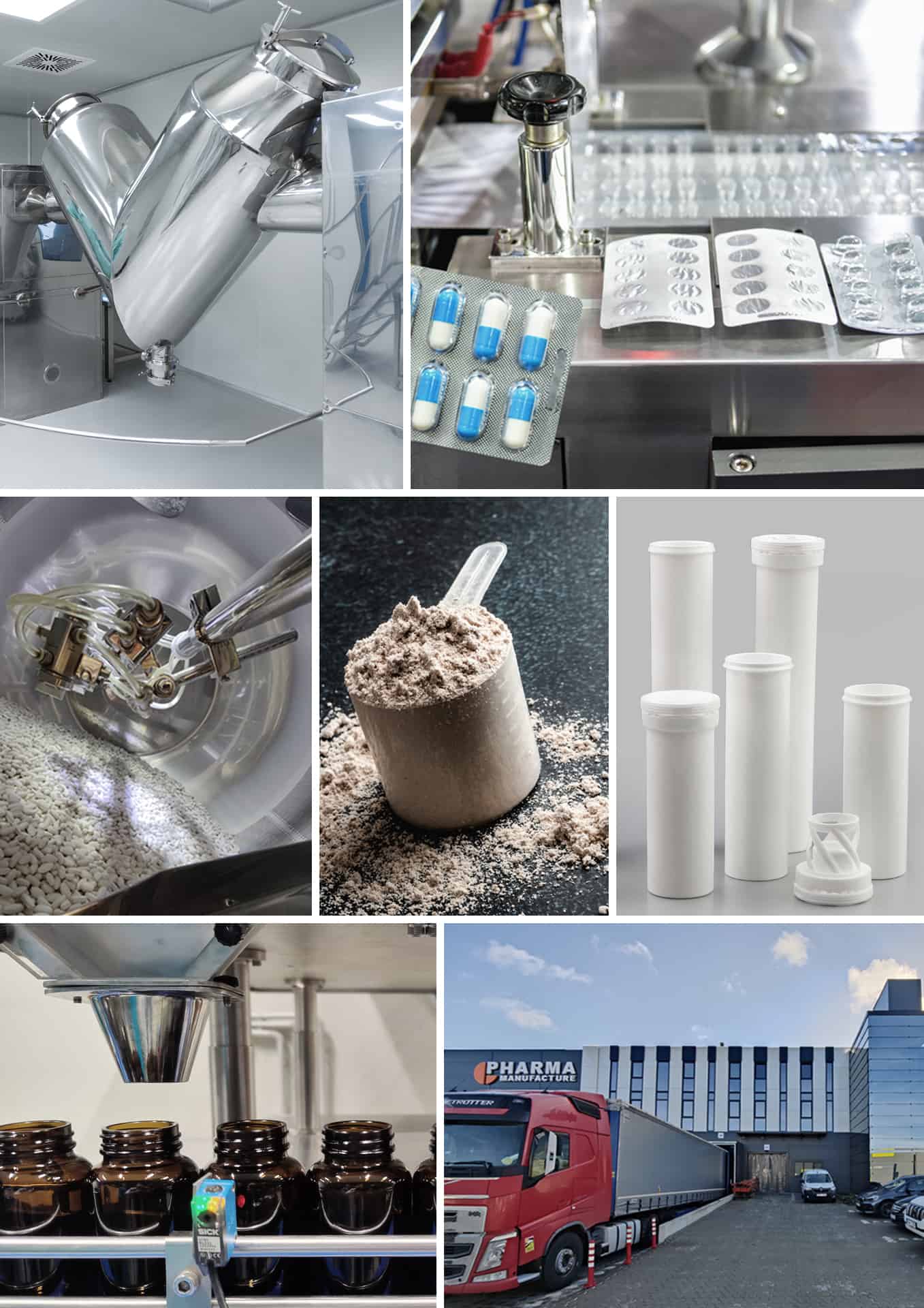
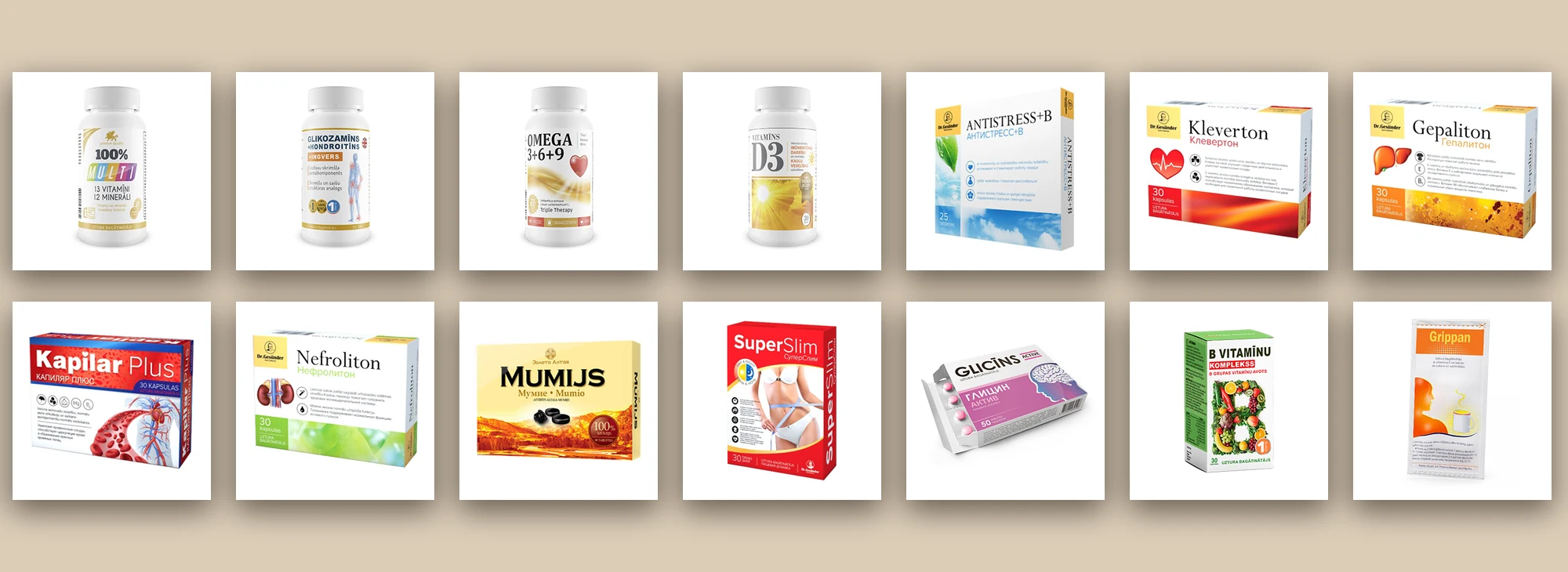
Pharma Manufacture is a contract food supplement manufacturer in Mārupe, Latvia, in the European Union. We produce tablets, capsules, softgels, effervescent tablets and sports-nutrition powders for private-label brands, as ready-made or custom formulas, and this guide walks through the same decisions you’d work through with any manufacturer like us: form, formula, compliance, packaging and minimum order. Where the guide gets specific about a real facility — certifications, capacity, location — it’s describing our facility. The full form and formula range is on our products page.
Here’s the short version. You find a contract manufacturer who makes the product to your formula and slaps your label on it. You validate demand with the audience you already have, lock a formula and packaging, handle the EU paperwork, place an order, then sell. The manufacturer does the hard part. You do the brand.
If you’ve got a following, a coaching list, a gym, or a store that already moves product, you’re starting from a much better place than most supplement brands. You don’t have to buy an audience. You have to serve the one you’ve got.
This is the realistic version of how that works in 2026, including the parts nobody tells you about.
How does private-label supplement manufacturing actually work?
You design the brand. Someone else makes the product. That’s the whole model.
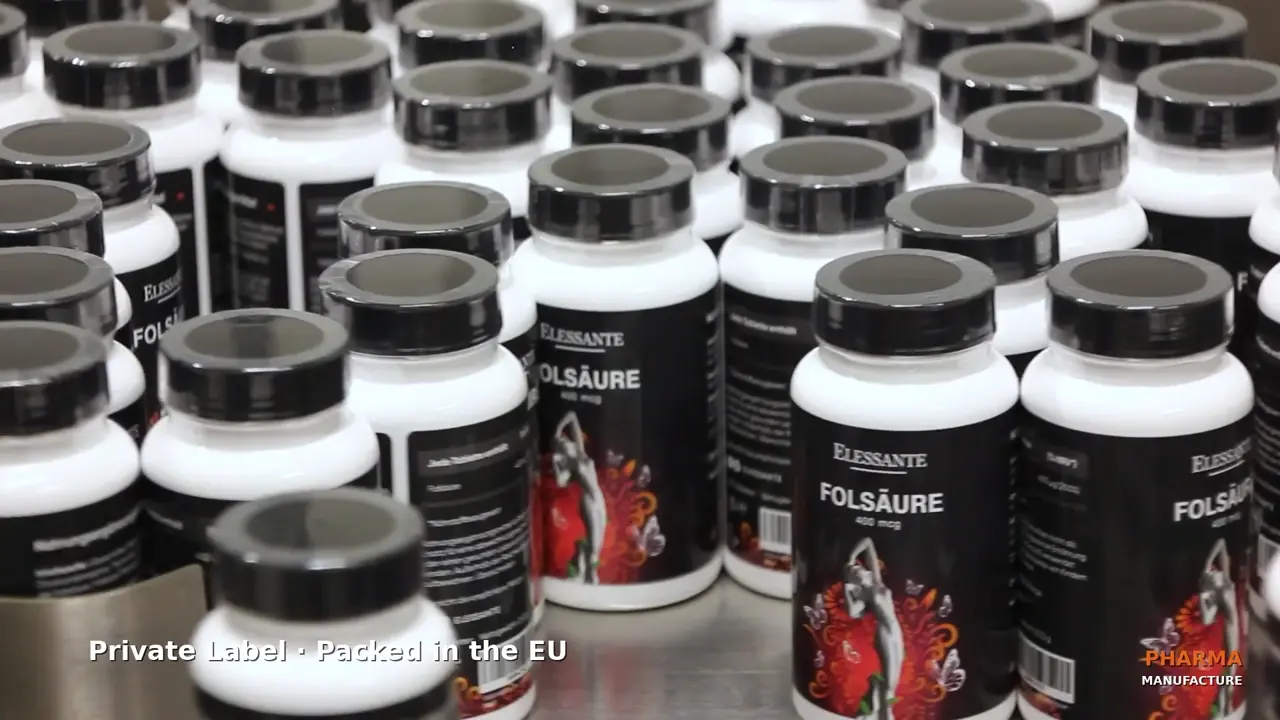
A private-label (or contract) manufacturer already has the production lines, the certifications, and an R&D team. You bring an idea, a budget, and a label. They formulate, produce, fill, and pack it under your brand name. The supplement inside might be a stock formula they already make, or something custom your dietician spec’d out.
Think of it like clothing. You’re not weaving fabric. You’re picking the cut, the colour, the tag, and the customer.
Two terms get used loosely, so let’s be clear:
- White label / stock formula: an existing product the factory makes, rebranded for you. Faster, cheaper, less control over the recipe.
- Custom / contract formula: your own recipe, developed with the manufacturer’s R&D team. Slower and pricier up front, fully yours.
Most first-time brands with an existing audience start with a stock or lightly tweaked formula, then go custom once they know what sells. There’s no prize for over-engineering version one.
Step 1: Validate demand with the audience you already have
Don’t guess what your people want. Ask them. This is the single biggest advantage you have over a brand starting cold, and most founders waste it by ordering product first and asking questions later.
The pattern we see again and again: a creator is sure their audience wants a pre-workout, runs a quick poll, and finds out they actually want sleep or daily greens. One question saved them a five-figure mistake.
Run a real test before you spend anything:
- Poll it. A story poll or email asking “which would you actually buy?” beats any market report for your niche.
- Pre-sell it. A waitlist or a small pre-order tells you who’ll pay, not just who’ll click a heart.
- Read the replies. The DMs asking “what do you take for X?” are your product brief, written by customers.
The goal isn’t a perfect forecast. It’s enough signal to pick one product and commit. One. Not a range of nine SKUs you hope might land.
Step 2: Choose your product form and formula
Form matters more than beginners expect. The same magnesium can be a tablet, a capsule, a powder, or a fizzy tablet, and your audience has a strong opinion about which one they’ll actually take every day.
What format fits your product?
These are the main forms a manufacturer like the one in Mārupe can produce:
- Tablets: cheap per unit, sturdy, great for high-volume daily vitamins.
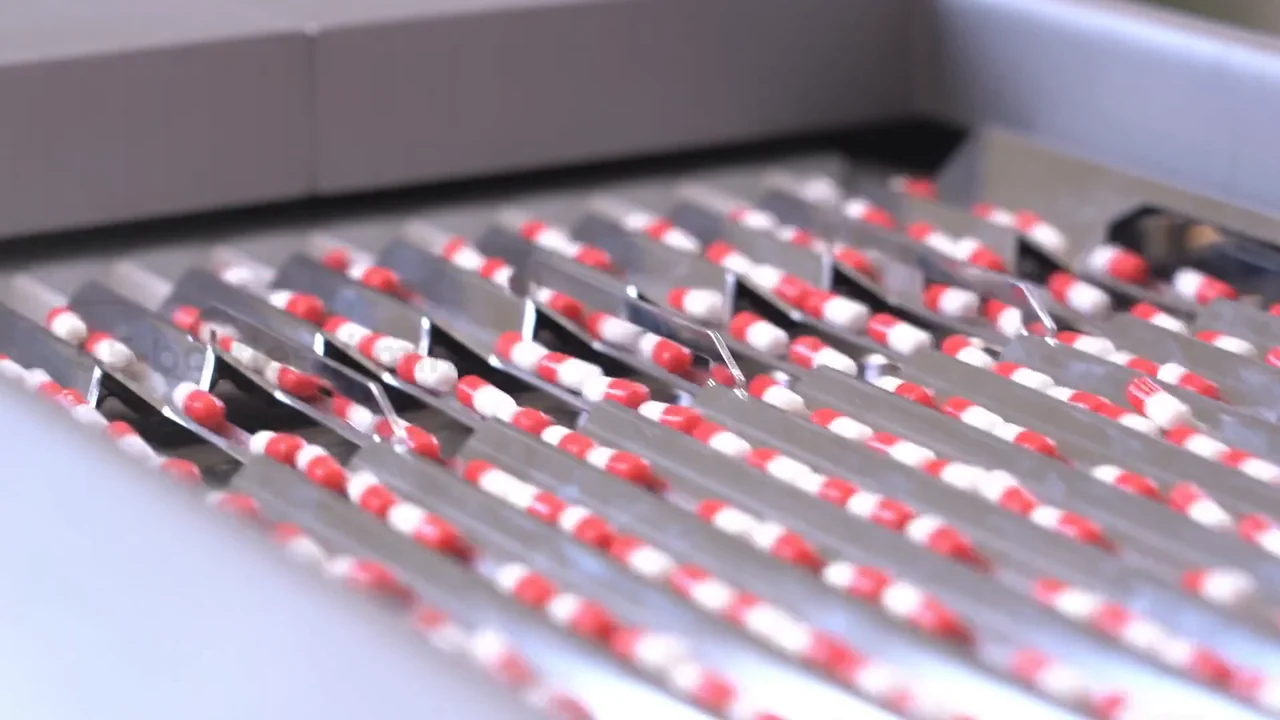
- Hard capsules: clean, easy to swallow, and you can choose gelatin or vegan HPMC, which matters if your audience is plant-based.
- Softgels: ideal for oils and fat-soluble actives like omega-3 or vitamin D.
- Effervescent tablets: the fizzy ones in a tube. Feels like a treat, strong for hydration and vitamin C.
- Sports-nutrition powders: protein, creatine, pre-workout, anything you scoop.
If you’re in the fitness or sports space specifically, powders and capsules are usually where the money is. There’s a dedicated sports-nutrition private label route for exactly that.
Stock formula or custom formula?
Start with this question: does an existing formula already do 90% of what you want? If yes, take it. A good manufacturer has in-house pharmacists, biochemists, dieticians, and nutritionists who can either hand you a ready-made formula or build one from scratch.
Going custom on your first product is usually the wrong call, even though it feels more “real.” Custom means longer development, higher cost, and more ways to be wrong before you’ve proven anyone wants it. Prove the demand on a stock formula, then spend custom money once you know the market’s there. The brands that survive treat version one as a test, not a monument.
You can see the range of forms and ready options on the product range page.
Step 3: Pick an EU GMP manufacturer (and what to actually check)
This is the decision that quietly determines everything else: quality, compliance, how fast you can restock, and whether your launch survives contact with reality. Pick on price alone and you’ll usually pay for it twice.
Use this checklist:
| What to check | Why it matters |
|---|---|
| GMP, HACCP, ISO 22000 — in writing | The baseline for food-supplement quality and safety |
| Registered with the US FDA | Gives you a path to the US market later |
| They actually make your form | A softgel specialist can’t fill effervescent tubes |
| In-house R&D and regulatory help | Fixes a formula and guides labelling, not just fills bottles |
| Replies within 24 hours | How they sell is how they’ll support you afterwards |
| Capacity headroom | Up to 100,000 tablets an hour means a viral week won’t break you |
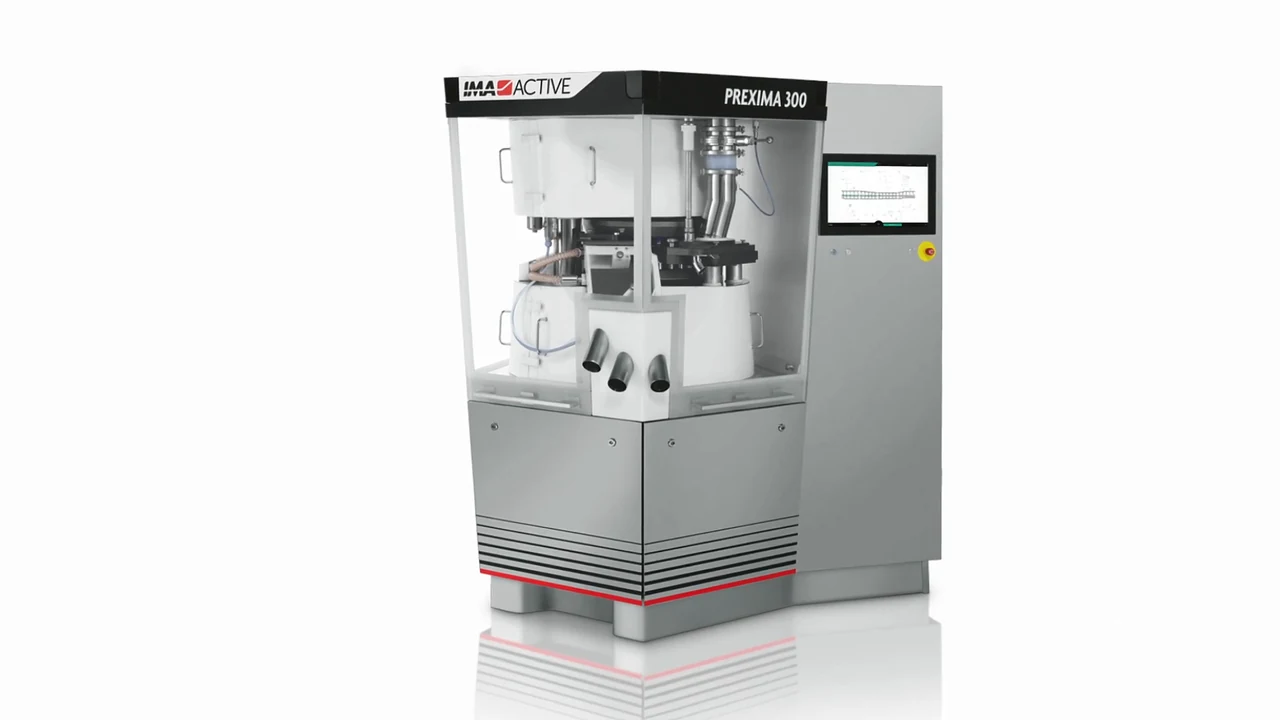
The Mārupe facility holds GMP, HACCP and ISO 22000, and is registered with the US FDA. One more thing founders underrate: distance and logistics. A certified EU manufacturer keeps you inside one regulatory zone and shortens shipping across Europe. That site sits two minutes from Riga Airport, which is the kind of unglamorous detail that saves you a week when you’re restocking in a hurry.
Step 4: Get your labelling and EU compliance right
This is where DIY brands get burned, so slow down here. In the EU, what you print on the label is regulated, and “it sounded good in the caption” is not a defence. The good news: a proper manufacturer guides this, and it’s far simpler than the legal text makes it look.
Three regulations shape almost everything you’ll deal with:
Food information and labelling
(EU) No 1169/2011 governs how you present food information to consumers, including supplements. It dictates what has to appear, legibly, on the pack: ingredients, quantities, allergens, and the rest. Get the panel right once and you reuse it forever.
Health and nutrition claims
(EC) No 1924/2006 controls the claims you can make. You can’t just write “boosts immunity” because it sells. A claim has to be authorised. This is the rule most creators break by instinct, because marketing language and approved claims are very different animals.
Food hygiene
(EC) No 852/2004 covers food hygiene across production. This one mostly sits with the manufacturer, but it’s part of why their certifications matter to you. Their compliance becomes your protection.
The part people miss: as the brand owner, you carry responsibility for what’s on your label, even if a factory printed it. That’s exactly why you choose a manufacturer who offers EU registration support and label-design help rather than one who just ships you product and wishes you luck. You’re not outsourcing the risk. You’re sharing it with someone who knows the rules.
Step 5: Sort packaging and understand MOQ
Packaging isn’t an afterthought. It’s the first thing your audience sees, and it changes your cost, your shelf life, and your shipping. A protein powder in a doypack and the same powder in a jar are two different products to a buyer.
What are your packaging options?
A full-service manufacturer offers a real spread:
- PET and glass bottles for tablets, capsules, and softgels.
- Blisters with a carton for a premium, tamper-evident feel.
- Plastic tubes for effervescent tablets.
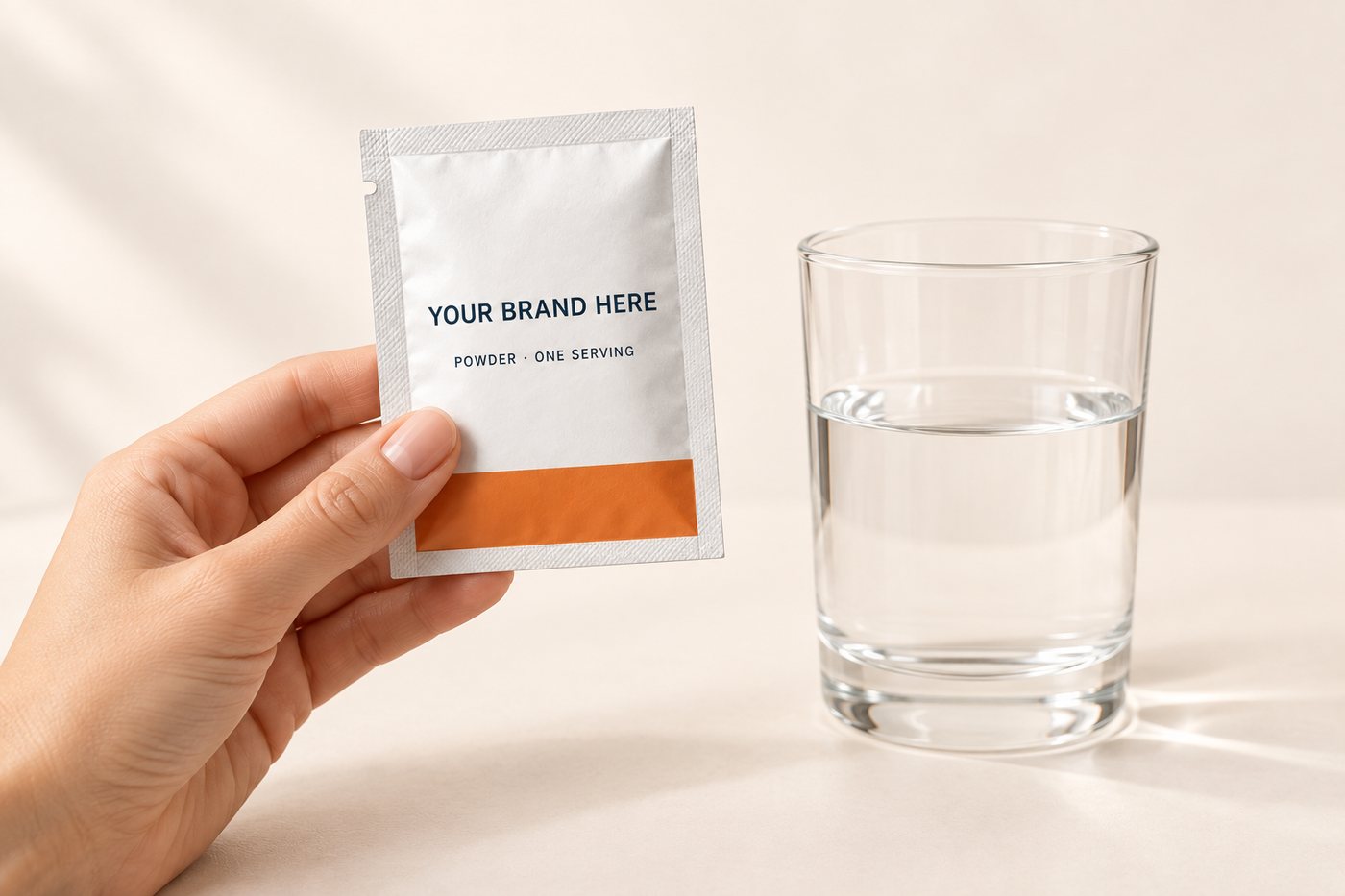
- Jars and doypacks (zip-lock) for powders.
Critically, packing materials should carry an EU Certificate of Conformity, meaning they’re cleared for food contact. That’s not a nice-to-have. It’s part of selling legally. You can see the formats on the packing solutions page.
What’s the minimum order, really?
Straight answer: it depends, and anyone quoting you a universal number is guessing. Minimum order quantity changes with the product, the form, and the packaging. A simple capsule in a PET bottle and a custom effervescent tube formula don’t carry the same minimum.
The honest move is to send your spec and ask for a quote. A good manufacturer keeps minimums low so first-timers can start without betting the house, but the exact figure has to come from the actual product. In practice, the founders who get the cleanest answer are the ones who show up with a defined product — form, formula, pack, rough quantity — rather than “how much for supplements?”
Step 6: Produce, then deliver to your audience
Once your formula, label, and packaging are locked, production is the calm part. You approve a sample, the manufacturer runs it on the line, packs it, and ships it. With EU-wide delivery from a central location, your stock reaches most of Europe without a customs maze.
Don’t over-order on launch one. Order enough to prove the sell-through, not enough to fill your garage for three years. You can reorder. What you can’t easily do is unsell a pallet of a flavour your audience didn’t love.
Then comes the part you’re already good at: selling to your own people.
- Warm them up first. Tease the behind-the-scenes. People who watched you build it feel like co-owners.
- Launch to the list, not the algorithm. Email and DMs convert your existing audience far better than chasing new reach.
- Use proof. Reviews and reorders from your own community are the most persuasive marketing you’ll ever run.
What actually gates you (the honest part)
Most supplement launches don’t fail at the factory. They fail at the decisions around it. Let’s name the three that catch people.
MOQ and cash flow. Even with low minimums, you’re buying inventory before you’ve sold it. That’s real money sitting on a shelf. Validate demand first (Step 1) so the stock you buy is stock you’ll move.
Compliance, not vibes. The fastest way to get a product pulled or a fine is a claim you weren’t allowed to make. This isn’t optional polish. It’s the cost of doing business in a regulated market, and it’s why your manufacturer’s regulatory support is worth more than a slightly lower unit price.
The cheapest source backfires. A rock-bottom quote usually hides a cost somewhere: no certifications, no R&D, no labelling help, slow or no replies, or a quality miss that lands on your brand and your customers. When the product carries your name, a cheap manufacturer isn’t a saving. It’s a liability with your logo on it. Pay for the certifications and the support. It’s cheaper than a recall.
Why manufacture in the EU (GMP, HACCP, ISO 22000)?
For an EU audience, an EU-made supplement is an easier sell, full stop. You stay inside one regulatory framework, your labelling rules are consistent, and “made in the EU” carries weight with buyers who care what they put in their bodies.
The certifications aren’t just letters. GMP (Good Manufacturing Practice) means consistent, controlled production. HACCP means food-safety hazards are identified and managed at every step. ISO 22000 ties it into a recognised food-safety management standard. Together they’re the difference between “we make supplements” and “we make supplements you can stand behind.”
There’s also the boring, decisive stuff: a facility two minutes from a major airport, three production lines, serious hourly capacity, and an in-house team that can develop the formula and guide the paperwork. That combination is what lets a one-person brand behave like a much bigger one.
Frequently asked questions
How much does it cost to start a private-label supplement brand?
It depends on the product, the form, the formula, and the packaging, so there’s no honest single number. Your main costs are the production run, label and packaging, and any custom formula development. The realistic move is to define your product and request a quote rather than budget off a figure you found online.
What’s the minimum order to launch?
Minimum order quantity varies with the product and packaging, and a good manufacturer keeps it low so first-timers can start small. There’s no universal MOQ. Send your spec (form, formula, pack, rough quantity) and ask for the actual minimum for that exact product.
Should I use a stock formula or develop my own?
If you’re launching your first product, a stock or lightly tweaked formula is usually smarter. It’s faster, cheaper, and lets you prove demand before spending on custom development. Once you know what your audience reorders, develop a custom formula with the manufacturer’s R&D team.
Do I need to handle EU compliance myself?
You’re responsible for your label, but you don’t have to figure it out alone. A full-service manufacturer offers label-design help and EU registration support, and guides you through the labelling and claims rules ((EU) No 1169/2011 and (EC) No 1924/2006). You stay accountable; they keep you compliant.
How long does it take to get my product made?
Lead time depends on the form, whether the formula is stock or custom, packaging, and order size, so it’s quote-specific. Stock formulas move faster than custom development. The practical answer: define your product, ask for a timeline alongside your quote, and plan your launch around the real date.
Can I sell my supplement across Europe and beyond?
Yes. An EU-made product registered correctly can be sold across the EU, and EU-wide delivery from a central location keeps logistics simple. A manufacturer that’s also registered with the US FDA gives you a path to the US market later, if you decide to expand beyond your home audience.
Ready to put a real number on it?
Pharma Manufacture is a contract food supplement manufacturer in Mārupe, Latvia, in the European Union. You’ve got the audience. The missing piece is a manufacturer who can make a certified product to your formula, help with the label and EU paperwork, and keep the minimum order sensible while you prove it out. That’s exactly the gap a private-label partner fills.
If you’re weighing a launch in 2026, the fastest way to turn a maybe into a plan is to get a real quote for your actual product. Send your idea, your preferred form, and a rough quantity, and ask what it takes. You can request a price list and get a real answer for your product.
Start with one product. Serve the people who already trust you. Build from there.
Sources
Regulation (EU) No 1169/2011 of the European Parliament and of the Council on the provision of food information to consumers, Article 9 (mandatory particulars), retrieved 2026-09-04: https://eur-lex.europa.eu/legal-content/EN/TXT/?uri=CELEX:32011R1169
Regulation (EC) No 1924/2006 of the European Parliament and of the Council on nutrition and health claims made on foods, retrieved 2026-09-04: https://eur-lex.europa.eu/legal-content/EN/TXT/?uri=CELEX:32006R1924
Regulation (EC) No 852/2004 of the European Parliament and of the Council on the hygiene of foodstuffs, retrieved 2026-09-04: https://eur-lex.europa.eu/legal-content/EN/TXT/?uri=CELEX:32004R0852