How a Canadian Brand Orders Private Label Supplements from a European Factory, Step by Step
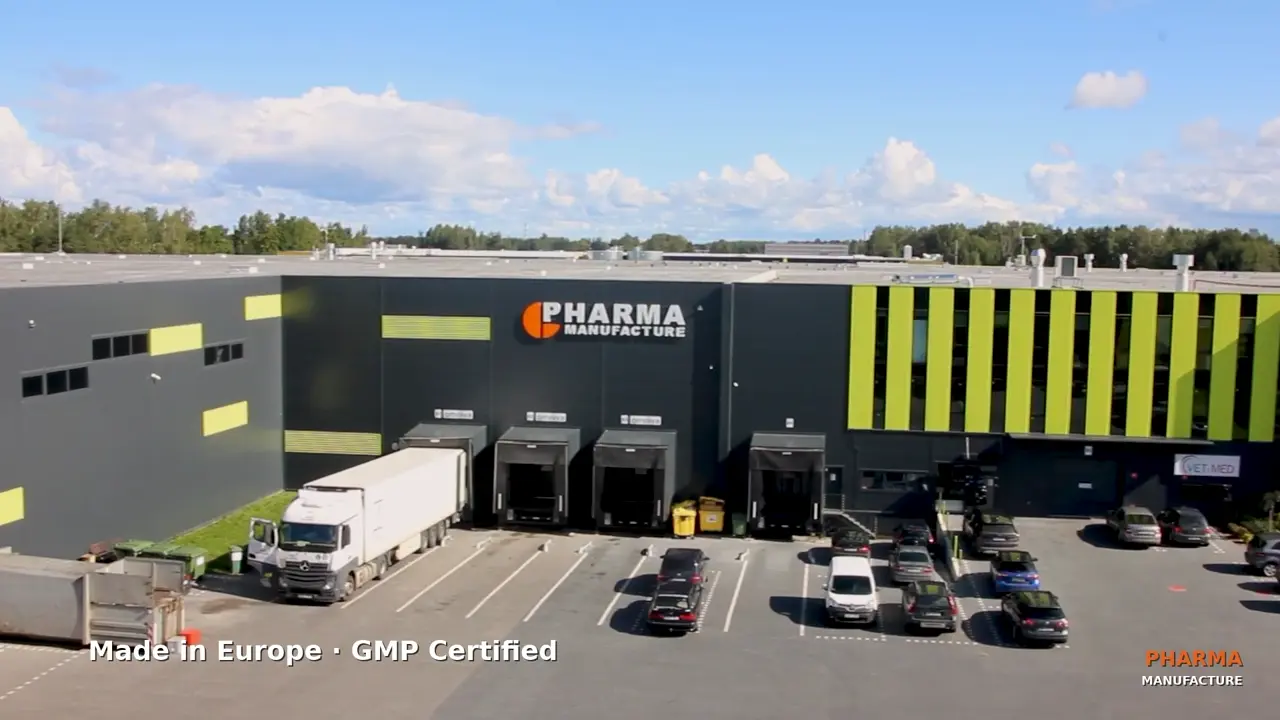
A Canadian brand that orders private label supplements from a European factory instead of a US one keeps the same Health Canada licences: the brand holds the NPN, its Canadian importer the site licence. The trade paperwork changes. Pharma Manufacture, the private label factory in Mārupe, Latvia, needs from 4 weeks to make the batch; above €6,000 per consignment, the CETA origin declaration needs a REX number.
| Step | Who does it | What it involves |
|---|---|---|
| Classify the product | Your brand | Tablets, capsules and dosed powders are likely natural health products (NHPs) in Canada |
| Product licence (NPN) | Your brand as applicant | A representative in Canada if the brand is based abroad; detail in the NPN guide |
| Site licence and importer of record | Your Canadian importer | Lists the Mārupe site and files its GMP evidence; registers with CBSA |
| Quote, samples, formula | Pharma Manufacture | Reply within 24 hours with a price list |
| Production | Pharma Manufacture | From 4 weeks, about 8 weeks for a typical run, from confirmed order and technical brief |
| Proof of origin | The EU exporter | Origin declaration on the invoice; above €6,000 per consignment the exporter needs a REX number |
| Transit | Your forwarder | Sea freight Riga–Montreal about two to four weeks port to port, air 1–3 days door to door, by booking-site estimates; the forwarder confirms |
| Label | The licence holder | English and French text (NHPR s. 87); new label rules apply to every NHP by 22 June 2028 |
The factory side, with its forms and certificates, is on the Canada market page. This article is the buyer’s side: who does what, in which order, and what to send so the first quote is a real one.
Key Takeaways
- Switching from a US to a European factory does not change the Health Canada licences: the NPN and the site licence work the same way for any manufacturing site outside Canada.
- What changes is trade paperwork: goods that meet the CETA rules of origin travel with an origin declaration on the invoice, and above €6,000 per consignment the exporter needs a REX number.
- Your Canadian importer is the importer of record; it holds the site licence, has the origin declaration at release and clears the goods with CBSA.
- Plan the calendar in three blocks: production from 4 weeks, transit as a range your forwarder confirms, and the licences on top of both.
- English and French label text and the NPN come from the licence holder; every natural health product has to meet the new label rules by 22 June 2028.
Ordering from Europe instead of the US: what changes for a Canadian supplement brand?
The licences stay the same and the trade route changes. Health Canada does not license a product differently because the factory is in Latvia rather than in the United States: the NPN and the site licence work the same way for any manufacturing site outside Canada. The agreement that sets the duty, the origin document and the shipping time are what move.
| Step | With a US factory | With Pharma Manufacture in Mārupe, Latvia |
|---|---|---|
| Product licence (NPN) | Brand applies | The same: brand applies, factory supplies the manufacturer’s documents |
| Site licence | Importer covers the foreign site | The same: importer covers the Mārupe site once the GMP evidence is filed |
| Trade agreement | CUSMA rules, applied by your broker | CETA preferential rate for goods that meet the CETA rules of origin |
| Proof of origin | Under CUSMA rules; your broker confirms | Origin declaration on the invoice; REX number above €6,000 per consignment |
| Transit | Quoted by your forwarder | Sea about two to four weeks Riga–Montreal port to port, air 1–3 days door to door, by booking-site estimates |
| Labels | English and French | The same: English and French, new rules by 22 June 2028 |
The argument for a second factory outside the US is supply risk. Canada–US trade terms changed in September 2025 and again in September 2026, and a brand with one supply route carries that change alone. An EU manufacturer spreads that risk.
Who holds the NPN, the site licence and the importer of record role?
Three Canadian roles sit around one European factory. Your brand holds the NPN as the applicant, your importer holds the site licence and is the importer of record with the Canada Border Services Agency (CBSA), and Pharma Manufacture makes the product in Mārupe and supplies the manufacturer’s documents. Both licences are held in Canada.
| Role | Who | What it does for the order |
|---|---|---|
| NPN holder (applicant) | Your brand or its Canadian company; a representative in Canada if the brand is based abroad | Files the product licence; its NPN goes on the front panel |
| Site licence holder | The Canadian company that imports for sale | Lists the Mārupe site and files the GMP evidence for it |
| Importer of record | Your Canadian importer | Registers with CBSA, holds the origin declaration at release, clears the goods |
| Customs broker and forwarder | Chosen by your importer | Confirm the tariff line, the customs steps, the route and the schedule |
| Manufacturer | Pharma Manufacture | Makes and releases the batch; supplies the Certificate of Analysis, certificate copies and the site name and address |
A site licence covers manufacturing, packaging, labelling or importing natural health products for sale. If your own Canadian company imports the goods, it holds the site licence; if a distributor imports them for you, the distributor does. Since Health Canada Bulletin No. 10 ended the Foreign Site Reference Number on 16 February 2026, the GMP evidence for the Mārupe site goes through that site licence. Guides that tell you to get an FSRN for the factory are out of date.
The NPN itself, its classes, review targets and the LNHPD lookup are in how to get an NPN in Canada.
How to start a supplement company in Canada with a European factory
Start with the product and the two Canadian roles, then the factory. A brand that settles the format, the formula route and its importer before the first quote request gets a quote it can plan on. The order below follows that logic.
- Confirm the format is an NHP. Tablets, hard capsules and softgels are natural health products; dosed powders and drops are likely NHPs; a caffeinated energy drink is a supplemented food. For borderline formats, such as drink cubes and shots, the brand can ask Health Canada for a classification at smiu-ugdi@hc-sc.gc.ca.
- Choose ready-made or your own formula. Pharma Manufacture has a catalogue of 350 ready-made formulas; a formula you bring is first checked by a formula calculation, and it starts at a higher minimum than a ready-made one. How to choose the form and formula covers the trade-off.
- Fix the applicant and the importer. Decide who files the NPN, who acts as representative in Canada if your brand is registered abroad, and which Canadian company imports.
- Ask for a quote and samples. The reply comes within 24 hours with a price list for the formulas you name. Samples of ready-made formulas are sent on request.
- File the licences. Your brand files the product licence, your importer the site licence with the Mārupe site in it.
- Approve the label and a sample of your product. The licence holder supplies the English and French text and the NPN; you approve a sample of your own product before the line runs it.
- Confirm the order and ship. Production runs from 4 weeks, about 8 weeks for a typical run. Your importer clears the goods with CBSA.
The calendar has three blocks, and only one of them belongs to the factory.
| Block | Time | Source of the figure |
|---|---|---|
| Production at Pharma Manufacture | From 4 weeks, about 8 weeks for a typical run | Counted from confirmed order and technical brief |
| Product licence (NPN) | Health Canada targets of 60 calendar days for Class I and 90 for Class II | Service standards; targets, not guarantees |
| Site licence | 35, 65 or 95 working days, by GMP evidence and number of sites | Health Canada site licensing bulletin, 15 October 2025 |
| Sea freight Riga–Montreal | About two to four weeks port to port | Booking-site estimates; your forwarder confirms |
| Air freight | 1–3 days door to door | Booking-site estimates; your forwarder confirms |
What does Pharma Manufacture supply for a Canadian order?
Pharma Manufacture supplies the manufacturer’s side of the file: a Certificate of Analysis for each batch, copies of its GMP-FS-01, HACCP-01 and ISO 22000:2018 MSC-22-1384 certificates, and the site name and address for the importer’s site licence, “Kargo k-1”, Mārupe, LV-2167, Latvia.
| Document or item | What it is for |
|---|---|
| Certificate of Analysis for each batch | Release record of your batch, linked to the batch number on the pack |
| Copies of GMP-FS-01, HACCP-01 and ISO 22000:2018 MSC-22-1384 | Manufacturer’s documents for the importer’s site licence file; the importer chooses the GMP evidence route with Health Canada |
| Site name and address | The Mārupe site entry in the importer’s site licence |
| Samples of ready-made formulas | Sent on request |
One point needs care. The three certificates are issued by a certification body, not by a regulatory authority, and Health Canada names its own GMP evidence for a foreign site: a regulator’s certificate from an MRA country or a PIC/S member, an NSF/ANSI 173 section 8 certificate, or a Quality Assurance Report. Your importer chooses the evidence route for the Mārupe site with Health Canada. The certificate scans are on the certificates page, and the same documents for any market outside the EU are listed on which manufacturer documents an importer asks for.
The CETA origin declaration and the €6,000 REX threshold
The CETA origin declaration is one sentence the EU exporter writes on the invoice or another commercial document that describes the goods. Up to €6,000 per consignment any exporter can make it; above €6,000 the exporter has to be registered in the Registered Exporter System (REX) and enter its number.
| Rule | What applies |
|---|---|
| Where it goes | On the invoice or another commercial document describing the goods in enough detail |
| Text | Set in Annex 2 of the CETA Protocol on Rules of Origin; origin entered as “Canada/EU” |
| Consignment up to €6,000 | Any exporter can make the declaration |
| Consignment above €6,000 | The exporter must be registered in REX |
| Validity | 12 months from the date the exporter completed it |
| Several identical shipments | One declaration can cover a period of up to 12 months |
| At the Canadian border | Your importer has it at release and presents it to CBSA on request (Memorandum D11-4-37) |
| Transport | From the EU to Canada without further processing in a third country |
The declaration states the origin; it does not create it. Whether a formula qualifies depends on the CETA rule of origin for its tariff heading, and supplements are generally classified in heading 21.06 (CBSA Memorandum D10-14-30). If the label states a therapeutic purpose, the broker may classify the product in chapter 30. Have your broker confirm the tariff line for each product before the first shipment, because the CETA rate applies only to goods that meet the rule.
How long does shipping from Latvia to Canada take, and on which terms?
Booking-site estimates put sea freight from Riga to Montreal at about two to four weeks port to port and air freight at 1–3 days door to door. Treat both as a range: your forwarder confirms the route and the schedule for each shipment, and production comes before it.
The factory in Mārupe is two minutes from Riga International Airport and close to the Freeport of Riga, so one address gives your forwarder air, road and sea options. Delivery terms are agreed per order. Since the importer of record is on the Canadian side, the terms that fit leave import clearance there: FCA, with the goods handed to your forwarder in Latvia, or DAP, with the goods delivered to your port or warehouse for your side to clear. The options from Latvia are on the delivery and Incoterms page.
English and French labels and the 22 June 2028 label deadline
Set label information on a natural health product appears in English and French (NHPR s. 87). The front panel carries the brand, the NPN, the dosage form and the net quantity. The new label rules, including the Product Facts table, came into force on 21 June 2025, and every NHP has to meet them by 22 June 2028.
For an order from Mārupe this splits into two jobs. The licence holder supplies the bilingual text and the NPN, because the label has to match the product licence. The pack decides the space: a blister carton, for example, falls between 28 × 12 × 55 mm and 92 × 60 × 190 mm on the cartoner, and the bottles on the counting line are 40 to 200 mm tall. Choose the pack on the packing solutions page before the artwork is laid out.
Why order from Pharma Manufacture for a Canadian brand?
Ordering from Pharma Manufacture lets a Canadian brand buy European rather than American: it works with a factory in the European Union that has 25 years of supplement manufacturing, GMP, HACCP and ISO 22000:2018 certificates and a registration with the US FDA. What that means for a Canadian order:
- Made in the EU, not in the US. Manufactured and packed in Mārupe, Latvia; goods that meet the CETA rules of origin ship with an origin declaration on the invoice.
- 350 ready-made formulas or your own. The in-house R&D team of pharmacists, biochemists and nutritionists can develop a formula for you.
- Documents for the Canadian file. A Certificate of Analysis for each batch, copies of the certificates, and the site name and address for your importer’s site licence.
- Small first order, known lead time. From 150 units of a ready-made tablet or capsule formula; production from 4 weeks, about 8 weeks for a typical run.
More on the market, duty and labels is on the Canada page.
What to send for a quote for a Canadian order
Send eight details and the first reply can carry a price list, the minimum for your form and a realistic lead time. Pharma Manufacture replies within 24 hours.
- The product and form: tablets, hard capsules, softgels or dosed powders, and whether it is a catalogue formula from the tablets, capsules and softgels page or your own.
- The formula: a catalogue name, or the ingredients with the dose per serving.
- The market: Canada, and any other country you will sell in, because doses and the label are checked against the rules of the country of sale.
- The pack: bottle, blister with carton, jar or doypack, and units per pack.
- A quantity range: an estimate is enough; a ready-made tablet or capsule formula starts from 150 units.
- Your Canadian roles: who files the NPN and which company imports.
- The label status: finished bilingual text, a brand identity, or only a product name.
- The delivery point: a Canadian port or warehouse, or collection in Latvia by your forwarder.
The fuller checklist is in what a manufacturer needs to quote your first order, and if you are still comparing factories, these nine questions help.
Frequently asked questions
Can a Canadian brand order private label supplements from Europe?
Yes. Pharma Manufacture makes private label supplements in Mārupe, Latvia, for brands and importers selling in Canada. Your brand holds the NPN, your Canadian importer holds the site licence and is the importer of record, and the factory supplies the Certificate of Analysis, certificate copies and the site name and address.
Who is the importer of record when I order from a European factory?
Your Canadian importer. It holds the site licence, which can cover the Mārupe site once it files the GMP evidence, registers with CBSA, has the CETA origin declaration at release and clears the goods. Pharma Manufacture is the manufacturer in Mārupe; the licences and the import clearance sit on the Canadian side.
Does ordering from Europe change the NPN process?
No. The NPN and the site licence work the same way for any manufacturing site outside Canada, so a product made by Pharma Manufacture follows the same Health Canada steps as one made in the US. The steps and review targets are in the NPN guide.
When does a CETA origin declaration need a REX number?
When the consignment is worth more than €6,000. Up to €6,000 any exporter can write the declaration on the invoice; above it, the exporter must be registered in REX. The declaration is valid for 12 months from the date the exporter completed it, and the goods must reach Canada without further processing in a third country.
How long does production and shipping to Canada take?
Pharma Manufacture produces from 4 weeks, about 8 weeks for a typical run, counted from the confirmed order and technical brief. Booking-site estimates add about two to four weeks by sea from Riga to Montreal, or 1–3 days by air; your forwarder confirms the schedule. The licences come on top of both.
What is the minimum order for a Canadian launch?
Pharma Manufacture starts from 150 units of a ready-made tablet or capsule formula, the same minimum as for any market. Your own formula starts higher, because development and a validation batch are paid for once, on the first order.
Does Health Canada accept Pharma Manufacture’s certificates?
Pharma Manufacture holds GMP-FS-01, HACCP-01 and ISO 22000:2018 MSC-22-1384, issued by a certification body rather than a regulator. Health Canada names its own GMP evidence for a foreign site, so your importer chooses the evidence route for the Mārupe site with Health Canada.
Do the labels have to be in English and French?
Yes. Set label information on a natural health product appears in English and French under section 87 of the Natural Health Products Regulations, and every product has to meet the new label rules by 22 June 2028. The licence holder supplies the text and the NPN for a product made by Pharma Manufacture.
Planning a Canadian launch from a European factory?
Tell Pharma Manufacture the product, the form, the formula and who your applicant and Canadian importer are. The reply comes within 24 hours with a price list, the minimum for your form and the manufacturer’s documents the factory supplies for your importer’s file. The factory, its lines and its certificates are described on the manufacturing page. Request a price list.
Sources
Natural Health Products Regulations, SOR/2003-196, sections 4, 5, 87 and 93 — product licence, representative in Canada, bilingual label, front panel: https://laws-lois.justice.gc.ca/eng/regulations/sor-2003-196/page-1.html (reviewed 2026-10-30)
Health Canada, Service standards for natural health product application reviews — Class I and Class II targets: https://www.canada.ca/en/health-canada/corporate/about-health-canada/legislation-guidelines/acts-regulations/service-standards-high-volume-regulatory-authorizations/service-standards-natural-health-product-application-reviews-under-natural-health-product-regulations.html (reviewed 2026-10-30)
Health Canada, Site licensing bulletin of 15 October 2025 — 35, 65 and 95 working days: https://www.canada.ca/en/health-canada/services/drugs-health-products/natural-non-prescription/applications-submissions/site-licensing/bulletin/october-15-2025.html (reviewed 2026-10-30)
Health Canada, Site licensing — who needs a site licence: https://www.canada.ca/en/health-canada/services/drugs-health-products/natural-non-prescription/applications-submissions/site-licensing.html (reviewed 2026-11-01)
Health Canada, Bulletin No. 10, 16 February 2026 — end of the Foreign Site Reference Number process: https://www.canada.ca/en/health-canada/services/drugs-health-products/natural-non-prescription/applications-submissions/site-licensing/bulletin/ending-foreign-site-reference-number-process-foreign-warehouses.html (reviewed 2026-10-30)
Health Canada, Site Licensing Guidance Document, version 3.0 (2015) — GMP evidence for foreign sites: https://www.canada.ca/en/health-canada/services/drugs-health-products/natural-non-prescription/legislation-guidelines/guidance-documents/site-licensing-guidance-document.html (reviewed 2026-10-30)
Health Canada, Supplemented Foods Regulations guidance — NHP and food boundary, classification requests: https://www.canada.ca/en/health-canada/services/food-nutrition/legislation-guidelines/guidance-documents/supplemented-foods-regulations.html (reviewed 2026-10-30)
Health Canada, Guidance document: Labelling of natural health products — 21 June 2025 and 22 June 2028: https://www.canada.ca/en/health-canada/services/drugs-health-products/natural-non-prescription/legislation-guidelines/guidance-documents/labelling.html (reviewed 2026-10-30)
CBSA, Memorandum D10-14-30 — classification of supplements in heading 21.06: https://www.cbsa-asfc.gc.ca/publications/dm-md/d10/d10-14-30-eng.html (reviewed 2026-10-30)
CBSA, Memorandum D11-4-37 (4 November 2021) — origin declaration held by the importer at release: https://www.cbsa-asfc.gc.ca/publications/dm-md/d11/d11-4-37-eng.html (reviewed 2026-11-01)
European Commission, Taxation and Customs Union, CETA Protocol on Rules of Origin, Annex 2, Text of the origin declaration: https://taxation-customs.ec.europa.eu/document/download/de70877d-75db-450f-92a5-927d0c2d700e_en?filename=canada_text_origin_declaration.pdf (reviewed 2026-11-01)
European Commission, Access2Markets, EU–Canada Comprehensive Economic and Trade Agreement (page version of 14 October 2026) — REX and the €6,000 threshold, 12-month validity, direct transport: https://trade.ec.europa.eu/access-to-markets/en/content/eu-canada-comprehensive-and-economic-trade-agreement (reviewed 2026-11-01)
Transit estimates, Riga to Montreal, from booking and reference sites, seen in search results on 2026-11-01: https://www.fluentcargo.com/routes/riga-lv/montreal-ca and https://www.movehub.com/lv/international-shipping/canada/montreal-from-riga
Department of Finance Canada, Canada’s response to U.S. tariffs (counter-tariffs removed 1 September 2025): https://www.canada.ca/en/department-finance/programs/international-trade-finance-policy/canadas-response-us-tariffs.html (reviewed 2026-10-30)
Department of Finance Canada, countermeasures in response to U.S. tariffs, 25 August 2026: https://www.canada.ca/en/department-finance/news/2026/08/canada-announces-targeted-countermeasures-and-substantive-support-for-workers-and-businesses-in-response-to-us-tariffs.html (reviewed 2026-10-30)
Pharma Manufacture, Canada market guide; manufacturing; buyer questions on documents, delivery, samples, label design and lead time: https://pharmamanufacture.eu/markets/canada/ and https://pharmamanufacture.eu/buyer-questions/ (page sources of 2026-10-30)