Is Private-Label Manufacturing Actually Cheaper? The Real Cost of Making Your Own Supplements
Pharma Manufacture is a contract food supplement manufacturer in Mārupe, Latvia, in the European Union. The cost drivers this article walks through are the same variables behind our own formulas and packing options: ready-made and custom formulas across tablets, capsules, softgels, effervescent tablets and sports nutrition powders, packed in bottles, blisters, tubes, jars or doypacks. Where this piece stops short of a number, our breakdown of why minimum order has no single figure picks up the thread.
Yes, ordering your own private-label supplements direct from a manufacturer is usually cheaper than the alternatives. You pay a manufacturer price instead of a retail markup, and the per-unit cost falls as your volume grows. The catch is that “cheaper” depends entirely on your formula, form, packaging, and order size, so the honest answer is that you need a real quote, not a number off a blog.
Let’s walk through where the money actually goes, and why the route most creators pick first is often the most expensive one.
You’re not comparing products. You’re comparing markups.
Most people weighing their own supplement line compare it against reselling a finished brand. That’s the wrong comparison. When you resell someone else’s product, you’re buying at their wholesale price, which already contains their manufacturing cost, their margin, and often a distributor’s margin on top. You’re the last link in a chain, and every link took a cut before you.
Private-label flips that. You go straight to the people who make the product and pay the manufacturer price. There’s no brand owner above you taking a margin on your sales, because you are the brand owner. The trade-off is that you carry more of the setup work yourself: choosing a formula, approving a label, ordering a batch. For people who already have an audience, that work pays back fast, because you keep the margin that used to belong to someone else.
If you’re still deciding whether your audience is ready for this, the companion guide on launching a supplement brand covers that decision separately.
What actually drives the cost?
Four things move the price more than anything else: the formula, the form, the packaging, and the volume. Compliance sits underneath all of them. Get a feel for these and you’ll read any quote in minutes instead of squinting at it.
The formula: ready-made vs custom
A stock formula is the cheaper starting point. The recipe already exists, it’s already been tested, and the ingredients are already sourced, so you skip most of the development cost. A custom formula costs more up front because someone has to develop it, source the specific actives, and validate it. That’s real R&D, and it shows up in the price.
Neither choice is “right.” A coach launching a simple magnesium or vitamin D product rarely needs a bespoke recipe. A brand with a specific blend in mind, or a flavour and texture target for a powder, will want custom work. If you’re torn, the breakdown on choosing a supplement form and formula walks through that fork in more detail. Worth reading before you ask for a quote, because the answer changes the number.
The form: tablets, capsules, softgels, powders
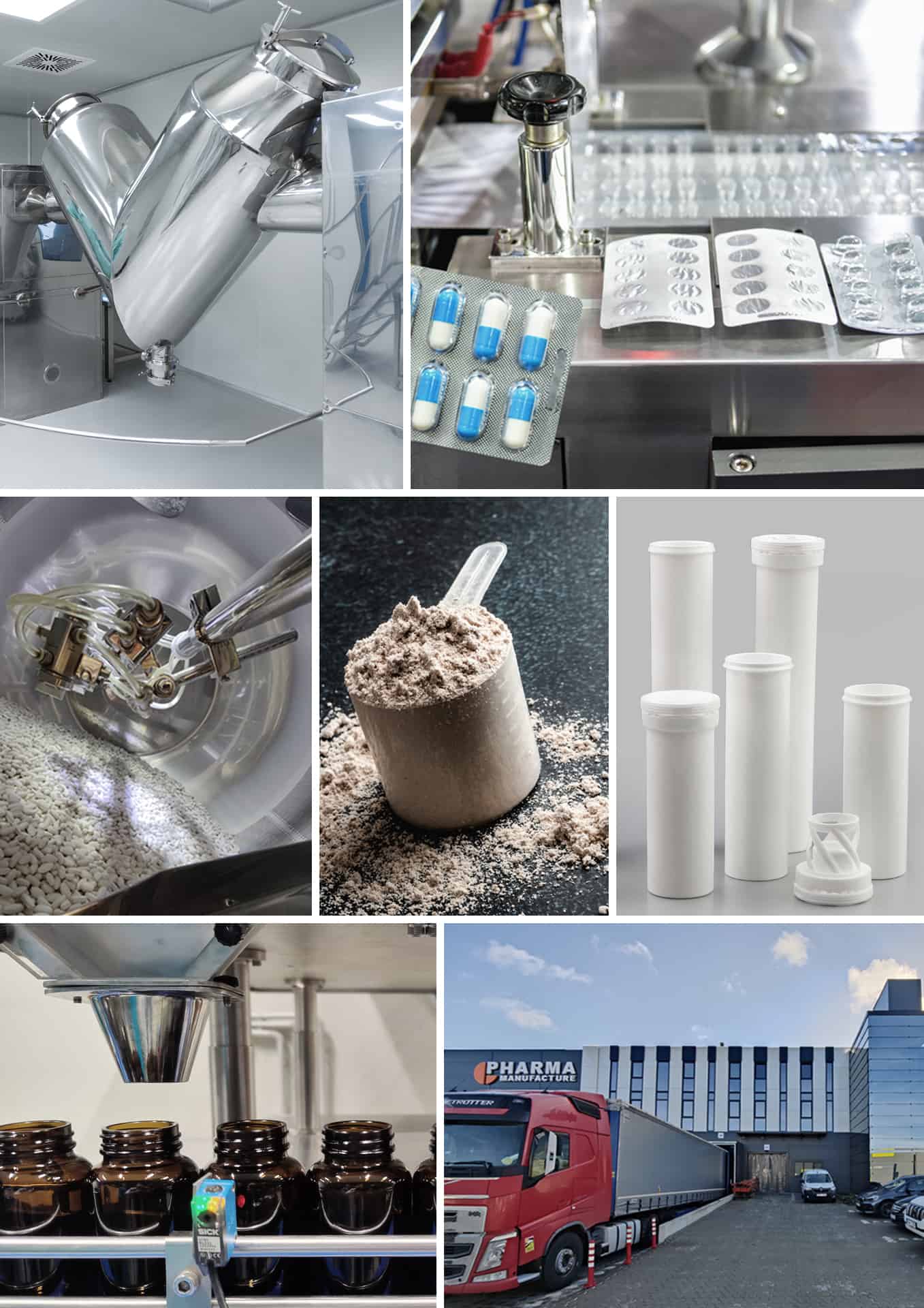
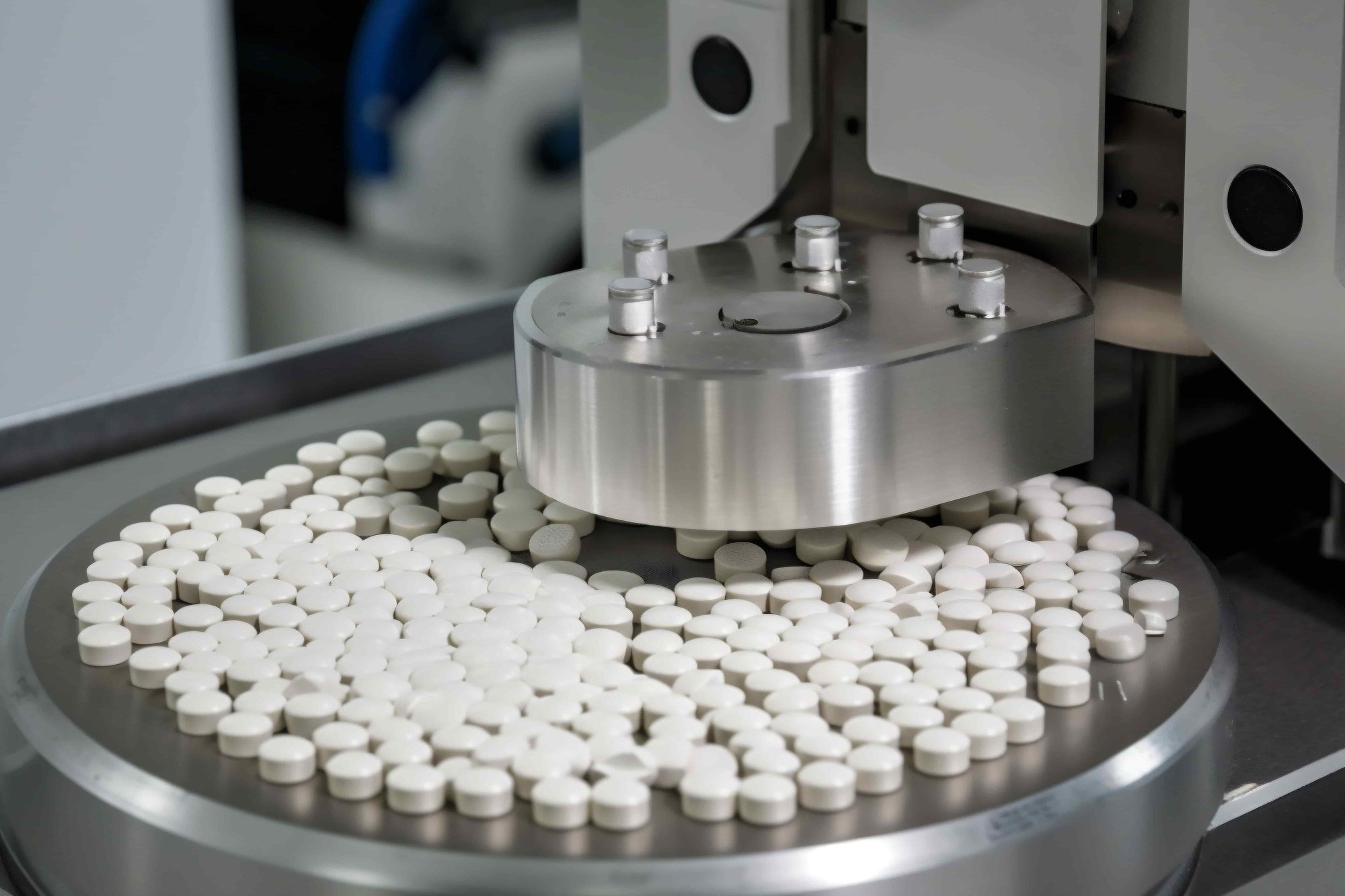
The physical form changes the machinery, the materials, and the per-unit cost. Tablets and hard capsules are typically the most economical at volume. Softgels and effervescent tablets involve more specialised production. Powders shift the maths again, because you’re often selling a larger serving and pricing per tub rather than per pill.
There’s no single cheapest form, only the cheapest form for your product. A daily vitamin works as a tablet. An omega-3 almost has to be a softgel. A pre-workout has to be a powder. Match the form to the product first, then price it. Doing it the other way round, picking the cheapest form and forcing your product into it, is how brands end up with something nobody wants to take.
The packaging: where budgets quietly leak
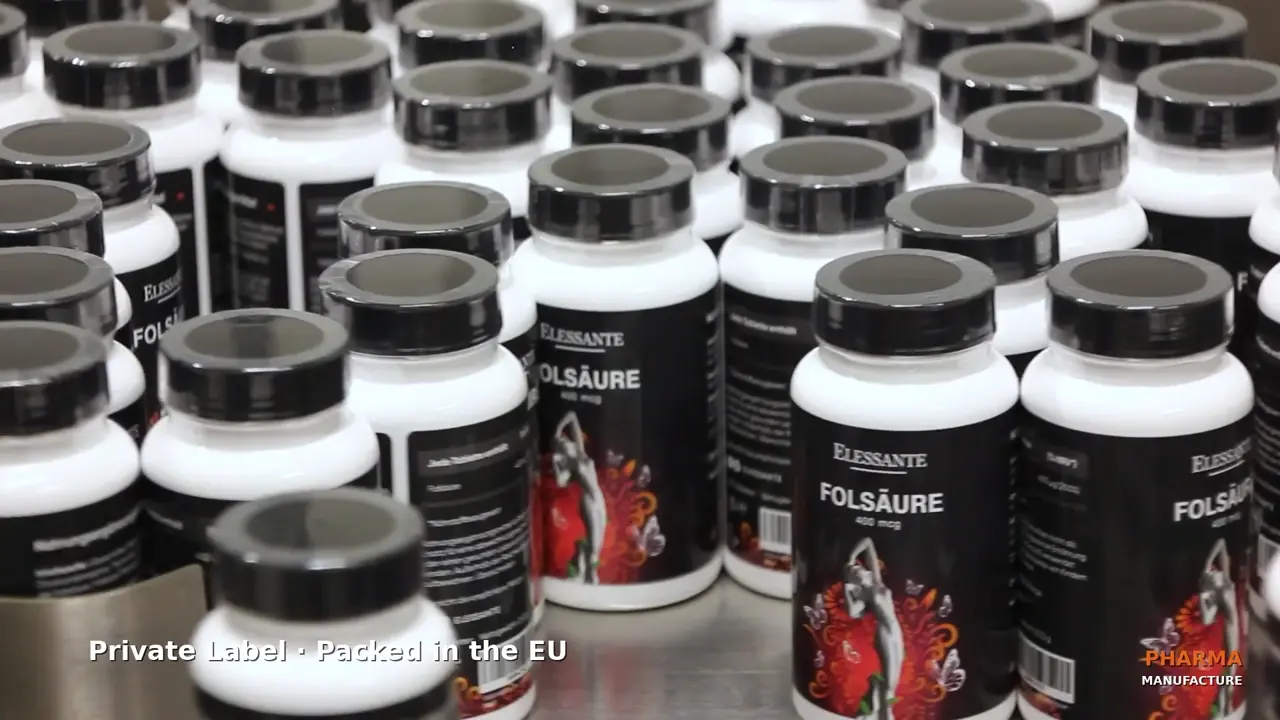
Packaging is the cost driver people underestimate most. A PET bottle, a glass jar, a blister sealed into a printed carton, a tube, a doypack: each carries a different material and assembly cost. Add a fancy carton, a custom cap, or a sleeve, and the per-unit figure climbs without changing the product inside the bottle at all.
This is where a first-time founder can quietly overspend. Premium packaging looks great in a launch photo and eats your margin on every single unit you sell after it. Start with packaging that protects the product and fits your shelf, then upgrade once you know what sells. The packing solutions overview shows the formats available, from PET and glass bottles to blisters, tubes, jars, and doypacks. Worth knowing your options before you commit to the prettiest one.
Volume: the lever you control
Per-unit cost drops as order size rises. That’s the one constant across every form and format. Setup, cleaning, changeover, and quality checks cost roughly the same whether you run a small batch or a large one, so spreading them over more units lowers the cost of each. With production capacity reaching up to 100,000 tablets per hour across three lines, the volume side scales with you as you grow.
This is exactly why you shouldn’t bet big on day one. More on that below.
The “cheaper source” that quietly backfires
Chasing the lowest sticker price abroad is the trap that catches the most first-time brands. A quote from a far-off, lightly regulated supplier can look unbeatable on paper. Then the real costs arrive. Long shipping times tie up your cash in stock for weeks. Customs and import duties eat the saving. And if a batch arrives off-spec, you’re disputing it across an ocean and a time zone, with a language barrier in the middle.
The compliance gap is the part that actually hurts. Selling supplements in the EU means meeting EU rules, and that’s not optional. A working partner already runs to GMP, HACCP, and ISO 22000, is registered with the US FDA, and ships packaging that carries an EU Certificate of Conformity. Source from someone who doesn’t, and you inherit the problem. The cheap units become expensive the moment a regulator, a marketplace, or a customer asks a question you can’t answer.
There’s a quieter cost too. An EU manufacturer two minutes from Riga Airport, replying within 24 hours, is someone you can actually reach when something needs fixing. “Cheap” stops being cheap the first time you can’t get anyone on the line during a recall.
Why a low MOQ matters more than the unit price
For a first launch, a low minimum order quantity beats a low unit price almost every time. A rock-bottom per-unit cost is worthless if it forces you to buy tens of thousands of units before you’ve sold one. That’s your cash, frozen in a warehouse, betting that a product you’ve never sold will move.
A low MOQ flips the risk. You order a modest first batch, put it in front of your audience, and learn what they actually buy. If it sells, you reorder at a better per-unit price as your volume grows. If your second flavour flops, you’ve lost a small test instead of a year’s runway. For someone with an existing audience, that first real batch is the cheapest market research you’ll ever run, because it’s the only kind that ends with you holding inventory you can sell.
The exact minimum depends on your product and packaging, so there’s no single number to quote. The point is that you don’t have to start big to start.
How to get a real number for your product
A useful quote starts with a few specifics, not a vague enquiry. The more precisely you describe what you want, the faster and tighter the price comes back. Before you reach out, get clear on the basics below. It turns a week of back-and-forth into a single reply.
Have these ready:
- The product idea. What is it, and roughly what should it contain? Even “a magnesium glycinate capsule, around this dose” is enough to start.
- Stock or custom. Are you happy with a ready-made formula, or do you need something developed? This is the biggest single swing in the price.
- The form. Tablet, hard capsule, softgel, effervescent, or powder. Pick the one that fits the product, not the one that sounds cheapest.
- The packaging. Bottle, blister and carton, tube, jar, or doypack. You can browse the formats on the products page if you’re unsure what suits you.
- Rough quantity. A ballpark first-order size, even a range, lets the team price the per-unit cost properly.
With in-house R&D, label-design help, and EU registration support on the same side of the table, a single conversation usually settles formula, form, packaging, and price together. That’s the fastest route from “I have an audience” to “I have a product to sell them.”
Frequently asked questions
Is private-label manufacturing really cheaper than reselling?
For most people with an audience, yes. Reselling means buying at a wholesale price that already includes the brand owner’s margin and often a distributor’s cut. Private-label removes those layers: you pay the manufacturer price and keep the margin yourself. You take on more setup work, but you stop paying other people to own your brand.
How much does it cost to make my own supplements in the EU?
There’s no honest flat figure, because the cost depends on your formula, form, packaging, and order size. A stock-formula tablet in a simple bottle sits at one end; a custom powder in premium packaging at the other. The only real answer is a quote built around your exact product, which is quick to get once you’ve nailed down those four basics.
Do I have to order a huge quantity to start?
No. Minimum order quantities here are low, which is the whole point for a first launch. You order a modest batch, test it with your audience, and reorder at a better per-unit price as you grow. The exact minimum depends on your product and packaging, so it’s worth asking for your specific case rather than assuming.
Why not just use the cheapest supplier I can find abroad?
Because the sticker price hides the real cost. Long shipping freezes your cash, import duties erode the saving, and a faulty batch becomes a cross-border dispute. The bigger risk is compliance: selling in the EU means meeting EU rules. A GMP, HACCP, and ISO 22000 certified manufacturer with packaging that carries an EU Certificate of Conformity keeps that problem off your desk.
What do I need before asking for a quote?
Five things speed it up: your product idea, whether you want a stock or custom formula, the form, the packaging, and a rough first-order quantity. With those in hand, the team can price your product properly instead of guessing. You don’t need final answers on all of them, just enough to describe what you’re trying to build.
Ready to find out what your product actually costs?
Pharma Manufacture is a contract food supplement manufacturer in Mārupe, Latvia, in the European Union. The number you’ve been guessing at is one conversation away. Describe your product, your preferred form, and roughly how much you want to make, and you’ll get a real quote for your exact case, usually with a reply within 24 hours. Get in touch and start with the question that matters: what would it cost to make this?
Sources
European Union, Regulation (EC) No 1935/2004 of the European Parliament and of the Council on materials and articles intended to come into contact with food (basis for the EU Certificate of Conformity carried on packaging materials), retrieved 2026-09-04: https://eur-lex.europa.eu/legal-content/EN/TXT/?uri=CELEX:32004R1935
European Union, Regulation (EC) No 852/2004 of the European Parliament and of the Council on the hygiene of foodstuffs (basis for the HACCP-based procedures referenced for a compliant manufacturing partner), retrieved 2026-09-04: https://eur-lex.europa.eu/legal-content/EN/TXT/?uri=CELEX:32004R0852